Supply chain security has received a lot of attention in recent years. And rightly so. Software vulnerability exploitation attacks have been a key tool in the hands of the hackers to hamper businesses, compromise sensitive data, and a cause of general sense of fear around open source software.
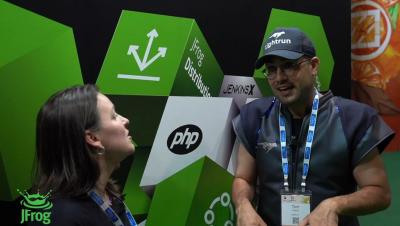
Stephen Chin is no stranger to having big ideas and implementing them to help the developer community. In the last twenty years he’s been involved in building open source IDEs, bootstrapping rich client libraries, maintaining JVM languages, and cultivating relationships with developers that do the same.
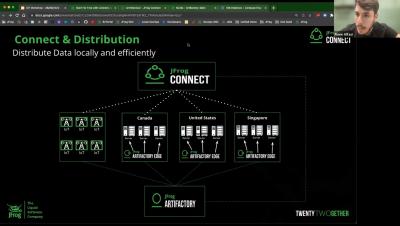
Today at swampUP, our annual DevOps conference, JFrog CTO Yoav Landman unveiled the next step toward making the Liquid Software vision of continuous, secure updates a truly universal reality. We’ve introduced JFrog Connect, a new solution designed to help developers update, manage, monitor, and secure remote Linux & Internet of Things (IoT) devices at scale.
Securing your software supply chain requires proactively identifying compliance issues and security vulnerabilities early in your software development lifecycle. Additionally early detection must be coupled with an organized and agile method of response that brings together developers, operations and SRE teams to accelerate remediation workflows across the organization.
In 2022, JFrog and ServiceNow engaged in a series of meaningful conversations around the state of DevSecOps and how the industry could benefit from tighter integrations with IT-Operations tools.
When relying on a 3rd-party package from a non-commercial entity, there is always the risk of lack of support, especially when it comes to outdated packages and versions. If the package stops being maintained, nobody will implement a new feature we might need or fix a newly-discovered security vulnerability. Consider, for example, CVE-2019-17571. A critical remote code vulnerability which was never fixed in Log4j 1.x, since it was not supported anymore, and only fixed in Log4j 2.x.