Security | Threat Detection | Cyberattacks | DevSecOps | Compliance



Gravitational Rebrands to Teleport, Ushers in New Era of Environment-Free Computing
OAKLAND, Calif. – Nov. 19, 2020 — Gravitational, a pioneer in environment-free computing, announced today that the company has changed its name to Teleport, effective immediately.

Announcing Teleport 5.0 - Unified Access Plane and Application Access
Today, we are announcing the availability of Teleport 5.0. This is a major release for the project with numerous improvements and new features, but the hallmark capability of this version is the Unified Access Plane and Application Access for Developers. For those unfamiliar with Teleport, it is an open source project for giving developers secure remote access to everything they need.

Gravitational Rebrands as Teleport
Dear Reader, Today we are officially announcing that Gravitational is becoming Teleport. As part of the transition, we are launching a new website and moving from gravitational.com to https://goteleport.com. But that’s not the most important part. A much more interesting side of the story is why we are doing this and the new product announcements and the direction we are taking.

What the Twitter Hack Says About Your Company
Cyber threats are a feature of our everyday digital life. Most of us have been the victim of one of these attacks, even if we are unaware. The larger hacks make it into the public consciousness, like Equifax, Ashley Madison, Capital One, and more, but we rarely hear from Silicon Valley tech companies. While not infallible, companies like Twitter or Facebook are still not held to strict standards for customer safety.

What is eBPF and How Does it Work?
About a year ago, a friend of mine decided to build an EVM (Ethereum Virtual Machine) assembler in Rust. After some prodding from him, I began to help by writing unit tests. At the time, I knew very little about operating systems and started to read about lexical and symbolical analyzers. I was quickly in way over my head. What I did retain, however, was a newfound appreciation for the OS as a whole. So, when he started raving about eBPF, I knew I was in for a treat.
Webinar | Teleport v4.4 | Release Demo |
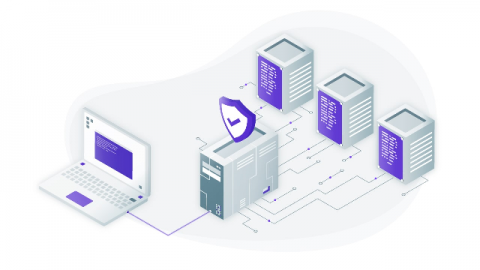
How to Set Up an SSH Jump Server
In this blog post we’ll cover how to set up an SSH jump server. We’ll cover two open source projects. Both of these servers are easy to install and configure, are free and open-source, and are single-binary Linux daemons. An SSH jump server is a regular Linux server, accessible from the Internet, which is used as a gateway to access other Linux machines on a private network using the SSH protocol.
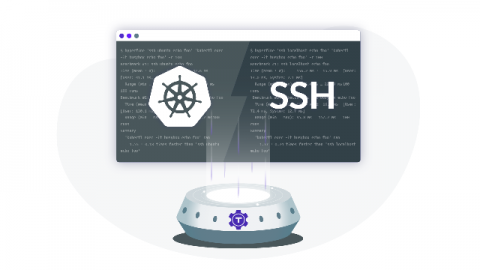
Session Control for SSH and Kubernetes in Teleport 4.4
Teleport 4.4 is here! The major innovation we’re introducing in this version is much improved control over interactive sessions for SSH and Kubernetes protocols. We’ll do a deeper dive into session control later, but for those who aren’t familiar with it, Teleport is an open source project. It provides access to SSH servers and Kubernetes clusters on any infrastructure, on any cloud, or any IoT device, anywhere, even behind NAT.
Teleport 4.4: Concurrent Session Control & Session Streaming
A SSH session can be interactive or non-interactive. The session starts when a computer or human connects to a node using SSH. SSH sessions can be established using public/private key cryptography or can use short lived SSH Certificates, similar to how Teleport works. Organizations often want to know who is accessing the systems and provide a greater level of control over who and when people are accessing them, which is where Teleport 4.4 comes into play.