Security | Threat Detection | Cyberattacks | DevSecOps | Compliance

CrowdStrike Named a Leader that "Delivers World-Class Threat Intelligence" in 2023 Forrester Wave

We’re excited to share that Forrester has named CrowdStrike a Leader in The Forrester Wave™: External Threat Intelligence Services Providers, Q3 2023. CrowdStrike received the highest ranking of all vendors in the Current Offering category, with the highest score possible in 16 criteria, surpassing all other vendors evaluated in the report.

An Introduction to Cyber Threat Intelligence: Key Concepts and Principles

Cyber Threat Intelligence (CTI), or threat intelligence, is evidence-based knowledge established from current cyber threats, gathered from myriad sources to identify existing or potential attacks. Threat intelligence assists in identifying the motives, targets, and attack behaviors of a threat actor and implementing strong defenses from future attacks. According to IBM’s Cost of a Data Breach 2022 report, the average data breach costs its victims $4.35 million.

SafeBreach and Recorded Future: Operationalizing Threat Intelligence with Breach and Attack Simulation

Modern enterprises have adopted more offensive measures to protect their organizations from evolving cyber threats. As a result, many security teams are looking to breach and attack simulation (BAS) and threat intelligence (TI) tools to enhance their programs and work more efficiently.

Using Threat Hunting to Uncover Cybersecurity Threats

In the fast-evolving digital landscape, the prevalence of cyber threats has become a stark reality for businesses and individuals alike. The conventional cybersecurity measures, while essential, are often reactive and inadequate against sophisticated attacks. This is where Threat Hunting emerges as a proactive and dynamic approach to cybersecurity. In this blog, we delve into the fascinating world of Threat Hunting and explore its significance in safeguarding against cyber adversaries.

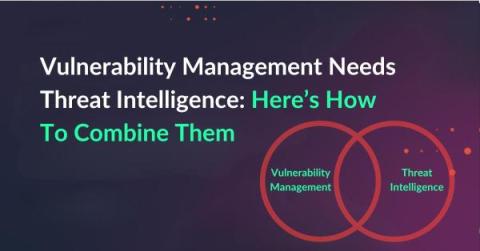
Using Mitre Att&CK with threat intelligence to improve Vulnerability Management

MITRE ATT&CK® is a globally accessible knowledge base of 14 adversary tactics and over 500 techniques based on real-world observations. The first model was proposed in 2013 and publicly released in 2015 which has been gathering momentum over the last couple of years.

Enhancing the Capabilities of National Cyber Agencies

In today’s interconnected digital landscape, cyber threats have become more and more sophisticated and prevalent, posing a huge risk to individuals, organizations, and even nations. To understand and stop these evolving threats effectively, cybersecurity agencies rely on advanced tools and technologies. One such tool is Threat Intelligence Platforms (TIPs), which play a crucial role in enhancing the capabilities of these agencies.

ISO 27002 puts Threat Intelligence center stage

The ISO 27000 series is an industry standard that has long defined and dictated base-level requirements for organizations’ information security management systems (ISMS). Through more than a dozen standards, the framework helps organizations demonstrate management commitment to their ISMS as they regularly review and improve their systems and procedures.

Better Together: How Cyware & Cyberint Pair Threat Intelligence & Automation

Mature cybersecurity programs require strategic, operational, and tactical threat intelligence, as well as structured ways to ingest, consume, and act on the relevant threat intel data. To help organizations better achieve these goals, Cyware and Cyberint have established a partnership and out-of-the-box integration.

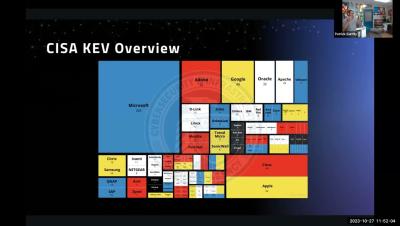
ThreatQ Cyber Forum Recap: Expert Insights on Risk-Based Vulnerability Management

The discipline of vulnerability management has been around for decades and the way we assess risk, based on severity and likelihood of exploitation, has remained fairly constant. However, there are challenges in how this formula is usually applied that narrow our perspective on risk and our mitigation strategies.

4 Steps to a Comprehensive Security Approach

Software supply chain attacks have become a major concern for organizations in recent years, as cybercriminals increasingly target third-party software components and libraries used to build applications. These attacks can have devastating consequences, including data breaches, theft of intellectual property, and disruption of business operations. In this article, we will explore the growing threat of software supply chain attacks and discuss strategies for mitigating the risks.