Tripwire/Belden Industrial Cybersecurity Pub Talk
Check out the on-demand recording of our first Tripwire/Belden Industrial Security Pub Talk. You'll hear a panel of industry experts weigh in on questions.


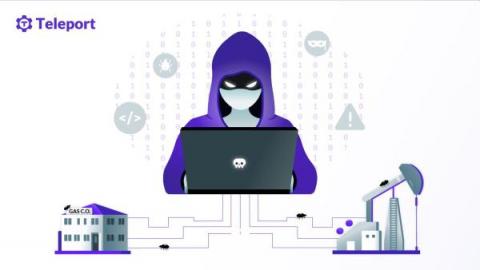
US Officials warn of potential ransomware attacks in response to increased sanctions on Russia and have asked state and local officials to consider how ransomware attacks could disrupt the provision of critical services. “Right now, the biggest concern we have are preparations for potential impacts to US utilities and industrial critical infrastructure, (Dragos)”
Cloud adoption has come a long way from its early days where corporate executives questioned the stewardship of their data. The initial suspicions of “where’s my data” have been laid to rest, as administrative tools and contractual obligations have emerged to give better visibility to, and accountability of, data custodianship. Even the capabilities of technology professionals have been enhanced to include full certification paths towards demonstrating cloud proficiency.
Russian hackers are attempting to broadly penetrate Ukrainian infrastructure to disrupt critical services such as electricity, transportation, finance, and telecommunications. US Government urges US Critical Infrastructure owners to harden their systems and implement a “shields up” strategy. As tensions escalate, Russian cyberattacks could seek to disrupt US electricity, gas, and other systems, warn the FBI and Department of Homeland Security.
Industrial companies worldwide are adopting capabilities that allow for remote operations. The pandemic has led companies to consider how they can reduce an onsite workforce while continuing with normal operations. Likewise, the worker shortage is leading companies to think in terms of a flexible workforce that may include remote staffing and flexible resourcing.
As industrial organizations continue to embrace change by leveraging the latest technologies into their daily operations and production cycles, they have also been tasked with embracing remote and hybrid work environments – all while maintaining operational continuity. Utilizing advanced technologies has enabled these organizations to reduce expenses, expedite production time, and elevate customer service levels.
Industrial control systems (ICS) are specific kinds of assets and associated instrumentation that help to oversee industrial processes. According to the National Institute of Standards and Technology, there are three common types of ICS.
One of the biggest problems with the IT / OT convergence in critical infrastructure is that much of the legacy hardware cannot simply be patched to an acceptable compliance level. Recently, Sean Tufts, the practice director for Industrial Control Systems (ICS) and Internet of Things (IoT) security at Optiv, offered his perspectives on where the industry has been, where it is going, and some of the progress being made to secure critical infrastructure.
I am writing this from my home office in Texas. Texas isn’t just my home. It is the home of the best brisket on the planet, some of the most iconic high tech brands in the world, and energy production that powers the global economy. In the morning, I might meet with one of the fastest growing SaaS companies in the country about achieving the rigorous FedRAMP certification so they can sell to federal agencies.