Security | Threat Detection | Cyberattacks | DevSecOps | Compliance

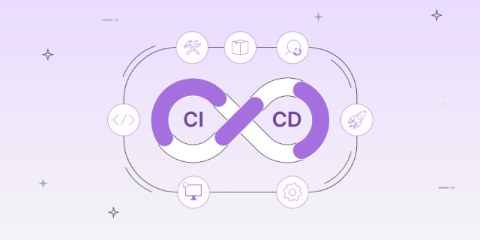
What is Continuous Signing in CI/CD? Importance and Best Practices

Keeping your software secure has become more important than ever due to various types of cybersecurity threats. If you are thinking about what measures you can take to protect it, then Continuous Signing in CI/CD is one way. Continuous Signing in CI/CD (Continuous Integration/Continuous Deployment) is a method that helps ensure that your code and data are protected throughout the development process.

GitProtect's Report Highlights Cost Of Weak DevOps Pipelines

Imagine launching the year’s most anticipated game—only to have your screen freeze at the climax. Or waiting for your favorite show’s finale, only to encounter a technical error. In the world of DevOps, where time and reliability are everything, outages on platforms like Azure DevOps, GitLab, GitHub, and Jira don’t just cause frustration — they can paralyze the entire software development process.

What Ransomware Teaches Us About Weak Links in the Development Pipeline

Ransomware attacks aren't just hitting banks and government agencies anymore-they're going straight for the jugular of how modern software is made. That's right: the development pipeline has become prime hunting ground. And while companies scramble to patch after the damage is done, the smarter ones are shifting focus to where it all begins-the code, the pipeline, and the people pushing it live.

Is Continuous Deployment Too Risky? Security Concerns and Mitigations

Adopting Continuous Deployment, an extreme form of software delivery automation, can drastically speed up software delivery, but it also introduces critical security challenges. Some of the most severe, global-scale security breaches of recent years (Solarwinds and Kaseya are just two examples) were related to breaches in software delivery infrastructure. Continuous deployment has the potential to make things worse.

What Is Jenkins? Features, Benefits & Core Concepts

Jenkins is an open-source automation server that is widely used for continuous integration (CI) and continuous delivery (CD) in software development. It is an automated engine that builds, tests, and deploys the application so that development teams can routinely integrate code changes in a way that ensures the software is deployable. Created as the Hudson project in 2004, Jenkins has grown to become an infinitely extensible and customizable tool hosting an enormous ecosystem of plugins.

Why CI/CD Security Scanning Is Non-Negotiable in Modern DevSecOps

In the race to deliver software faster and more frequently, Continuous Integration and Continuous Deployment (CI/CD) pipelines have become the backbone of modern DevOps workflows. But with this speed comes a critical trade-off — security. Integrating security checks into your CI/CD pipeline is no longer optional; it’s a necessity. This is where CI/CD security scanning steps in.

Best Practices for Using ionCube Encoder in CI/CD Pipelines

With the growing adoption of automated build pipelines, the ionCube Encoder CI Edition offers a tailored solution for developers needing flexible, temporary machine licensing within their CI/CD workflows. The CI Edition is ideal for use in ephemeral environments like Docker containers or cloud-based runners, allowing encoding operations to occur seamlessly as part of your integration process. If you’re not yet familiar with this product, our FAQ entry provides a concise overview.

Secure your CI/CD pipelines from supply chain attacks with Sumo Logic's Cloud SIEM rules

Supply chain attacks, particularly those targeting continuous integration/continuous delivery (CI/CD) pipelines, are on the rise. It’s easy to think of these attacks as something that only happens to others, but the reality is that your organization is part of the supply chain too. Whether your company develops software for internal use, offers it as part of a service to your customers, or sells it as a product, you’re exposed.

Yonit Gruber-Hazani: Securing the Pipeline: Remediating CI/CD Vulnerabilities with SLSA | DevSecNext

Software supply chain attacks are on the rise, exploiting gaps in CI/CD pipelines to introduce malicious code. In this talk, Yonit Gruber-Hazani dives deep into common CI/CD vulnerabilities and how to mitigate them using the SLSA (Supply-chain Levels for Software Artifacts) framework. This talk was recorded at DevSecNext, a community-driven event reimagining how we share security insights—short, to the point, and packed with actionable takeaways.

Application Packaging Services vs. In-House Packaging: What's Right for You?

Should you perform in-house packaging or use application packaging services? Obviously, both options have their pros and cons. It always comes down to your requirements, expectations, but also deadlines and other factors. In many cases, app packaging services tend to be quicker, however there are still many companies that go for in-house packaging because they already have that system in place and set up correctly.