Security | Threat Detection | Cyberattacks | DevSecOps | Compliance

A Threat As Old As The Internet: Why We Still Care About Malware (And Why You Should Too)

Every career has defining moments. Most are spread out over years or even decades, but the cybersecurity world has had two career-defining moments just in the past year. It started with the global shutdown due to the COVID-19 pandemic. Overnight, many organizations were forced to support employees working remotely. CISOs, like me, were expected to keep both our company and its employees safe in a completely unpredictable world.

What's New with JFrog Xray and DevSecOps

As we look to improve the quality and capabilities of the JFrog DevOps Platform, especially in the world of DevSecOps, we have added powerful new features to further enhance the award-winning JFrog Xray. The capabilities detailed below cement Xray’s position as a universal software composition analysis (SCA) solution trusted by developers and DevSecOps teams globally to quickly and continuously identify open source software vulnerabilities and license compliance violations.

Evaluating The Risk Posed By Ransomware Threats

Arguably the greatest threat to organisations in 2021 is ransomware. Ransomware attacks proliferated in 2020, increasing by 435% compared to 2019. The number of ransoms paid has also increased from 39% in 2018 to 58% in 2020 (the figure is likely to be even higher when factoring in those organisations that have not disclosed whether a ransom has been paid).

Trend Micro launches Cloud One Open Source Security powered by Snyk

Last summer, we announced our plan to expand our partnership with Trend Micro to provide security operations teams visibility and tracking of vulnerabilities and license risks in open source components. The long-standing partnership already includes container image security scanning that leverages Snyk’s proprietary vulnerability database.

Hack my misconfigured Kubernetes at Kubecon Europe

In the last few years, we’ve seen more and more responsibilities shift left – to development teams. With the widespread adoption of Kubernetes, we’re now seeing configurations become a developer issue first and foremost. This responsibility means that developers need to be aware of the security risks involved in their configurations.

The State of Infrastructure as Code Security at Kubecon Europe

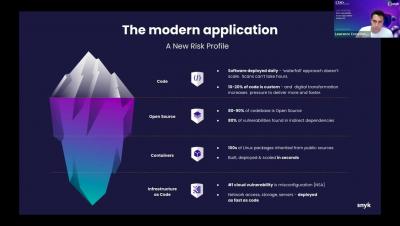
The adoption of infrastructure-as-code and configuration-as-code is soaring with the rising popularity of technologies like Kubernetes and Terraform. This means that designing and deploying infrastructure is a developer task, even if your “developer” is an infrastructure architect, and, just like application code, configurations can use test-driven methodologies to automate security prior to deployment.

OWASP Top 10: Using Components with Known Vulnerabilities Security Vulnerability Practical Overview

If you know about a vulnerability, you can be certain that adversaries also know about it – and are working to exploit it. It sounds like a no-brainer; but using components with known vulnerabilities still makes #9 in the current OWASP list of the ten most critical web application security risks.

1Password Secrets Automation

Announcing 1Password Secrets Automation. It’s the 1Password you know and love, now for all your company secrets. 1Password protects secrets like logins and credit cards. Secrets Automation protects secrets in your company infrastructure – like API tokens, application keys, and private certificates – and supplies them when and where they’re needed.