Security | Threat Detection | Cyberattacks | DevSecOps | Compliance

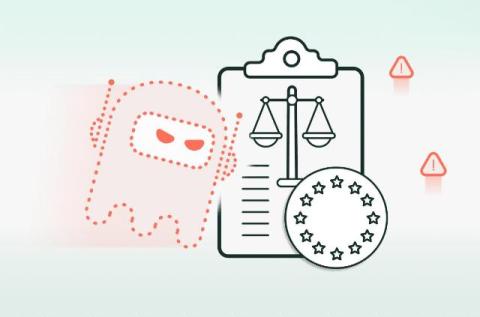
NIS2 vs DORA: Your Complete EU Cybersecurity Compliance Guide

By January 2025, over 160,000 EU organizations became subject to new cybersecurity regulations—NIS2, DORA, or both. If you operate in the EU or serve EU clients, you’re likely affected. This guide clarifies which regulations apply to you and what you must do to comply. Contents hide At-a-Glance Comparison Is Your Organization Affected? Question 1: Where Do You Operate? Question 2: What Sector Are You In? Question 3: What’s Your Company Size? What is NIS2?

Poland's Energy Sector Attack is a Wake-Up Call for Improving Edge Security

The Cybersecurity Infrastructure Security Agency (CISA) issued an alert this week based on an attack that struck Poland’s energy sector in late 2025. The attack compromised the operational technology (OT) and industrial control systems (ICS) in 30 renewable energy and heating plants, impacting 500,000 people and also that nation’s manufacturing sector.

Why Cyber Security Budgets Fail (And How to Fix Them)

Organisations are investing heavily in cyber security, with global spending on cyber security products and services projected to reach approximately $213 billion in 2025 and expected to grow further to around $240 billion by 2026. Yet, a persistent paradox remains: despite escalating budgets, the threat landscape continues to evolve, and data breaches and cyber attacks are becoming more sophisticated and prevalent.

How Cato Turns Identity Noise Into High-Confidence Detections

Jeremy, the Head of IT, thought it was a normal Monday until his help desk was overwhelmed with login complaints. 37 employees couldn’t log in. Password resets were happening that nobody could explain, and some devices seemed to vanish from the identity directory. The worst part was that the identity logs did not show a clear break-in. There was no obvious malware and no dramatic spike, only routine-looking admin activity.

The Credential Stuffing Fix: Stop Bot Attacks Without Frustrating Real Users

Login abuse is one of the common types of cyberattacks. It happens quietly, often showing up as a spike in failed sign-ins or customers locked out of their accounts. On the surface, these events look routine. In reality, they are usually early signs of automated attacks targeting login systems. This pattern is commonly known as credential stuffing. In this method, attackers use automation to test large volumes of stolen usernames and passwords across multiple services.

A 101 Guide to Web Application Security

Web application security is the prevention and protection of web applications through protocols and processes implemented to ensure a cyber threat and vulnerability-free web environment. Modern applications need to handle sensitive customer data, financial transactions, and proprietary business data, as most of the world has transitioned to digital business. As a result, these systems have been prime targets for various attackers seeking to exfiltrate data, disable services, or gain access to the systems.

Target Higher Education: Major University Data Breaches in 2025

In 2025, universities in the United States and Australia found themselves squarely in the crosshairs of persistent and evolving cyber threats. Higher education institutions manage highly sensitive personal information, financial details, healthcare records, and research data, making them prime targets for sophisticated attackers, ransomware gangs, and even hacktivists. As cybercrime escalates globally, the education sector is facing some of its most disruptive and consequential breaches in years.

What Is SCIM Provisioning and How It Works in Shopify

SCIM provisioning, or System for Cross-Domain Identity Management provisioning, is a standardized way to automate the process of creating, updating, and removing user accounts across multiple applications. Instead of manually adding or deleting users in each platform, SCIM provisioning ensures that any change made in one system is instantly reflected in all connected systems. This keeps user data consistent, reduces admin workload, and improves security.

Public Wi-Fi vs Secure Mobile Data: What Remote Workers Need to Know

You can work from almost anywhere today, cafés, airports, hotels, even park benches. Free public Wi-Fi makes it easy to jump online fast. But is it really safe? Many remote workers don't think about security until something goes wrong. One weak network can expose emails, client files, passwords, and payment details in minutes. On the other hand, secure mobile data offers more control and privacy-but may cost more. So which option should you trust with your work? In this guide, we'll break down the real risks, clear up common myths, and help you choose the safest connection for your remote setup.