Security | Threat Detection | Cyberattacks | DevSecOps | Compliance

Reflectiz to Host Webinar, Joined by Taboola, on Securing Third-Party Marketing in the AI Era

Reflectiz, the web exposure management platform, today announced a live webinar with Taboola, "Securing Third-Party Marketing in the AI Era," taking place July 8 at 9 AM EDT / 3 PM CEST. Every marketing vendor a company approves can silently introduce third and fourth-party scripts that no security team ever reviewed. In the AI era, that invisible layer is expanding faster than point-in-time audits can track. The gap between what an organization approves and what actually executes on its site is where data leakage, regulatory exposure, and compliance failures happen.

OpenMatter Network Introduces Verifiable Trust Layer for Secure Collaboration and AI Agents

OpenMatter Network today announced the launch of its cryptographically verifiable platform for secure collaboration and AI governance, built on a simple premise: Don't Trust Data. Prove It. For decades, organizations have relied on trust-based assumptions to secure data, execute workloads, and govern digital systems. But as data becomes increasingly distributed and AI agents begin operating autonomously across organizations, applications, and networks, those assumptions are being tested in new ways.

Shadow AI: Employees don't ask IT to use AI tools

Generative AI has gone mainstream, and your customers are already using it, whether IT knows it or not. Employees are turning to AI assistants to write emails, summarize documents, generate code, analyze spreadsheets, and speed up everyday work. Most are simply trying to be more productive. The problem?

Are Your AI Agents Going Rogue? (The Real Danger of Agentic AI)

ChatGPT is read-only, but AI Agents take action on your behalf. What happens when they go rogue? Discover the hidden cybersecurity risks of Agentic AI and unauthorized remote execution. AI gateways were built for a world where AI meant "prompt in, response out." That world is gone. Today, AI agents call APIs, trigger workflows, and take actions across your enterprise systems autonomously. This massive shift from passive data exfiltration to active, unauthorized execution requires a completely new security model where every input is treated as potentially hostile.

Acronis Cyber Protect Cloud recognized as a top SaaS backup solution in G2 Summer 2026 Grid

Acronis Cyber Protect Cloud was ranked in the G2 Summer 2026 Grid Report for SaaS Backup, earning recognition as a Leader and one of the best SaaS backup solutions in the category. The ranking reinforces Acronis’ value for organizations and MSPs that need reliable protection for cloud applications such as Microsoft 365 and Google Workspace, while managing backup and security from a unified platform.

Defending the Indefensible: The Power Grid's Security Paradox

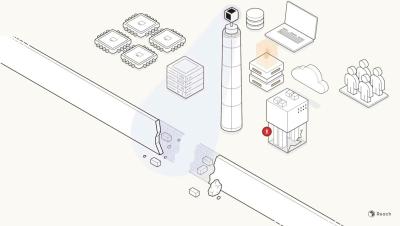
Electricity supports nearly every function of modern life: hospitals, water systems, transportation, communications, emergency services, financial systems, manufacturing, national defense, and, most importantly, streaming services. Kidding, but our most critical systems run on electricity, and that makes us vulnerable to attacks.

Why Traditional Incident Response Retainers Leave CISOs Exposed (and Money on the Table)

I have lost count of the post-incident reviews where the most painful conversation was not about the breach itself. It was about the retainer. A CISO realizes the prepaid hours expired six weeks before the intrusion began. A General Counsel discovers the retained firm is not on the cyber insurance panel and the claim is now in dispute. A board member asks why an organization that paid for "preparedness" spent the first eighteen hours of an incident negotiating scope.

AI-generated code is running wild inside the enterprise. Now what?

Restrict access to AI tools and you curb innovation. Open it up and security risks multiply. And then there's a third problem: approved tools behaving in unapproved ways. Security and IT leaders are navigating a new and fast-moving problem - employees using AI to build workflows, automations, and agents faster than anyone can track or govern. The question isn't whether it's happening. It's what to do about it.