Security | Threat Detection | Cyberattacks | DevSecOps | Compliance

The latest News and Information on Security Incident and Event Management.

AI is a NEW Gold Rush But Token Burn is STUPID! #podcast #cybersecurity

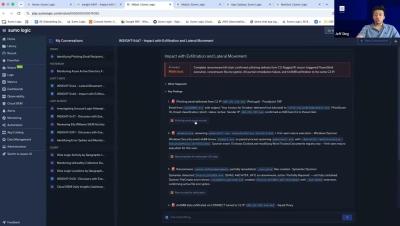
On this episode of Masters of Data, Adam White and David Girvin dig into Sumo Logic's freshly launched compliance apps for Claude, ChatGPT, and LiteLLM, and why your IT team will want to pay attention before the token bill arrives. We unpack how enterprises can move beyond the "AI black hole" era of shadow IT and actually get eyes on who is using what, how much it is costing, and whether any of it is moving the needle.

Centralized Log Management: Guide, Compliance & Blueprint

A security alert rarely fails because the team lacks data. It fails because the data is scattered. At 2 a.m., that usually looks familiar. The firewall has one timestamp format. The domain controller has another. The cloud console keeps the event you need behind three menus. The application server writes plain text that only one engineer knows how to read.

HIPAA Compliance Automation: Roadmap for CISOs 2026

Most healthcare security teams don't start thinking about HIPAA automation because they love compliance tooling. They start when another audit request lands, someone asks for six months of access reviews, policy attestations are out of date in three different folders, and the security team spends a week reconstructing evidence that should already exist. The problem isn't that teams don't understand HIPAA.

Agentic SOCs: The public sector's new AI cybersecurity defense

Adversaries are using AI to launch cyber attacks in record time, forcing security teams to measure responses in seconds instead of hours or days. Detecting these attacks is increasingly difficult. Phishing campaigns built by large language models (LLMs) achieve click-through rates 4.5x higher than traditional methods.1 Public sector organizations are at an inflection point with cybersecurity. Most security stacks in place today weren’t built for this level of speed.

Network Device Monitoring: A Complete 2026 Guide

A lot of teams are in the same spot right now. Users say the VPN feels unstable, finance reports timeouts in a cloud app, a firewall throws intermittent alerts, and nobody can tell whether the problem is congestion, a misconfigured interface, a failing device, or something hostile moving through the network.

The Price Tag Is Not the Price

Most security platform comparisons begin and end with the wrong number. Two vendors submit proposals. One comes in lower. Finance notes the delta, flags the savings, and the conversation shifts. What rarely makes it into that comparison is everything that determines what the platform actually costs once deployed, staffed, scaled, and operating effectively in production. That gap between sticker price and real cost is where security investment decisions quietly go wrong.

The New CISO Ep. 146 - Eric O'Neill | Rogue Agents: The New Era of AI Insider Threats (Part 2)

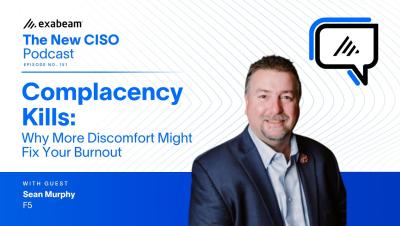
What happens when an AI agent inside your company starts behaving like an insider threat? In part two, Steve Moore picks the thread back up with former FBI operative Eric O'Neill to explore how agentic AI is rewriting cybersecurity, the legal traps that follow a breach, and why the modern CISO must think like a spy hunter.

How to overcome data gravity and accelerate AI security in the SOC

Security teams ingest massive volumes of telemetry from endpoints, cloud workloads, identity providers, and network controls. The goal is faster threat detection and shorter incident response times. But the reality is that all of this data becomes harder to move, slower to query, and messier to analyze as it grows. That's data gravity, and it's the biggest barrier to effective AI in cybersecurity.

Where Should Humans Sit in AI-Driven Cybersecurity?

There is a huge amount of excitement right now about AI and security operations. Across the industry, we are seeing rapid innovation in areas such as behavioural analytics, AI-assisted investigation, and increasingly agent-based capabilities designed to help security teams process large volumes of activity more effectively. Security teams need that help. The scale of alerts, identities, and telemetry they must manage today has grown far beyond what humans alone can realistically handle.

Protecting critical infrastructure in the AI era: It starts with data

In the public sector, it’s not uncommon for disruptions of critical infrastructure to ripple outward and wreak major havoc on systems and communities whether the cause is a technical issue, a natural disaster, or a cyber attack. As critical infrastructure becomes more connected through distributed systems and IoT devices, the attack surface continues to expand.