Security | Threat Detection | Cyberattacks | DevSecOps | Compliance

Your API Is the New Titanic (Iceberg Already Here) #apisecurity #cybersecurity #riskmanagement #api

The Titanic didn't hit the iceberg by accident. Organizations hit the API security iceberg for the same reason: they didn't see it coming. Your API iceberg consists of: Public APIs — for customers (SaaS, partners, third-parties) Private APIs — internal infrastructure (larger companies = larger insider threat surface) Partner APIs — for ecosystem integration AI APIs — the new frontier (and the most dangerous)

$170k Gone in One Day - API Paid Out Money Itself #apisecurity #cybersecurity #fraud #api #ai

This isn't a data leak. This is direct financial loss. The case: Flex Pay (payment processor in India) The vulnerability: An API flaw allowed unauthorized payouts The impact: $170,000 vanished in a single day Why this matters: Most CISOs focus on data breaches. But some APIs control MONEY. If that API is vulnerable, the attacker doesn't steal data—they drain your accounts. Attackers aren't always after data. Sometimes they're after money. And financial APIs are often the most neglected from a security perspective.

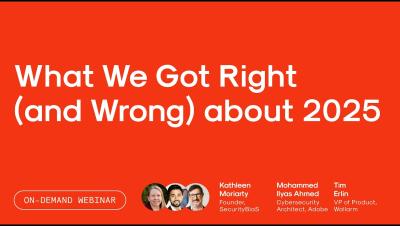
What We Got Right (and Wrong) about 2025

Watch now for a clear and candid look back at the predictions made for 2025 by Wallarm and by other voices across the industry. During the session, we revisit what people expected to happen in cybersecurity, API security, and the broader technology space, and compare those expectations with what actually unfolded throughout the year.

57% of Companies ALREADY BREACHED Through APIs (Your Company Is Probably Next) #apisecurity #api

82% of companies are going API-First in 2025 But here's the troubling fact: 57% of them have ALREADY been breached through APIs. Why? Because they're going API-first without a solid API security strategy. It's like buying a sports car and forgetting the insurance. Organizations are racing toward digital transformation while threat actors simply walk through the open door. Threat actors love when you're API-first without a good security program. It makes their job easier.

Bots vs. Barcodes: The Resource Quota Failure. #ticketmaster #bla #ratelimiting #businesslogic

The infamous Ticketmaster case highlights BLA 1: Resource Quota Violation. Attackers used bots for mass purchasing and employed ingenious evasion: they reverse-engineered the barcoding logic to rotate and authenticate tokens, bypassing security controls. The core failure? Flawed rate limiting and business logic expiration. You must protect your inventory and your purchasing flows as if they were financial assets.

The Easiest Way to Get Hacked: Open Introspection. #graphql #businesslogic #apisecurity #rbi

The RBI incident (Burger King, Tim Hortons) proves that BLA often results from a cascade of simple flaws, not one complex attack. The key mistake: GraphQL Introspection was enabled. This gave the attacker the full API blueprint - the map needed to find the open registration validation flaw and execute a massive data leak. Action Item: If you have GraphQL, check your production settings now. Disable Introspection. Don't hand the attacker the map to your castle!

If You Can't Block It, You Don't Secure It. #mitigation #cyberdefense #apisecurity #blocking

Detection is information; Blocking is mitigation. For Business Logic Abuse, simple detection alerts are not enough. Your tools must be able to actively block those manipulative, stateful attacks in real-time. Furthermore: Stop "one-and-done" security testing! You must continuously tune your testing by adopting an adversary's perspective. Tune your defense as constantly as attackers tune their exploits.

CISO Guide: 3 Steps to Stop Business Logic Abuse in Design #ciso #businesslogic #apisecurity

Fixing Business Logic Abuse starts at the whiteboard, long before code is written. Here is the three-step defense: Map Critical Workflows: Visualize data flows and state transitions for all high-value features. Implement Adversary Emulation: Integrate the hacker's mindset into your process to find flaws early. Test Constantly: Refine and re-test the logic at every phase of the CI/CD pipeline.

CISO Workshop on API Threat Modeling: How to Use STRIDE to Predict, Prevent, and Protect

Threat modeling is a critical function for effective cybersecurity and threat models must adapt to emerging threats. As API deployments grow across organizations, cybersecurity teams need to extend their threat modeling to include the API attack surface. In this webinar, we'll examine threat modeling best practices for APIs, focusing on the STRIDE methodology. Attendees will learn.

The Business Logic Paradox: Hackers Are Your Best Architects #businesslogic #cybersecurity #api

Here is the truth: To exploit Business Logic Abuse, hackers must understand your application flow holistically. Your individual developers focus on clean code within their one block. The attacker studies the entire blueprint and finds the gaps and missing connections between those blocks. They are committed-spending months on reconnaissance to know your product better than your own team. You must adopt the attacker's mindset in your design stages!