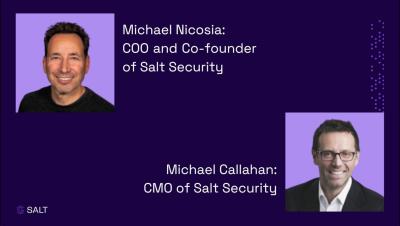
We're on the last leg of the customer journey in API Security in Episode Five of Founder's Corner! Listen in on Salt’s CEO, Roey Eliyahu, and CMO, Michael Callahan, as they dive deeper into Threat Protection.
Continuing the API security journey with Episode 4 of Founder’s Corner! Join Salt’s CEO, Roey Eliyahu, and CMO, Michael Callahan, in their deep dive into the topic of Posture Governance. Be proactive in your API Security.
Welcome to Episode Three of Salt Security’s Podcast Series: Founder’s Corner Salt’s CEO and Co-founder, Roey Eliyahu, talks with Salt’s CMO, Michael Callahan, about the first step of the customer journey in API Security: Discovery (also known as the crawl stage). They dive into topics around Discovery (as well as Salt’s phases of Discovery), Data Security, Shadow and Zombie APIs, GenAI, and how Salt is utilizing AI.
Welcome to Episode Two of Salt Security’s Podcast Series: Founder’s Corner This episode features Salt's COO and Co-founder, Michael Nicosia, as he defines the main steps of the customer journey in API Security. Hosted by Salt’s CMO, Michael Callahan.
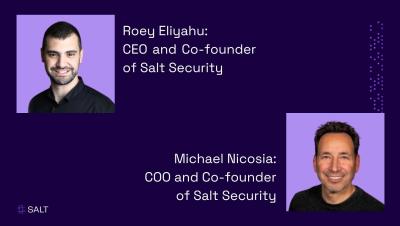
Welcome to Episode One of Salt Security’s New Series: Founder’s Corner This series will share insights and conversations from founders on markets, technology, trends, and other interesting topics of the day. Starting off the series with Salt’s Co-Founders, Roey Eliyahu and Michael Nicosia, as they talk about how they became founders, what inspired them to start Salt Security, where the name came from, and the future of API Security.
Join Nick Rago (VP of Product Strategy at Salt Security) and Claudio Acquaviva (Software Architect of Kong Inc.) in this informative webinar (live April 11). They discuss what being API-first really means, the essentials to success, and walkthrough the lifecycle of an API from design to deployment and how combining Salt Security with Kong through that API lifecycle can help provide a risk-free API-first journey.
As organizations increasingly embrace APIs, a new challenge has emerged - the complexity of managing, securing, and understanding the sprawling API landscape within an organization. To tackle these concerns head-on, Salt Security has pioneered the industry's first API posture governance engine and a suite of advanced capabilities designed to bring clarity, security, and efficiency to your API ecosystem.