Security | Threat Detection | Cyberattacks | DevSecOps | Compliance

SOX Compliance Audit Preparation And Checklist

SOX Compliance can be quite overwhelming for those looking to achieve compliance. Organizations need to prepare well for the audit in order to ensure they meet all the requirements and achieve compliance. So, here is an opportunity for organizations like you to learn about the critical aspects of SOX Audit and ensure a hassle-free SOX Compliance Journey.

GDPR & HIPAA Compliance- Mapping the Similarities and Differences

Is your organization looking to achieve both HIPAA and GDPR Compliance? Well, believing that achieving compliance with one will automatically ensure compliance with the other regulation isn’t really true. So, based on this notion, if you are looking to achieve compliance with both HIPAA and GDPR, then here is an interesting webinar video that you should watch to get clarity on this aspect.

A Complete Guide on SOC2 Audit Process

SOC2 Audit can be a daunting task, especially with the detailed assessment process that it involves. Organizations need to prepare for the audit to ensure they meet the requirements and pass the audit. So, for the benefit of our viewers and organization who plan to go through SOC2 Audit, VISTA InfoSec conducted an informative webinar on “A Complete Guide on SOC2 Audit Process”. Watch the video and learn the knack of navigating effortlessly through the audit process and ensuring a successful Audit and SOC2 Attestation.#soc2 #soc2audit

PCI DSS Requirement 1: Summary of Changes from Version 3.2.1 to 4.0 Explained

With the launch of the new PCI DSS 4.0 version, people are still trying to get a grip on the changes introduced and the requirements improvised in the latest version. So, explaining the changes in detail VISTA InfoSec is publishing a series of expert videos explaining each of the requirements of PCI DSS in detail. So, check out the first video that talks about Requirement 1 of the PCI DSS 4.0 version, explaining the updates in detail.#pcidss #pcidss4.0

CMMC 2 0 Compliance Understanding the Requirements

The new updated CMMC 2.0 version was released to improve the security standard and address the growing cyber risks in the industry. The latest version is updated in a way that the CMMC compliance evaluates the cyber security practices and processes, and certifies a contractor based on their ability to protect the Controlled Unclassified Information (CUI) and Federal Contract Information (FCI) within the supply chain system. Explaining in detail the new additions and changes introduced in CMMC 2.0 Compliance, VISTA InfoSec conducted an informative webinar on “CMMC 2.0 Compliance Understanding the Requirements”.

PCI DSS 4 0 Requirements Explained

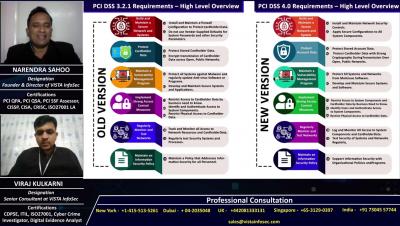
PCI DSS 4.0 update has made a huge buzz in the industry post its release. Organizations are still scrambling to understand the changes introduced and learn about the requirements of PCI DSS. So, explaining the updates and the PCI requirements in detail VISTA InfoSec conducted an informative webinar on ”PCI DSS 4.0 Requirements Explained”. Watch the video and gain insight into the key updates introduced by the PCI Council.

Managing GDPR Vendor Third Party Risk Management Across Supply Chain

Vendor Third-Party Risk Management is a major concern for organizations looking to achieve GDPR Compliance. EU GDPR is a stringent Data Privacy law that organizations are expected to comply with. So, even organizations outsourcing major parts of their data processing operations to third-party vendors need to ensure that their vendors are compliant.

What is the Difference between Masking & Truncation

PCI DSS Compliance is a payment card security standard that outlines stringent security requirements for protecting cardholder data. In the outlined 12 PCI Compliance Requirements, one of the Requirement 3.3 states that organizations need to “Mask PAN when displayed such that only personnel with a legitimate business need can see more than the first six/last four digits of the PAN. So, as a matter of best practice organizations adopt masking and truncation techniques for data security.

Strategies For Vendor Third Party Risk Management

Vendor Third-Party Risk Management is an essential part of most regulatory and compliance programs. Tracking and monitoring vendor risk are important as it helps businesses make critical business decisions and mitigate risk from time to time. As organizations mostly outsource some parts of their operations to vendors or third-party service providers, it has become mandatory in certain standards and regulations to establish Vendor third-party risk management as a part of the compliance process.