Security | Threat Detection | Cyberattacks | DevSecOps | Compliance

What is Safe Remediation in Check Point Exposure Management's Offering?

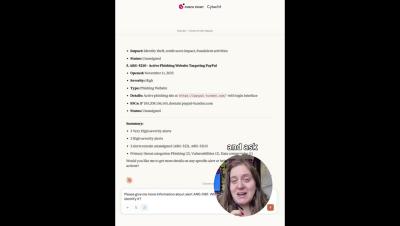
Safe Remediation is the process of turning validated exposure insights into coordinated, non-disruptive fixes across security controls ensuring teams can reduce risk quickly without breaking production. More specifically, Safe Remediation includes: Validation before enforcement Remediation without downtime Automated, coordinated action across controls Preemptive blocking of attacker infrastructure Safe-by-design automation Safe Remediation ensures that exposures are fixed quickly, automatically, and without operational risk – turning detection into trusted, validated action.

Is CTEM a framework or a solution?

CTEM, introduced by Gartner, was designed to address a critical gap in traditional vulnerability management: the broken flow between detection and remediation. While reports and alerts pile up, exposures often remain unresolved, leaving organizations at risk. CTEM organizes this process into five stages—Scoping, Discovery, Prioritization, Validation, and Mobilization—bringing structure to chaos. Technically, it’s a framework because Gartner never mandated a single solution to deliver all stages. Most vendors only cover one or two.

Attack Surface Management vs. Exposure Management: What Wins?

When Attack Surface Management (ASM) stops at discovery, teams drown in alerts, CVE lists, and noise. What’s exposed isn’t the same as what’s actively being weaponized—and without prioritization or built-in remediation, risk piles up fast. Exposure Management (EM) closes that gap. It merges threat intelligence, vulnerability context, and safe-by-design remediation into one continuous loop. Instead of “scan → report → wait,” EM delivers.

Why Consolidation is Key in Cybersecurity

This is not only important for Cyberint's bottom line, but also crucial to demonstrate to investors that we are spending responsibly. One of the problems that CFOs encounter frequently is product sprawl. Where teams are using separate solutions for different purposes, each with their own price tag. Many of these point solutions aren’t better than a consolidated product; if they were using one, the information shared would make the tool more valuable. Despite this product sprawl occurs. The same is true for cybersecurity products.