Security | Threat Detection | Cyberattacks | DevSecOps | Compliance

Microsoft 365 Security Series - Using Azure Active Directory to secure your Microsoft 365 Installation

Microsoft 365 (formerly Office 365) is a Software-as-a-Service (SaaS) that offers a cloud-based version of its popular software productivity suite, including MS Word, Excel, PowerPoint, Outlook, and OneNote. In contrast, Azure Active Directory (Azure AD) is an Infrastructure-as-a-Service (IaaS) that offers a cloud-based version of Active Directory to control identity management and access to virtual resources across an organization.

How Microsoft 365 - E5 Can Help Protect Your Organization Against Phishing Attacks

Microsoft 365 E5 is an enterprise cloud-based suite of Microsoft Office productivity apps combined with advanced voice, analytics, security, and compliance services. It is an upgrade over lower tiers E1 and E3. Though threat protection features are included in all Microsoft or Office 365 subscriptions, an E5 license provides some advanced features.

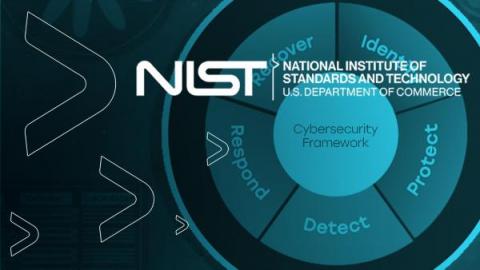
Five Things to Know About the NIST CSF 2.0

The National Institute of Standards and Technology’s (NIST) Cybersecurity Framework (CSF) is undergoing a major update. Originally released in 2014, the NIST CSF is one of the most widely used cybersecurity frameworks helping organizations understand and manage their cybersecurity risk. NIST is currently updating the CSF to align with the latest cybersecurity trends and best practices, with the expected release date of the CSF 2.0 slated for the first quarter of 2024.

What Is Business Profile Hijacking & How You Can Protect Your Business

Search engines automatically create a business listing based on publicly available information, but they permit business owners to override this automatic listing by publishing their own. This listing may include business hours, slogan, geographical location, a website link, contact information, reviews, and images. Business owners are also permitted to respond to reviews. Recently, Sedara has seen incidents in which the attacker claims control over a business listing that they do not own.

FTC's New Deadline for the Gramm-Leach-Bliley Safeguards Rule

The Gramm-Leach-Bliley Act (GLBA) applies to many types of financial institutions, like banks, savings and loans, credit unions, insurance companies and securities firms. It requires those organizations to explain their information-sharing practices to their customers and to protect sensitive data. On November 15, 2022, The FTC announced a six-month extension for companies to comply with data security provisions in the GLBA. The new deadline is June 9, 2023.

What is MDR?

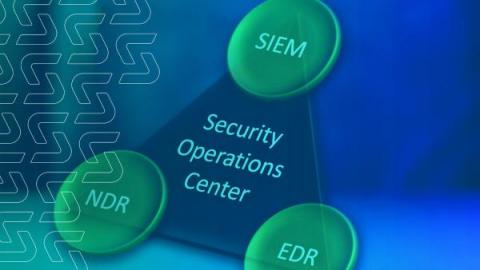
MDR (Managed Detection and Response) is a type of cybersecurity service that combines advanced threat detection technologies with human expertise to provide continuous monitoring and rapid response to cyber threats. These services involve a team of cybersecurity experts who monitor an organization’s network and endpoints in real-time using advanced security tools, such as threat intelligence, machine learning, and behavioral analytics.

Sedara Named to MSSP Alert's Top 250 MSSPs List for 2022

The list and research identify and honor the top MSSPs (managed security service providers) worldwide. The rankings are based on MSSP Alert’s 2022 readership survey combined with the site’s editorial coverage of MSSP, MDR and MSP security providers. The sixth-annual list and research track the MSSP market’s ongoing growth and evolution.

The Top 5 Security Breaches of 2021

Has your business experienced one of the Top 5 Security Breaches of 2021? Sadly, many have. As businesses become more reliant on technology, the risk of becoming a victim of a data breach only increases. Unfortunately, the United States exceeded the previous record of cyber attacks in a single year. In 2017, we saw a whopping 1,529 data breaches – compared to the 1,862 data breaches we saw last year.

The Federal Trade Commission Announces New Updates

The Federal Trade Commission (FTC) put significant updates into effect on January 10th, 2022, to strengthen the Standards for Safeguarding Customer Information (Safeguards Rule) under the Gramm-Leach-Bliley Act (GLBA) to protect consumer data collected by financial institutions. The amendment applies to nonbank financial institutions and requires them to develop, implement, and maintain a comprehensive cybersecurity program in order to protect their customers’ information.