Security | Threat Detection | Cyberattacks | DevSecOps | Compliance

Using Coralogix to Gain Insights From Your FortiGate Logs

FortiGate, a next-generation firewall from IT Cyber Security leaders Fortinet, provides the ultimate threat protection for businesses of all sizes. FortiGate helps you understand what is happening on your network, and informs you about certain network activities, such as the detection of a virus, a visit to an invalid website, an intrusion, a failed login attempt, and myriad others. This post will show you how Coralogix can provide analytics and insights for your FortiGate logs.


Why You Need to Closely Monitor Your Exchange Servers

Monitoring your on-prem and hybrid cloud infrastructure has always been important. With an ever-growing rise in cyber attacks, zero-day exploits, and insider threats, keeping track of your infrastructure has a renewed level of significance. Microsoft Exchange is one of the most prominent enterprise systems in use today, with both cloud and on-prem iterations.

What's the Most Powerful Tool in Your Security Arsenal?

Trying to work out the best security tool is a little like trying to choose a golf club three shots ahead – you don’t know what will help you get to the green until you’re in the rough. Traditionally, when people think about security tools, firewalls, IAM and permissions, encryption, and certificates come to mind. These tools all have one thing in common – they’re static.

DevSecOps vs DevOps: What are the Differences?

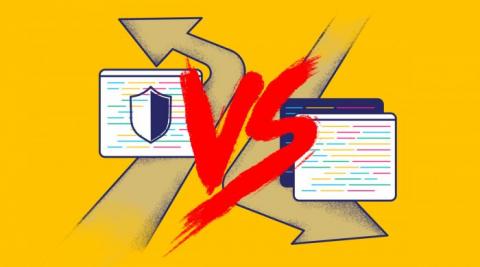
The modern technology landscape is ever-changing, with an increasing focus on methodologies and practices. Recently we’re seeing a clash between two of the newer and most popular players: DevOps vs DevSecOps. With new methodologies come new mindsets, approaches, and a change in how organizations run. What’s key for you to know, however, is, are they different? If so, how are they different? And, perhaps most importantly, what does this mean for you and your development team?

Best Practices for Writing Secure Java Code

Every Java developer should follow coding standards and best practices to develop secure Java code. It is critical your code is not vulnerable to exploits or malicious attacks. In recent times, even big organizations like eBay, the CIA, and the IRS have fallen victim to vulnerabilities in their applications that have been discovered and exploited by attackers. The following guidelines provide a solid foundation for writing secure Java code and applications.

Network Security: The Journey from Chewiness to Zero Trust Networking

Network security has changed a lot over the years, it had to. From wide open infrastructures to tightly controlled environments, the standard practices of network security have grown more and more sophisticated. This post will take us back in time to look at the journey that a typical network has been on over the past 15+ years. From a wide open, “chewy” network, all the way to zero trust networking. Let’s get started.

Stop Enforcing Security Standards. Start Implementing Policies.

In days gone by, highly regulated industries like pharmaceuticals and finance were the biggest targets for nefarious cyber actors, due to the financial resources at banks and drug companies’ disposal – their respective security standards were indicative of this. Verizon reports in 2020 that, whilst banks and pharma companies account for 25% of major data breaches, big tech, and supply chain are increasingly at risk.

5 Common Elasticsearch Mistakes That Lead to Data Breaches

Avon and Family Tree aren’t companies you would normally associate with cybersecurity, but this year, all three were on the wrong side of it when they suffered massive data breaches. At Avon 19 million records were leaked, and Family Tree had 25GB of data compromised. What do they have in common? All of them were using Elasticsearch databases. These are just the latest in a string of high profile breaches that have made Elasticsearch notorious in cybersecurity.

SIEM Tutorial: What should a good SIEM Provider do for you?

Modern day Security Information and Event Management (SIEM) tooling enterprise security technology combine systems together for a comprehensive view of IT security. This can be tricky, so we’ve put together a simple SIEM tutorial to help you understand what a great SIEM provider will do for you. A SIEM’s responsibility is to collect, store, analyze, investigate and report on log and other data for incident response, forensics and regulatory compliance purposes.