CTI Roundup: Hackers Use ChatGPT Lures to Spread Malware on Facebook
CISA issues a joint advisory on Russia’s Snake malware operation, hackers use ChatGPT lures to spread malware on Facebook, and a new phishing-as-a-service tool appears in the wild.


CISA issues a joint advisory on Russia’s Snake malware operation, hackers use ChatGPT lures to spread malware on Facebook, and a new phishing-as-a-service tool appears in the wild.
The rise of low-code/no-code platforms has empowered business professionals to independently address their needs without relying on IT. Now, the integration of generative AI into these platforms further enhances their capabilities and eliminates entry barriers. However, as everyone becomes a developer, concerns about security risks arise.
As containerized applications become increasingly complex, it can be challenging to design and execute an effective container security strategy. With the growing trend towards cloud-based applications and services, cyber criminals are also evolving their attack techniques, making container security solutions more critical than ever. Calico provides robust detection capabilities to detect known and zero-day container and network-based attacks.
For a competitive advantage, transform agent, customer, and employee experiences with proactive incident management via self-service software management and real-time incident remediation.
There’s a new cybersecurity challenge threatening the identity processes and systems of organizations worldwide: identity fatigue.
As part of our continued commitment to making the world a safer place, SecurityScorecard recently partnered with the Transportation Security Administration (TSA). This partnership will enable the agency to more accurately monitor and assess the cyber health of the nation’s pipeline, rail, and aviation transportation systems.
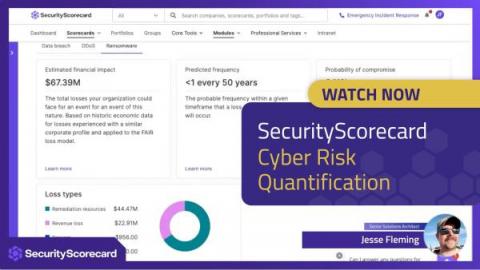
Cyber risk is not just a security issue, it’s also a business issue. When security leaders and their businesses don’t see eye to eye, resources get misallocated, expectations aren’t met, and businesses are left unprepared to face threats. SecurityScorecard launched its Cyber Risk Quantification product in April 2022, allowing customers to quantify the financial impact of cyber risk and help facilitate collaboration and communication among business stakeholders.
2023 started much the same as the year before, with state legislatures producing an impressive list of privacy-related bills in the U.S. Twenty-three states introduced comprehensive privacy legislation, with many more targeted privacy bills being considered as well. Iowa's governor signed the sixth comprehensive privacy law to close out the quarter.