Security | Threat Detection | Cyberattacks | DevSecOps | Compliance

ISO 9001 meets information security: integrating quality and security management

We’ve watched it happen more than once: A company nails its ISO 9001 audit, celebrating streamlined processes, detailed documentation, and measurable quality goals. Then, a quarter later, they’re scrambling to respond to a phishing incident that exposed customer data – because security lived in a separate silo, untouched by all that operational rigor. At TrustCloud, we’ve seen that organizations that treat quality and security as separate tracks are missing a massive opportunity.

HIPAA compliance in multi-cloud environments: Challenges and solutions

For healthcare leaders navigating the digital transformation, the promise of multi-cloud environments is hard to ignore – more speed, more scale, more resilience. But in the shadows of innovation lies a regulatory tightrope. HIPAA wasn’t written with Kubernetes clusters or hybrid cloud policies in mind, yet today’s CIOs and CISOs must reconcile 1996-era law with 2025-era infrastructure.

Google knows you better than your spouse: The privacy crisis no one's talking about

There was a moment that caught me off guard. I was typing an email – just a routine reply – and as I started with “Thanks again for your time earlier today,” Gmail finished it for me, word for word. Not a helpful nudge. A perfect match. It knew. It had seen this phrase before. It had seen me before. That’s when it hit me: my data isn’t private. It’s just…predictable. For most people, this kind of automation is a convenience.

HITRUST vs. SOC 2: Which framework is right for your business?

Choosing between HITRUST and SOC 2 isn’t just a compliance decision – it’s a business one. We’ve seen companies burn time and money pursuing the wrong framework simply because “everyone else is doing it.” The right choice depends on who your customers are, what data you handle, and how much rigor you’re prepared to sustain. One size doesn’t fit all – and treating it that way is where most teams go wrong.

From manual to programmatic: Transforming risk registers for modern GRC

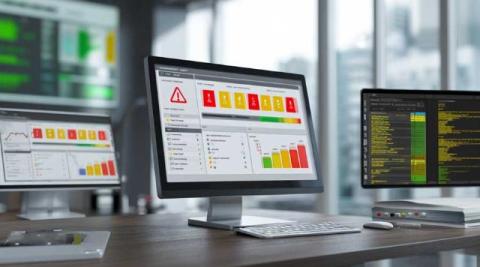
In this article Relying on manual risk registers is no longer a sustainable strategy. As organizations face more complex threats, regulatory shifts, and operational changes, static spreadsheets and disconnected documentation fall short. These manual methods often lead to inefficiencies, missed risks, and a lack of real-time visibility, hindering timely decision-making and exposing organizations to greater vulnerabilities.

Mastering RTO and RPO for bulletproof business continuity

In this article The hospital’s electronic health records system went dark at 2:47 AM on a Tuesday. By 6 AM, doctors were scrambling with paper charts while patients waited in emergency rooms across three facilities. The IT team had backup systems, sophisticated monitoring tools, and a disaster recovery plan that looked impressive on paper.

Data privacy in 2025: What to expect

As we advance into 2025, data privacy continues to be a critical area of focus for organizations worldwide. The accelerating pace of technological innovation, coupled with heightened consumer awareness and stricter regulatory frameworks, demands that technology leaders prioritize data protection. This article explores key trends shaping the future of data privacy and offers actionable insights for navigating this complex landscape.

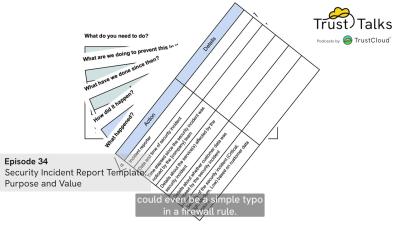
Security Incident Report Template | TrustTalks - Ep 34 | Security and GRC Podcast

This podcast focuses on a downloadable security incident report template, explaining its importance, use, and value in maintaining organizational security. A security incident report is a document that outlines the details of any security incident that occurs within an organization. This report serves as an official record of the incident and is used for documentation, analysis, and future prevention.

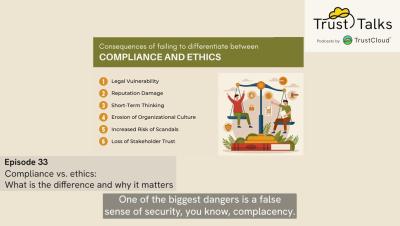
Compliance vs ethics | TrustTalks - Ep 33 | Security and GRC Podcast

This podcast focuses on the crucial difference between compliance (adhering to laws and regulations) and ethics (upholding moral principles) in business. It highlights the risks of prioritising one over the other, advocating for a balanced approach to foster a strong ethical culture. Several case studies illustrate the consequences of neglecting either compliance or ethics. It also offers strategies for integrating both into business practices to enhance reputation, reduce risk, and improve decision-making.

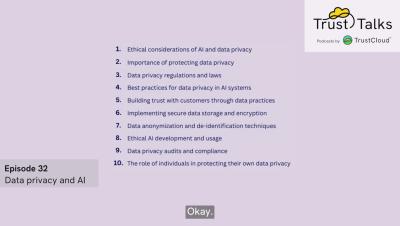
Data privacy and AI | TrustTalks - Ep 32 | Security and GRC Podcast

This podcast focuses on the ethical implications of AI’s data usage, emphasizing the importance of transparency, informed consent, and robust security measures. It discusses the ethical considerations and best practices for data privacy in the age of artificial intelligence (AI). It is a platform offering resources and tools for governance, risk, and compliance (GRC) and support for various compliance standards like GDPR, HIPAA, and ISO 27001, utilizing AI to streamline audit processes.

Data Governance 2025: Building Trust and Resilience | TrustTalks - Ep 31 | Security and GRC Podcast

This podcast focuses on how data governance is evolving, what the 2025 landscape looks like, and what enterprises need to do today to be future-ready. As enterprises march towards an AI-driven, hyper-connected digital future, the strategic importance of data governance is more critical than ever. In 2025, data will no longer just be an asset – it will be the foundation of trust, innovation, and resilience. Yet many organizations still treat data governance as a compliance checkbox rather than a competitive differentiator.

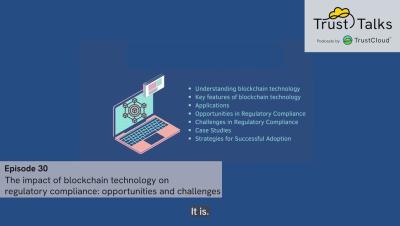
Impact of blockchain on regulatory compliance | TrustTalks - Ep 30 | Security and GRC Podcast

Navigating the intricate landscape of regulatory compliance has always been a challenge for businesses, but the rise of blockchain technology brings both unprecedented opportunities and formidable challenges. Blockchain, with its transparent and immutable ledger, promises to revolutionize how companies approach compliance by offering real-time audits, reducing fraud, and enhancing data security. However, embracing this innovation isn’t without its hurdles.

CMMC readiness: How AI-powered platforms accelerate DoD compliance

Defense contractors and organizations involved in Department of Defense (DoD) projects are facing growing pressure to comply with stringent cybersecurity standards. The Cybersecurity Maturity Model Certification (CMMC) represents a transformative initiative aimed at enhancing the security posture across the defense industrial base. As organizations embark on this compliance journey, AI-powered platforms are emerging as critical enablers to accelerate CMMC readiness.

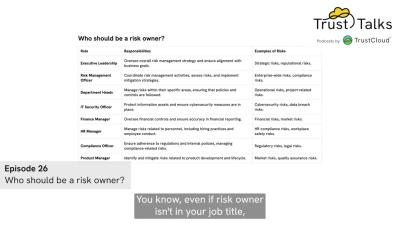
Who should be a risk owner? | TrustTalks - Ep 26 | Security and GRC Podcast

This podcast focuses on the roles and responsibilities of risk owners within an organisation’s risk management framework. It outlines key responsibilities, required skills and qualifications for effective risk ownership, and provides examples of who might fill this role (e.g., executive leadership, department heads).

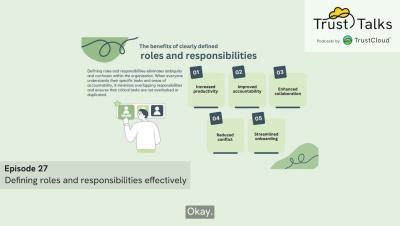
Defining roles and responsibilities effectively | TrustTalks - Ep 27 | Security and GRC Podcast

This podcast focuses on the importance of clearly defined roles and responsibilities for enhanced organisational efficiency, accountability, and collaboration, offering practical steps and tools for implementation. It showcases TrustCloud resources, including training materials, forums, and a GRC Launchpad offering numerous guides on governance, risk, and compliance (GRC), security, and privacy topics focusing on improving organisational effectiveness through better structure and understanding of GRC principles.

Why are MSAs required for security compliance? | TrustTalks - Ep 28 | Security and GRC Podcast

This podcast focuses on Master Service Agreements (MSAs) and their importance for security compliance, explaining their components, benefits, and use in mitigating risks. It is a comprehensive guide and resource hub for navigating GRC and achieving compliance.

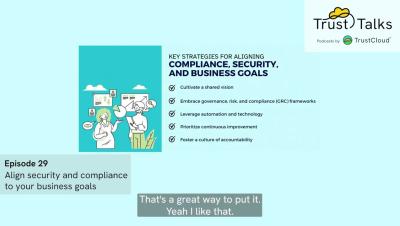
Align security and compliance to your business goals | TrustTalks - Ep 29 | Security and GRC Podcast

This podcast focuses on aligning business goals with compliance and security. It details strategies for successful alignment, including using GRC frameworks, automation, and continuous improvement. Numerous best practices and case studies illustrate how to integrate these elements effectively, ultimately fostering a culture of accountability and enhancing organisational success. Tools and resources are also highlighted to support this integration. The pursuit of success is a multifaceted endeavour.

ISO 27001 beyond IT: Building a culture of security across the enterprise

The digital era has spurred organizations to rethink how they protect sensitive data, necessitating a robust and holistic approach to security. Although ISO 27001 is widely recognized as a framework for managing IT security, forward-thinking leaders are discovering that its principles can be extended far beyond IT departments.

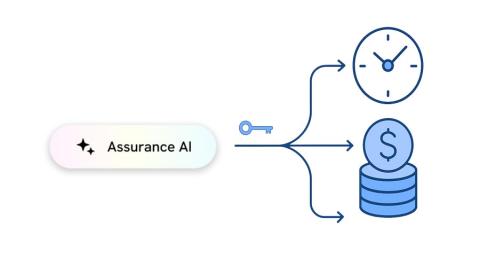
Unlocking time and budget for teams with security automation

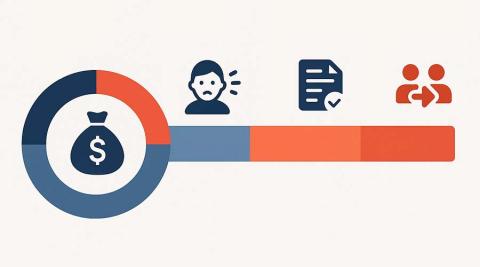
As security threats become increasingly sophisticated and the landscape of cyber attacks evolves, organizations are compelled to reexamine their investments and strategies in cybersecurity. One critical lever for improving security effectiveness and efficiency is automation. When implemented correctly, automation enables security teams to unlock significant time and budget savings, making them more agile, resilient, and proactive in combating threats while reducing the burden of routine tasks.

Introducing the TrustCloud AI Chatbot: Instant answers, no guesswork

At TrustCloud, we know that great tools aren’t just about features – they’re about how fast and confidently your team can use them. That’s why we’ve just rolled out something we’re really excited about: an AI chatbot built to give TrustCloud customers instant answers from across our product guides, security documentation, and GRC best practices library inside the TrustCommunity. This isn’t just any chatbot.

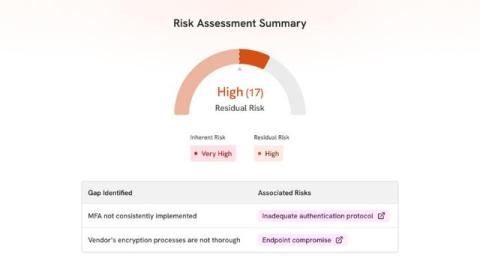
Predictive risk assessment: Preventing security incidents

Organizations are facing an increasing array of security challenges these days that can disrupt operations, lead to significant financial losses, and damage reputations. Traditional reactive security measures are no longer sufficient. Instead, a strategic focus on proactive security is essential. Predictive risk assessment stands at the forefront of modern security approaches, offering a comprehensive framework for identifying vulnerabilities before they are exploited.

Leveraging API-driven security platforms for hybrid enterprises

Hybrid enterprises, defined by the coexistence of on-premises systems and cloud-based solutions, have become the norm in today’s digital economy. The evolution of IT infrastructure and the widespread adoption of cloud environments have dramatically broadened the attack surface. Enterprises face persistent threats including advanced persistent threats (APTs), data breaches, ransomware attacks, and insider risks.

Automating application and security risk assessments for ServiceNow & Splunk customers

Last week, our CEO, Sravish Sridhar, announced that TrustCloud secured $15 million in new funding from ServiceNow Ventures, Cisco Investments, and others. In his words, the raise “validates the urgent need to modernize GRC for enterprise CISOs and unify CISOs and chief risk officers around a shared view of risk.” The new capital accelerates our mission to automate governance, risk, and compliance for every security team – no matter which system of record they live in.