Security | Threat Detection | Cyberattacks | DevSecOps | Compliance

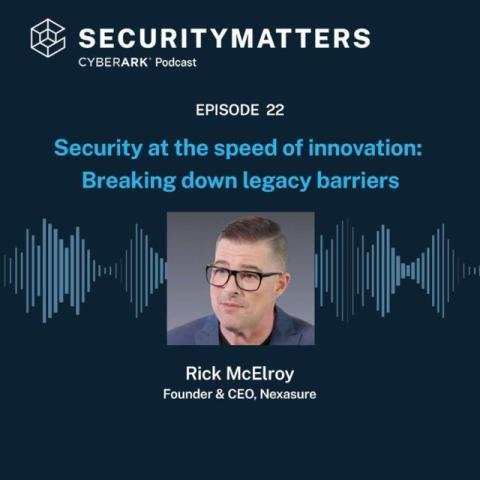
EP 22 - Security at the speed of innovation: Breaking down legacy barriers

How are defenders supposed to keep up when attackers move at the speed of AI? In this episode of Security Matters, host David Puner welcomes Rick McElroy, founder and CEO of Nexasure, for a candid conversation about cybersecurity’s breaking point. Together, they unpack the realities of defending organizations in an era of identity sprawl, machine risk, agentic AI, and relentless automation. Rick shares hard-won insights from decades on the front lines, challenging the myth of perfect defense and revealing why identity remains at the root of most breaches.

EP 22 - Security at the speed of innovation: Breaking down legacy barriers

How are defenders supposed to keep up when attackers move at the speed of AI? In this episode of Security Matters, host David Puner welcomes Rick McElroy, founder and CEO of Nexasure, for a candid conversation about cybersecurity’s breaking point. Together, they unpack the realities of defending organizations in an era of identity sprawl, machine risk, agentic AI, and relentless automation.
Vibe check your vibe code: Adding human judgment to AI-driven development

Remember when open meant visible? When a bug in open-source code left breadcrumbs you could audit? When you could trace commits, contributors, timestamps, even heated 2:13 a.m. debates on tabs versus spaces? That kind of openness created confidence in the code and made it possible to hold contributors accountable when issues arose. Today, as AI changes how code is created and shared, those familiar markers of trust and transparency are becoming harder to find.

The next identity frontier: Automating PKI and certificate management before the 47-day era arrives

Every organization operates on a foundation of identity. Whether it’s a person logging into an app, an API connecting to a service, or a container spinning up in the cloud, every interaction begins with authentication. But here’s the shift most organizations are only starting to catch up to: machines now outnumber people by more than 80 to 1. These workloads and devices all depend on digital certificates to prove who they are. Those certificates are their identities.

The CA/B Forum mandate: a catalyst for modernizing machine identity management

Modernization rarely begins without a catalyst. For organizations managing machine identities, the CA/B Forum mandate is driving a wave of change—transforming compliance pressure into momentum for lasting modernization. For more than a decade, organizations have recognized that their machine identity operations are fragile. Manual renewals, siloed ownership, and spreadsheet-driven workflows were never built for the speed and scale of modern digital business.

EP 21 - When attackers log in: Pausing for perspective in the age of instant answers

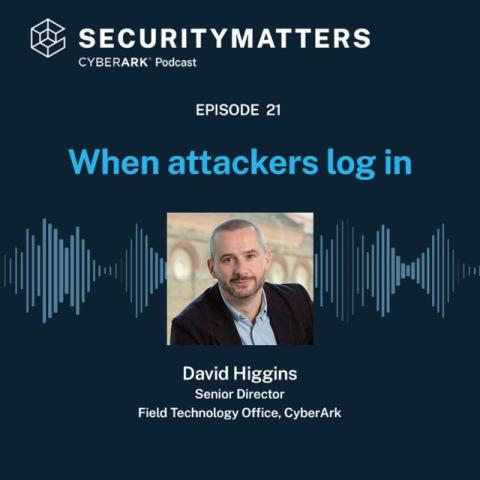
In this episode of Security Matters, host David Puner welcomes back David Higgins, senior director in CyberArk’s Field Technology Office, for a timely conversation about the evolving cyber threat landscape. Higgins explains why today’s attackers aren’t breaking in—they’re logging in—using stolen credentials, AI-powered social engineering, and deepfakes to bypass traditional defenses and exploit trust.

Identity security: The essential foundation for every CISO's 2026 cybersecurity strategy

When I first joined CyberArk, it wasn’t just about the company or the technology, but a belief. A belief that identity security is the foundation of cybersecurity. Identity security is the unifying thread that ties together risk management, resilience, and trust in an era where identity—human, AI, and machine—has become the true perimeter of the enterprise. Every day, I see how this conviction plays out across industries and organizations.

EP 21 - When attackers log in: Pausing for perspective in the age of instant answers

In this episode of Security Matters, host David Puner welcomes back David Higgins, senior director in CyberArk’s Field Technology Office, for a timely conversation about the evolving cyber threat landscape. Higgins explains why today’s attackers aren’t breaking in—they’re logging in—using stolen credentials, AI-powered social engineering, and deepfakes to bypass traditional defenses and exploit trust.

Hydden partners with CyberArk to deliver enhanced identity visibility

In today’s threat landscape, the identity attack surface is expanding at an unprecedented rate. Recent high-profile breaches have demonstrated how cybercriminals exploit any type of identity or account to gain an initial foothold within the corporate environment. Organizations with hybrid, multi-cloud infrastructures or those navigating mergers, acquisitions, and broader digital business transformations are especially vulnerable to misconfigured identity systems and poor identity hygiene.

Eliminating standing admin privilege for Microsoft 365

Why we’re bringing Zero Standing Privileges to M365, and why it matters. In the past decade, we collectively agreed that standing access to infrastructure is a security failure. No credible security team allows permanent root access on production servers or standing SSH keys for cloud instances. We built vaults, we implemented session recording, and we moved to Just-in-Time (JIT) access for infrastructure.

The future of privilege: Dynamic identity security in real time

Privilege is no longer a static control. It shifts dynamically with every action taken by an increasingly dynamic set of users, workloads, and AI agents, making traditional reliance on static credentials outdated and unfit for modern, fast-paced hybrid environments. As a result, organizations now need to evolve to a more agile and adaptive approach to securing privilege, one that can effectively handle the sheer volume and complexity of identities operating across cloud, on-prem, and hybrid ecosystems.

How AI agent privileges are redefining cyber insurance expectations

When ransomware drove record losses, insurers began scrutinizing basic controls like multi-factor authentication (MFA), backups, and endpoint detection. Now, AI-driven automation is introducing a new category of risk—AI agents—and insurers are responding with heightened attention to privilege management. AI agents are non-human identities that can approve payments, access sensitive data, and execute commands using powerful API keys.

AI agents and identity risks: How security will shift in 2026

The pace of technological change is relentless. Not long ago, our migration to the cloud and the automation of CI/CD pipelines dominated the conversation. Now, AI agents are reshaping how we think about automation, productivity, and risk. As we look toward 2026, it’s clear that these intelligent, autonomous systems are not just a passing trend; they are becoming foundational to how businesses operate.

TLS certificate management in 2026: The endless game of Whack-A-Cert

As 2025 races to a close, you’ll see several predictions about AI agents, quantum computing, and other frontier innovations. Don’t get me wrong, I’m excited about solving these challenges, too. But there’s a quieter, less flashy countdown underway, one that will determine whether organizations can even reach the cutting edge. TLS certificates—the machine identities used to prove machines are who they say they are—will begin expiring twice as fast in March 2026.