Security | Threat Detection | Cyberattacks | DevSecOps | Compliance

The Multi-Agent System: A New Era for SecOps

Security teams face mounting pressure to defend against sophisticated cyber threats. Traditional automation strategies are often rigid, reactive, and lack the ability to scale effectively. Many SOCs already have access to generative AI to assist with simple tasks and now Torq has brought agentic AI into the mix — which thinks, acts, and learns autonomously to handle security risks. What’s next?
Three SOC Threats Solved in Minutes with Torq Hyperautomation

Your SOC exists for one core reason: to rapidly reduce the mean time to detect, investigate, and respond to threats. The more efficiently your team operates, the faster you reduce essential KPIs like MTTR, MTTD, MTTI, and what we call ‘MTTx’ (mean time to anything). Ask our Field CISO, Patrick Orzechowski (PO), and he’ll tell you straight: If your SOC isn’t relentlessly focused on reducing risk through speed, you’re falling behind. Talking about efficiency is easy.

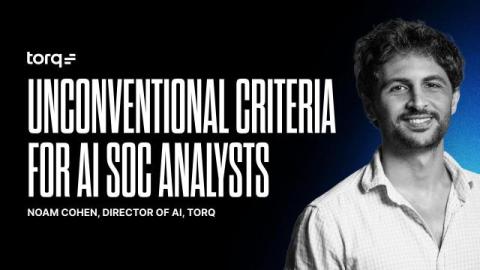
CISOs' Unconventional Criteria for Evaluating AI SOC Analysts

Noam Cohen is a serial entrepreneur building seriously cool data and AI companies since 2018. Noam’s insights are informed by a unique combination of data, product, and AI expertise — with a background that includes winning the Israel Defense Prize for his work in leveraging data to predict terror attacks. As the Head of Artificial Intelligence at Torq, Noam is helping build truly next-gen AI capabilities into Torq’s autonomous SOC platform.

The Future of Retail Cybersecurity: SOC Automation

Retail companies are high-value targets for cybercriminals. With sprawling infrastructures, complex supply chains, and large amounts of customer data, retailers are a goldmine for bad actors. In 2024, the retail sector accounted for 24% of all cyberattacks — more than any other industry. The average cost of a data breach in retail rose to $3.28 million.