
Security | Threat Detection | Cyberattacks | DevSecOps | Compliance

Securing the Agentic Enterprise with Behavioral Analytics and AI Visibility

By mid-2026, the question is no longer whether AI belongs in the enterprise. It’s already embedded in daily work, supporting research, development, customer engagement, and operations. AI agents now act on behalf of employees, automate decisions, and interact directly with enterprise data and systems. This shift creates a new security challenge.

The Price Tag Is Not the Price

Most security platform comparisons begin and end with the wrong number. Two vendors submit proposals. One comes in lower. Finance notes the delta, flags the savings, and the conversation shifts. What rarely makes it into that comparison is everything that determines what the platform actually costs once deployed, staffed, scaled, and operating effectively in production. That gap between sticker price and real cost is where security investment decisions quietly go wrong.

The New CISO Ep. 146 - Eric O'Neill | Rogue Agents: The New Era of AI Insider Threats (Part 2)

What happens when an AI agent inside your company starts behaving like an insider threat? In part two, Steve Moore picks the thread back up with former FBI operative Eric O'Neill to explore how agentic AI is rewriting cybersecurity, the legal traps that follow a breach, and why the modern CISO must think like a spy hunter.

Where Should Humans Sit in AI-Driven Cybersecurity?

There is a huge amount of excitement right now about AI and security operations. Across the industry, we are seeing rapid innovation in areas such as behavioural analytics, AI-assisted investigation, and increasingly agent-based capabilities designed to help security teams process large volumes of activity more effectively. Security teams need that help. The scale of alerts, identities, and telemetry they must manage today has grown far beyond what humans alone can realistically handle.

Stopping the Agentic Breach: How to Operationalize Your Defense Against Mythos-Speed Attacks

The industry has spent the past few weeks focused on Claude Mythos Preview and the rise of autonomous offensive AI. As outlined in Claude Mythos, Project Glasswing, and the Machine-Speed Security Race, this shift is not only about faster attacks. The same AI-driven acceleration that helps attackers discover weaknesses faster can also help defenders validate exposure sooner. For security operations teams, the challenge is turning that strategic shift into action.

Why Security Leaders Lose Budget When Security Tools Look the Same

Every CISO has sat in a budget meeting where the conversation quietly pivoted from risk to price. Not because the chief financial officer (CFO) was being difficult. Not because security stopped mattering. But because at some point in the discussion, two platforms started to look identical, and when things look identical, cost becomes the deciding factor. That pivot is where security investment decisions go wrong. Security leaders do not lose budget because financial leaders undervalue security.

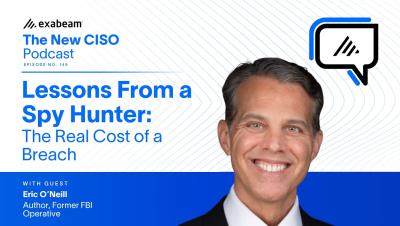
The New CISO Ep. 145 - Eric O'Neill | Lessons From a Spy Hunter: The Real Cost of a Breach (Part 1)

What does it feel like to stand in the smoking ruin of a ransomware attack? In this episode, Steve Moore is joined by former FBI undercover operative Eric O'Neill—the man who helped capture Robert Hanssen—to explain why modern cybercrime is just traditional espionage repackaged, and why the dark web has quietly become the world's third-largest economy.

The Metric AI Security is Missing

As autonomous and semi-autonomous AI systems take on more responsibility within the enterprise, they shift from being “features” of software to becoming true internal actors. They make decisions, take actions, call tools, orchestrate workflows, and influence other AI agents. With this evolution, we must confront an uncomfortable truth: the metrics and response patterns we built for deterministic software no longer work.

Behavior Intelligence: The New Model for Securing the Agentic Enterprise

Behavior Intelligence is a security operations model that detects risk by analyzing behavior, automates investigation and response using AI, and measures whether security outcomes are improving over time. It focuses on how users, systems, and AI agents operate rather than relying only on predefined rules or knowns indicators of compromise. This shift matters because modern attacks rarely look malicious at first. They look normal.

Five Reasons Security Operations Teams Augment Microsoft Sentinel With New-Scale Analytics

Security operations teams face rising alert volumes, tighter staffing, and growing pressure to reduce risk without adding tools or people. If Microsoft Sentinel sits at the center of your environment, you may already see where it helps and where it starts to strain. For many teams, that moment shows up when detections lag, investigations drag, or too much work funnels to a small group of specialists.