Security | Threat Detection | Cyberattacks | DevSecOps | Compliance

Access Isn't Trust: A Behavioral Risk Framework for People, Service Accounts, and AI Agents

Risk in the agentic enterprise spans people, service accounts, and AI agents. All three act with legitimate credentials, so access controls alone can’t show whether their activity is safe. A behavioral risk framework applies one model to every actor: Verify expected behavior before access goes live, observe activity once it does, analyze behavior for risk and drift, and improve detection coverage over time.

Why CISOs Need an Agentic SOC Strategy

CISOs need an agentic SOC strategy because traditional staffing models can’t scale to match machine-speed threats, a global talent shortage, and rising alert volume. An agentic SOC pairs AI agents that collect evidence and investigate at machine speed with analysts who provide judgment, context, and accountability. Exabeam combines Agent Behavior Analytics (ABA), Exabeam Nova AI, and automated investigation to expand coverage and speed response without adding headcount.

Why Choose Exabeam Over QRadar and Cortex XSIAM for SIEM?

Exabeam delivers stronger detection, faster investigations, and more flexible deployment than IBM QRadar and Cortex XSIAM. It combines user and entity behavior analytics (UEBA), Agent Behavior Analytics (ABA), and agentic AI through Exabeam Nova AI to reduce alert noise and automate workflows. With cloud-native capabilities in New-Scale Fusion, Exabeam gives security teams a modern approach to SIEM and security operations.

What's New in LogRhythm SIEM for October 2026

The October 2026 LogRhythm SIEM release modernizes self-hosted security operations with an in-place migration from Elasticsearch to OpenSearch, a next-generation self-service reporting engine, generative AI collectors, and a community Model Context Protocol (MCP) server. The release also includes backend and API updates that improve event drilldown, rule administration, network routing, and telemetry quality while helping organizations maintain control of sensitive security data.

The Agentic SOC Isn't Coming for Analysts' Jobs. It's Coming for Their Tabs.

An agentic SOC uses AI-powered investigation, analysis, and automation to gather data, connect activity, and handle repetitive investigative work. Analysts remain in control and focus on judgment, prioritization, and response. This addresses the need for machine-speed security operations as AI agents gain autonomy and Tier 1 access to systems. Spend five minutes watching a security analyst at work and the “AI will replace analysts” headline starts to sound out of touch.

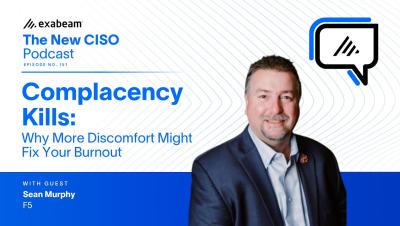
The New CISO Ep. 151 - Sean Murphy | Complacency Kills: Why More Discomfort Might Fix Your Burnout

Sean Murphy spent more than twenty years in the CISO chair and walked away from it while things were going well. In this episode of The New CISO, he returns to talk with Steve Moore about trading the operational seat for a field CISO role at F5 — and why getting too good at the job was the warning sign.

What OpenAI's Misalignment Reports Tell Security Teams About AI Agents

AI Agents are no longer the new insider threat. They’ve become firmly planted as the primary challenge for security leaders when it comes to insider threat activity. They have credentials, they act autonomously, and increasingly, they can take real actions on real systems. How would you know when one of your digital workers starts doing something it’s never done before?

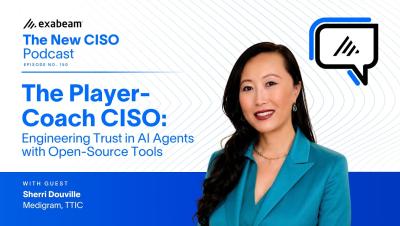
The New CISO Ep. 150 - Sherri Douville | Engineering Trust in AI Agents with Open-Source Tools

In this episode of The New CISO, host Steve Moore welcomes Sherri Douville for a conversation that sits outside the show's usual lane — less war story, more blueprint. Sherri works alongside CISOs rather than inside the role, and arrives with a pointed argument about what the job is becoming.