Security | Threat Detection | Cyberattacks | DevSecOps | Compliance

Developer Leaks API Key for Private Tesla, SpaceX LLMs

In AI, as with so many advancing technologies, security often lags innovation. The xAI incident, during which a sensitive API key remained exposed for nearly two months, is a stark reminder of this disconnect. Such oversights not only jeopardize proprietary technologies but also highlight systemic vulnerabilities in API management. As more organizations integrate AI into their operations, ensuring robust API security has never been more critical.

The Ongoing Risks of Hardcoded JWT Keys

In early May 2025, Cisco released software fixes to address a flaw in its IOS XE Software for Wireless LAN Controllers (WLCs). The vulnerability, tracked as CVE-2025-20188, has a CVSS score of 10.0 and could enable an unauthenticated, remote attacker to upload arbitrary files to a susceptible system – but the real story is that this vulnerability drives home the persistent risks associated with hardcoded credentials, particularly JSON Web Tokens (JWTs), in network infrastructure components.

Addressing API Security with NIST SP 800-228

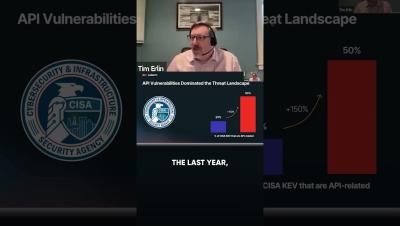
APIs are quickly becoming the primary attack surface targeted by cyber criminals. The rise of generative AI systems, which run on APIs, has driven a dramatic increase in the number of APIs in use. How can you ensure your existing APIs and growing AI deployments remain secure, compliant, and resilient? NIST has now released an initial public draft of SP 800-228: Guidelines for API Protection for Cloud-Native Systems.

API Threat Trends: How Attackers Are Exploiting Business Logic

As businesses rely more on APIs, attackers are quick to turn that trust into opportunity. Among the most dangerous and difficult-to-detect threats are business logic exploits, which let cybercriminals manipulate legitimate functionality to gain unauthorized access, exfiltrate data, or disrupt operations. These attacks often slip past traditional defenses unnoticed, making them a growing concern for security teams.