Security | Threat Detection | Cyberattacks | DevSecOps | Compliance

A Fake MCP Server Just Exposed Your WhatsApp History

A security researcher introduced a malicious MCP server into an environment that already had a legitimate WhatsApp integration—and watched it silently expose message history without any user approval. The technique is called a rug pull. The server advertised one behavior at installation. On second usage, it switched to something else entirely. The approval was real. The thing you approved was not. This is what trust decay looks like in practice—and it passes every classical security check.

Ep. 62 - Zero Trust Breaks Against MCP: Why "Verified" No Longer Means Safe

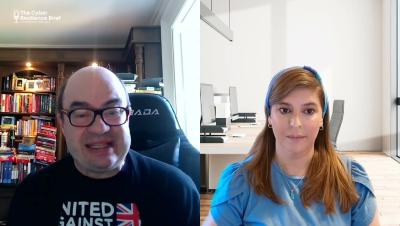
Most enterprises assume their Zero Trust architecture covers their AI agents. It doesn't. Hosts Tova Dvorin and Adrian Culley break down why zero trust breaks against the Model Context Protocol (MCP)—and why "verified" no longer means "safe." They unpack trust decay, the WhatsApp and GitHub MCP exploits, rug-pull tool poisoning, CVE-2025-49596, and the rise of "zero standing trust," then close with three moves for CISOs this quarter: inventory your MCP estate, mandate authentication, and validate your controls.

MCP is the New Attack Surface -- and Your Controls Probably Don't Cover It #ai #mcp

AI just handed attackers a new front door — and most security teams don't even know it exists. Model Context Protocol (MCP) is the emerging standard that lets AI agents talk to your tools, your data, and each other. It's also the most significant new attack surface to emerge in years. The NSA noticed. Your adversaries already have.

Ep. 61 - Blind With Scissors: The NSA's MCP Warning for Every Agentic AI Deployment

The NSA just published a rare advisory on the Model Context Protocol (MCP)—the plumbing under nearly every agentic AI deployment of the last 18 months—and the verdict is stark: optional authentication, no token lifecycle, silent behavior changes, and no logging to catch any of it. Host Tova Dvorin sits down with defensive cybersecurity expert Adrian Culley to unpack the eight risk categories, the WhatsApp and GitHub MCP exploits, and why MCP is now a testable validation surface.

Ep. 60 - The Puppet Masters: Mustang Panda's Long Con Against ASEAN Diplomats

When a tired EU diplomat clicks "connect" on an airport Wi-Fi portal, his briefing—and his government's secrets—end up in Chengdu. Hosts Tova Dvorin and Adrian Culley unpack Mustang Panda (APT27 / Bronze President), the Chinese threat group running the long con against NGOs, ASEAN ministries, and Tibetan and Uyghur activists. Inside: captive-portal Wi-Fi Pineapples that bypass MFA, PlugX side-loading through legitimate apps, and the USB worm that jumps air-gapped military networks.

Ep. 59 - Russia's Cyber Arsenal Exposed: Defeating the FSB, GRU, and BlackCat Before They Strike

In the finale of our Russian intelligence and proxy threat series, SafeBreach engineer Adrian Culley joins host Tova Dvorin to turn five episodes of analysis into concrete, actionable defense. The threat is real—now here's how you stop it.

Ep. 58 - Double Dragon: How China's APT 41 Works for the State by Day - and Itself by Night

China's cyber shadow has already reached your software. APT 41 — known as Double Dragon — isn't just stealing state secrets. They've pioneered a new generation of supply chain attacks, trojanizing the shared code libraries that thousands of organizations trust without question. And their latest splinter unit, UAT 7290, has been inside North American developer environments for over a year — not triggering anything, just watching, learning, and waiting to strike in a way that looks completely native.

The CRINK Catalog: In-Depth Resources to Navigate a New Era of Cyber Threats

The emergence of the CRINK axis—a coordinated cyber-threat nexus comprised of China, Russia, Iran, and North Korea—has dramatically impacted the 2026 global risk landscape. As these nation-states utilize AI-driven scale and living-off-the-land (LOTL) tactics to target critical infrastructure, SafeBreach’s new content series provides essential intelligence on their evolving motivations and methods.

Dirty Frag Vulnerability (CVE-2026-43284 & CVE-2026-43500): Why Reliable Linux Privilege Escalation Changes the Defense Equation

Dirty Frag (comprising CVE-2026-43284 and CVE-2026-43500) is a high-impact Linux kernel vulnerability chain that enables deterministic, reliable local privilege escalation (LPE) to root across major enterprise distributions. Unlike previous race-condition exploits, this logic flaw in the IPsec ESP and RxRPC subsystems offers a near 100% success rate, allowing attackers to escalate from a minor foothold to full system control without triggering typical kernel panics.

Ep. 57 - Russia's Proxy Bridge: BlackCat, Scattered Spider, and the Kremlin

In Part 4 of our Russian intelligence series, host Tova Dvorin and Adrian Culley map the proxy bridge between Western teenage hackers and Moscow. BlackCat (ALPHV) ransomware-as-a-service is the operational hinge: Scattered Spider breaks in, BlackCat encrypts, and the FSB watches the dashboard. Hear how the Kremlin earns plausible deniability, why a $115M extortion stream self-funds Russian intelligence, and what MI6's new "hybrid shadow war" warning means for defenders simulating Rust-based ransomware in their own networks.