The fast evolution of technology in the IT industry has made it increasingly important for professionals to keep up with emerging trends and skill sets. Data security, analytics, and automation have become crucial as companies deal with growing cyberattacks and data breach threats. To remain relevant and secure, IT professionals must actively address skill gaps in these areas, while organizations should create environments that prioritize continuous learning.
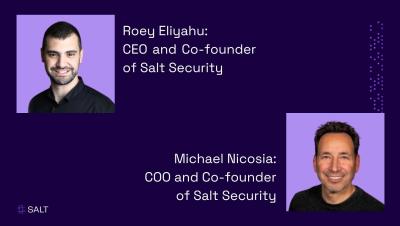
Welcome to Episode One of Salt Security’s New Series: Founder’s Corner This series will share insights and conversations from founders on markets, technology, trends, and other interesting topics of the day. Starting off the series with Salt’s Co-Founders, Roey Eliyahu and Michael Nicosia, as they talk about how they became founders, what inspired them to start Salt Security, where the name came from, and the future of API Security.
API security is a critical concern for industries that are undergoing digital transformation. Financial services and insurance sectors are particularly vulnerable due to the increasing number of APIs they need to manage. As early adopters of digitalization, these sectors face unique challenges requiring a customized API security approach.
APIs are built expressly to share a company’s most valuable data and services. This makes them a lucrative target for bad actors. We’ve already hit the tipping point — APIs are now THE way in. Salt Security’s 2024 State of API Security Report revealed that the count of APIs is increasing, having gone up by 167% in the past year. 95% of respondents have experienced security problems in production APIs, with 23% having experienced a breach.
As API usage grows, so do the complexities of securing them. At Salt Security, we're constantly striving to stay ahead of the curve and bring you the best-in-class solutions for API traffic analysis. With that mission in mind, we are thrilled to announce the release of Salt Sensor 3.0.0, packed with exciting new features to enhance your ability to capture and analyze API traffic.
APIs are crucial in our digital world, but they also introduce new vulnerabilities. Attackers often exploit these vulnerabilities by concealing malicious payloads within encrypted traffic, rendering them undetectable to traditional security tools. As we observe Cybersecurity Awareness Month, it's important to emphasize the significance of advanced solutions that can detect hidden threats.
As organizations adopt a “digital-first” mentality, APIs have essentially become the backbone of modern applications, providing seamless integration between services, platforms, and third-party systems. For businesses, APIs help streamline processes and for consumers, APIs enable smooth and easily accessible digital services. However, an increased reliance on and growing number of APIs has also made them prime targets for cyberattacks.
In a groundbreaking move, some of the world’s largest telecom operators—América Móvil, AT&T, Bharti Airtel, Deutsche Telekom, Orange, Reliance Jio, Singtel, Telefonica, Telstra, T-Mobile, Verizon, and Vodafone—are partnering with Ericsson to launch a new venture aimed at transforming how network Application Programming Interfaces (APIs) are accessed and used.
We are excited to share the tremendous response to our Large Language Model (LLM) attacker summary feature. Since its launch, usage has increased by an amazing 800%, demonstrating its significant impact on our customers' daily operations.