Explore how a Web Application Firewall (WAF) protects websites by blocking malicious attacks using key methods, including filtering traffic and preventing threats like SQL injections and XSS.
SQL injection is a type of attack where malicious SQL code is inserted into a query, allowing attackers to access or manipulate a website's database. Learn the best practices to prevent SQL injection and safeguard your web applications.
The OWASP Top 10 is a research-based document that raises awareness among developers, organizations, and security professionals on the most critical security risks facing web applications. The latest is the OWASP Top 10 vulnerabilities 2021, released in September 2021 after a 4-year gap. In this article, the OWASP Top 10 vulnerabilities 2021 are explained in detail, along with ways to mitigate each.
From GDPR in Europe to CCPA in California, compliance officers and CISOs face a deluge of regulations, standards, and requirements. With every country, industry, and regulator demanding different levels of control, how can teams manage these complex requirements efficiently? In a recent virtual panel discussion, I had the opportunity to join Ashish Tandon, Founder & CEO of Indusface, where I highlighted essential strategies for CISOs to navigate these compliance complexities efficiently.
Over 1 billion known malware threats exist, with an alarming 17 million new variants emerging each month! Malware targeting customer-facing websites and API applications poses significant risks, including compliance violations, defacements, and even blacklisting. In this webinar, join Vivekanand Gopalan, VP of Products at Indusface, as he shares effective strategies for safeguarding websites and APIs against malware.
Security testing aims to find vulnerabilities and security weaknesses in the software/ application. By subjecting the software or application to controlled security scenarios, cyber security testing ensures that the system is adequately prepared to withstand attacks and unforeseen failures. Security experts and testers use different types of security testing to identify potential threats, measure the probability of exploitation of vulnerabilities, and gauge the overall risks facing the software/ app.
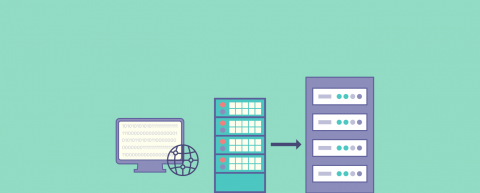
A reverse proxy is a server that sits between the client and the origin server. It accepts requests from clients and forwards them to the appropriate server. It also receives responses from the server and sends them back to the client. A reverse proxy is an essential component of web application infrastructure, providing a layer of abstraction between clients and origin servers to help optimize traffic routing and improve performance and security.
Compliance is a critical concern for businesses today, but navigating the rules can be overwhelming. With regulations constantly evolving, many organizations struggle to keep up. I had the opportunity to participate in a recent virtual panel with Ashish Tandon, Founder & CEO of Indusface. Over the years, I have consulted with multiple large enterprises across geographies and industries. Below are the top challenges that they face as far as compliance is concerned.
A new series of vulnerabilities in the Common Unix Printing System (CUPS) threatens numerous Linux systems, potentially allowing remote code execution (RCE). This affects a wide range of platforms, including Debian, Red Hat, SUSE and macOS. The vulnerabilities—tracked as CVE-2024-47176, CVE-2024-47076, CVE-2024-47175, and CVE-2024-47177—are believed to endanger over 76,000 devices, with estimates suggesting up to 300,000 could be affected.
It’s considered a best practice to regularly conduct VAPT to identify and fix vulnerabilities in systems, applications, and networks, ensuring robust security.