Security | Threat Detection | Cyberattacks | DevSecOps | Compliance

Integrating fuzz testing in the V-model testing process for secure software

The market of embedded computing has been growing constantly, and this trend is expected to continue in the near future. Notably, embedded systems are key components for the Internet of Things (IoT) and for Cyber Physical Systems (CPSs). In the embedded software industry, secure software development is critical. This is especially true because embedded software often involves vital industries, such as medical devices or automotive solutions.

How to prompt prompt LLMs to fine-tune an AI-generated fuzz test

In previous videos, you've seen that LLM can generate fuzz tests. But what if AI fails to produce a working test or to cover specific workflows that are unavailable as unit tests or usage examples in the code base? You can prompt AI to make changes. Here is how the "Interactive mode" works in CI Fuzz.

Step 3. How to automatically validate AI-generated Fuzz Tests

After generating fuzz tests with LLMs, the next important step is verifying that these tests are of high quality and ensuring they run and work as intended. CI Fuzz can now automatically build the generated fuzz test, run it, and perform a health check to assess its quality and refine it further if it doesn't pass the health check. Watch the video to see it in action.

Step 2. How to automatically generate fuzz tests with LLMs

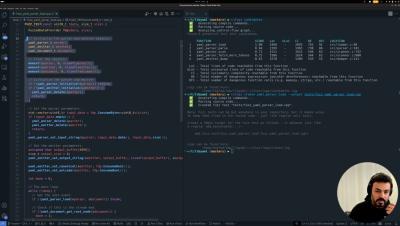
Creating high-quality fuzz tests is essential for efficient fuzz testing. However, crafting these tests is a time-consuming, manual process, which has become a major barrier to the widespread adoption of fuzz testing. Watch the video to see how CI Fuzz can automatically generate high-quality fuzz tests by leveraging LLMs and static analysis.

Step 1. How to automatically identify fuzz testing targets

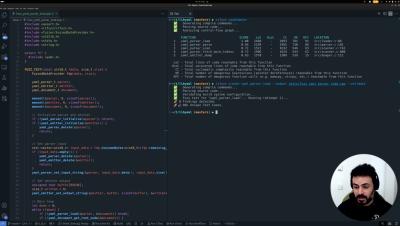
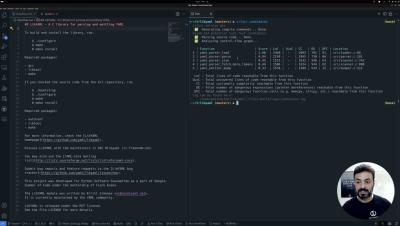
The first step to start fuzzing is to identify what part of the software you want to fuzz. You definitely want to fuzz the most critical functions/APIs—those that exercise a significant amount of code and trigger key functionalities. However, manually identifying these targets can be time-consuming and challenging. Watch the video to see how CI Fuzz can automatically prioritize functions for fuzzing.

Step 1.2. How to identify best targets for fuzzing based on a coverage report

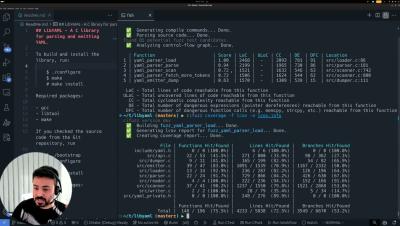
If you want to automate your code analysis to identify the best fuzzing targets, you can do so with CI Fuzz. In the previous video, Khaled demonstrated how CI Fuzz automatically prioritized functions to test. But what if you already have unit or fuzz tests? CI Fuzz can analyze an LCOV coverage report and identify less-covered functions. These functions will now receive higher scores, highlighting them as top targets for new tests.

Understanding, detecting, and fixing buffer overflows: a critical software security threat

Buffer overflows are one of the oldest and most dangerous vulnerabilities in software security. A heap buffer overflow was the second most exploited vulnerability in 2023. Over the years, it has enabled countless attacks, often with severe consequences, such as Cloudbleed in 2017. Despite advances in security practices, buffer overflows continue to pose significant risks, especially in software written in low-level languages like C and C++.

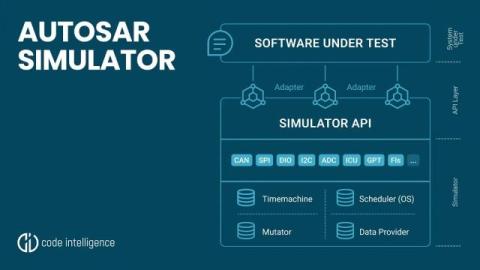
How to detect more bugs in AUTOSAR Applications and enable SiL testing by using a simulator

Testing Classic AUTOSAR applications has long been a significant challenge due to the reliance on hardware-in-the-loop (HiL) setups, which are costly, complex, and hard to scale. Code Intelligence’s new lightweight AUTOSAR simulator revolutionizes this process by enabling entire AUTOSAR applications to run on x86 Linux systems, thus facilitating software-in-the-loop (SiL) testing.