Security | Threat Detection | Cyberattacks | DevSecOps | Compliance

Tag Manager Security: How to Control GTM, Adobe Launch & Tealium for Privacy Compliance

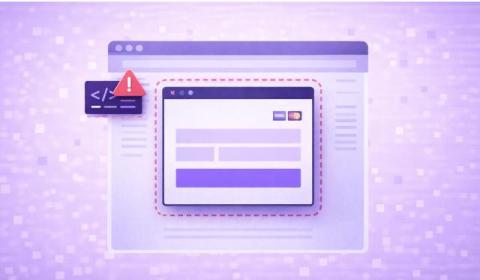
Marketing needs to ship campaigns in hours. IT and engineering move in days. Tag managers live at the center of that conflict. They’re essential infrastructure, enabling marketing velocity by letting marketing teams deploy analytics, advertising pixels, and conversion tracking without IT or production bottlenecks. So campaigns launch faster, testing happens in real time, and teams optimize performance mid-campaign. But that same architecture can create compliance exposure.

CCPA consent vs opt-out: What websites Get Wrong About User Choice

If you have a consent banner, a Do Not Sell link, and a preferences database logging every opt-out, you’re CCPA compliant, right? Not really. In July 2025, Healthline Media settled with the California Attorney General for $1.55 million. That’s one of the largest CCPA fines to date. They had opt-out forms. They had GPC support. They had a preference database. Yet, after users exercised all three, investigators found that 118 cookies were still active and 82 tracking tags were still operating.

G2 Names Feroot a 2026 Best Software Product in Data Privacy

We’re excited to share that Feroot has been named one of G2’s Best Software Products of the Year for 2026 in the Data Privacy category. This recognition is especially meaningful because it’s based on direct customer feedback. G2’s awards are powered by real-world reviews and outcomes, and we’re honored that customers chose to share their experience with Feroot. Even more humbling: our customers have given us an average rating of 4.9 out of 5 stars.

GA4 Is Collecting PHI from Your Website and a BAA Won't Fix Your HIPAA Problem

Conversations about GA4 in healthcare tend to stay strangely shallow, circling the same procurement question: “Is there a BAA?” It’s as if GA4 creates risk at the contract layer, when the truth is that the risk is born earlier and lower, in the collection layer, where ordinary telemetry becomes sensitive the moment it is attached to health context and allowed to leave your site.

When Do U.S. State Privacy Laws Apply? Scope and Thresholds Explained

While the objective of protecting personal data is to be lauded, the current setup in the US is one of the most complex in the world. Twenty states. Twenty different thresholds and definitions. ‘Sale’ means one thing in California, another in Virginia. Tracking 275 daily website visitors puts you in scope for CCPA/CPRA, but not Tennessee’s law. 274 keeps you out of both. Just determining if a law even applies has become a legitimate challenge for businesses.

PCI DSS Requirements for Gaming & iGaming: When 6.4.3 and 11.6.1 Apply to Your Payment Flows

Ask five compliance leads in the gaming industry how 6.4.3 applies to their payment flows, and you’ll get five different answers. Ever since PCI v4.0.1 has come into effect, gaming and iGaming operators have been struggling to identify where they fall in scope, which SAQ paths apply to their specific architecture, and if Requirement 6.4.3 and 11.6.1 apply to them or their payment processors.

Mobile Payment Security in PCI DSS 4.0.1: In-App Purchase Protection vs Web Checkout

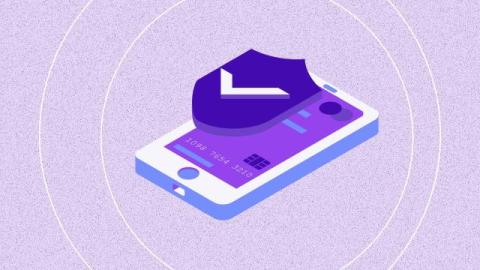
Nearly 70% of online purchases now happen on mobile, yet PCI scoping decisions are still often made as if mobile is just a smaller browser. It is not. A native in-app payment flow and a mobile web checkout trigger materially different obligations under PCI DSS 4.0.1. In one case, risk concentrates inside the application runtime through SDKs, platform storage, and release controls.

You Passed the ROC. Can You Defend Checkout? PCI DSS 4.0.1 for Payment Processors

Very few people know this, but passing a PCI audit has very little to do with having defensible evidence. Your processor passed its last PCI assessment. Three months later, a merchant using your payment forms gets hit with a Magecart attack. Card brands start asking: What monitoring did you have on that checkout page? When did you detect the compromise? What evidence can you provide? That’s when the gap becomes obvious.

Payment Processor Security Requirements: Stripe, Adyen, and PayPal (Braintree) Compared

Chances are, if you are reading this article, you are comparing Stripe, Adyen, and PayPal (Braintree) on fees, payout timing, and how quickly you can ship the integration. And that would be reasonable. But the security outcome is shaped earlier than most teams think. A payment processor protects card data once it enters its fields and systems. The transaction begins on your checkout page, inside a browser that is also running analytics, tag managers, A/B tests, support widgets, and third-party scripts.

How to Detect Unauthorized Script Changes in Real-Time for PCI 11.6.1

If you stand behind almost any modern checkout today and inspect the network tab, you will rarely see a tidy, controlled set of assets. Instead, you will see 15 to 30 different scripts, ranging from payment orchestration and fraud tools to analytics and session replay, all the way to tag managers, experimentation, consent logic, and accessibility widgets, with many loading from domains your security team has never directly vetted.