1Password 8 for Mac is here!
Today I have the honour of introducing the most powerful and capable 1Password ever. Wrapped in a gorgeous new design and blazingly fast, 1Password 8 is our love letter to Mac users everywhere. 💌


Today I have the honour of introducing the most powerful and capable 1Password ever. Wrapped in a gorgeous new design and blazingly fast, 1Password 8 is our love letter to Mac users everywhere. 💌
Artificial intelligence has been (and continues to be) a popular topic of discussion in areas ranging from science fiction to cybersecurity. But as much fun as it might be to discuss my favorite sci-fi AI stories, let’s set aside the works of Asimov, Bradbury and other storytellers to focus on the role of AI in cybersecurity.
According to Joshua Ray, managing director, Global Cyber Defense Lead, Accenture, “Every business is digital now and must adopt a resilient cybersecurity posture to protect their value.
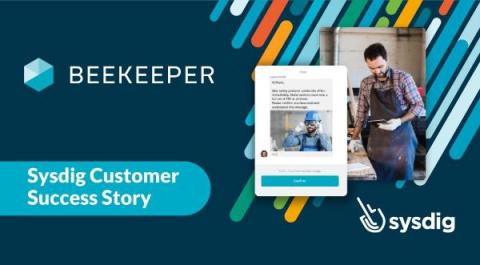
Beekeeper is known as one of the world’s top platforms for helping remote employees stay connected with their customers, other front-line workers, and the data they need to be successful. Through the company’s platform, employees can gain access to training, forms, and other work-based resources that require flawless access every time.
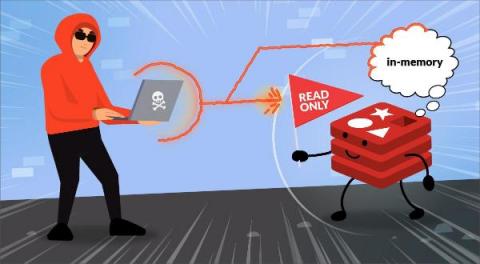
Containers provide a number of security features that are not simply available on a normal host. One of those is the ability to make the container’s root filesystem read-only. By making the file system unable to be altered, it prevents an attacker from writing their malware executable to disk. Most attacks rely on writing files in order to work, but sophisticated cases use fileless malware as part of their malicious behavior.
Ransomware can be expensive—in 2021, the average cost of a ransomware attack was $4.62million, and that doesn’t include the ransom itself. Beyond financial costs, the cost of time, data, and brand reputation can also be astronomical. According to the IST Ransomware Task Force, the average downtime can be 21 days, with full recovery taking on average 287 days from the initial ransomware incident response. And cyber criminals are getting more sophisticated every year.
Ignore a vulnerability? That sounds like a paradox. Why would anyone want to ignore a vulnerability? While ignoring security issues should not be your default practice, it is still sometimes necessary. Development and security teams today face vulnerability backlogs consisting of thousands of issues. To maintain rapid development, they must be able to effectively prioritize their work.
Zero-trust network architecture (ZTNA) provides a holistic view of business cybersecurity that secures your applications and environment when accessed by any user, device, or location. A comprehensive zero-trust model enables you to mitigate, detect and respond to threats.
This is the important question that Veriato Head of Product & Technology, Jay Godse asks in his new article, published this week. With so many employees working from home, it’s hard for CISOs, managers and HR leaders to know what they are doing, and that creates risk. Don’t wait until it’s too late. Threats to the company are much harder to spot when people are working at home.