
When will Ethereum begin its rebound?
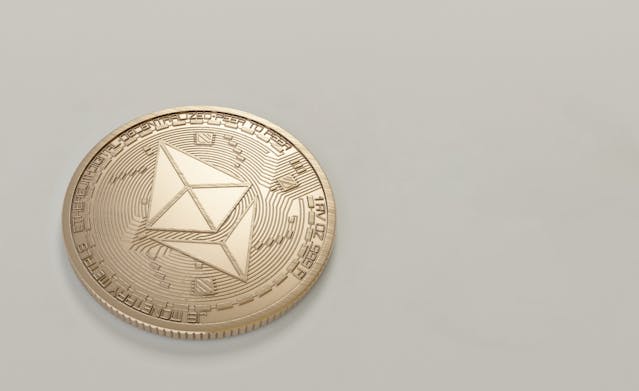
Ethereum is the second-largest cryptocurrency in the world, second only to Bitcoin in terms of market capitalization. While it has long been one of the preferred assets for investors from all over the world, it has recently been dealing with some issues as a result of sell-offs and corrections. On the other hand, some analysts believe that the marketplace is in a state of consolidation right now. This concept refers to a period of relative stability in the price of a crypto coin, during which the value trades within a narrower range and tends to move sideways instead of up or down.
Due to the ongoing shifts and changes, investors have been doing a lot of research on the latest ETH price prediction numbers in order to get a better idea of what they can expect from the future. While it’s impossible to come up with an estimation that is 100% correct due to the continuous volatility recorded in the ecosystem, data, and analysis can nonetheless help you come up with a more objective game plan.
The overview
Ethereum is not doing as well as many would expect in spite of the upgrades and changes the blockchain has been going through. Corrections are expected in all crypto markets, but the values start climbing as well after a while. ETH is still struggling in that regard, a fact that has made many investors feel apprehensive as they aren’t sure how to proceed in order to guarantee the safety of their portfolios. The fear of missing out on some monumental price development can cause many to act rashly as well and make choices that destabilize their finances instead of helping them.
Ethereum has also lost quite a lot of value when compared to other altcoins, most notably XRP. While the latter’s ascent might sound unbelievable for some, it is indeed true that some market experts believe XRP is on its way to replace Ether and become the second-largest crypto in the ecosystem. An ever-growing number of investors are wondering if Ethereum has the ability to recover from its most recent losses in the near future, with many believing that things are likely to become even worse in the event of a plunge below the $1,900 area.
The traders
According to a recent study, Ethereum holders have accumulated about 3.56 million ETH coins between the $1,843 and $1,900 price points. The average price has been determined to be around $1,871. This data indicates that the ongoing accumulation value stands at $6.65 billion, with Ethereum having a robust support level between the two price levels. The region has the potential to act as a bullish reversal zone in the future, but if Ether’s price continues to drop and reaches the lower level of that range, there is a possibility of capitulation fears beginning to take hold.
This market sentiment arises when investors begin to panic and start selling their positions at a loss during a period of sizable corrections. If Ethereum continues to consolidate, the likelihood that a more significant correction will take place increases by quite a lot as well. Below $1,843, size and volume are much lower, which is yet another reason why the current level must be protected. The number of Ethereum addresses under profit dropped to its lowest level in five years. When this occurred in the past, it was typically regarded as a price bottom for Ether, but given the significant accumulation and decreased number of profit-making addresses, it can also be considered a bullish signal.
Crypto experts believe that now is not the best time to have a bearish approach on Ethereum, highlighting the rise of RWAs (real-world assets) within the industry sector. The increase has been roughly 51% over the last month, with the yearly increase being a whopping 850%, and Ethereum has a market share of over 80%.
Neutral indicators
Crypto data analysis platforms have been conducting research in order to determine the full scope of the investor sentiment that is prevalent within the Ethereum market. The long/short ratio was used, as the metric evaluates the proportion of futures traders going for increases and decreases. The charts indicate that the larger investors are inclined toward the long positions, so they are aiming for increases. The smaller investors, on the other hand, are in the process of deleveraging. This means that they are unwinding borrowed positions that are typically quite risky, lowering volatility and leveraged trading interest and engagement in the process.
The current ratio is situated at 1.3 which means that the marketplace is overall quite cautious at the moment. In the short term, Ethereum will continue to experience low volatility and little interest in leveraging features that will most likely leave many investors feeling impatient and exhausted.
Whale accumulation
Many investors are convinced that Ether is unlikely to record further decreases as a result of the whale accumulation patterns. The fact that these investors have started bringing substantial capital into the equation means that the level has a lot of potential to remain intact. Institutional investors have been positioning themselves for strategic moves in either direction, showing that the marketplace remains uncertain about the direction Ethereum is more likely to take in the future. The number of whale addresses climbed 4% year-to-year between January and March 2025.
The bottom line
If you’re an investor and have been thinking about safeguarding your portfolio during the ongoing price shifts and market uncertainty, you should remember that a good strategy remains of paramount importance in this environment. Determine what your financial goals are and design a game plan that can help you achieve them. It’s not a simple task, given how complex the situation is at the moment, but being disciplined and taking things slowly will take you further than impulsivity and making choices based on what other holders are doing.
You must always keep up with the marketplace as well. Being up to date with the latest developments will provide you with an edge so that the choices you make are more objective and won’t end up having a negative impact on your portfolio.