
What Cybersecurity Risks Does CNC Automation Introduce in 2026?
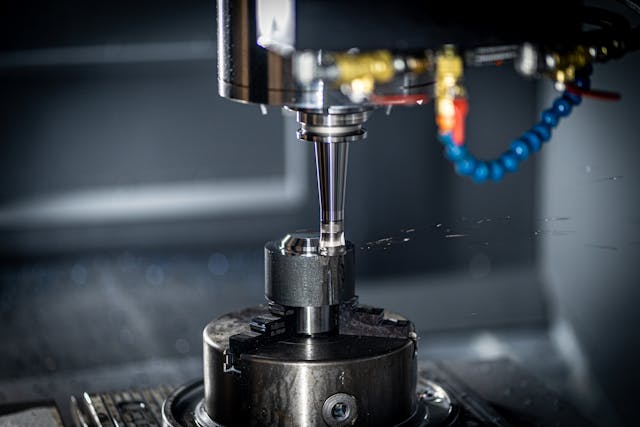
Manufacturing floors are no longer air-gapped environments. As CNC machines connect to networks for automated loading, real-time monitoring, and remote diagnostics, they become potential entry points for cyber attackers targeting industrial operations.
Companies like Gimbel Automation are advancing in-machine CNC automation that reduces manual labor and increases throughput. But every connected system, from spindle grippers to pneumatic workholding, needs cybersecurity planning alongside its mechanical engineering.
Why Are Automated CNC Systems a Growing Target?
Automated CNC machines generate valuable operational data and control high-value production processes. A compromised machine can produce defective parts, leak proprietary designs, or shut down an entire production line.
The shift toward Industry 4.0 means more CNC equipment now communicates over standard network protocols rather than proprietary closed systems. This connectivity enables powerful capabilities like predictive maintenance and real-time quality monitoring. It also exposes machines to the same network-based threats that affect any connected device.
According to the Cybersecurity and Infrastructure Security Agency, attacks targeting industrial control systems increased significantly in recent years, with manufacturing becoming the most targeted sector globally. The convergence of operational technology (OT) and information technology (IT) on shared networks creates attack surfaces that many manufacturers have not yet addressed.
How Should Manufacturers Secure Their CNC Networks?
Protecting automated manufacturing systems requires a layered approach. Here are the steps that matter most.
- Segment your network so CNC machines operate on a separate VLAN from office systems and guest WiFi. A compromised email account should never provide a path to your production floor.
- Implement access controls on every CNC controller. Default passwords on machine interfaces are one of the most common entry points for attackers.
- Monitor network traffic for anomalies. Unusual data transfers from a CNC machine, especially outside production hours, may indicate unauthorized access or data exfiltration.
- Keep CNC firmware and control software updated. Manufacturers issue security patches for known vulnerabilities, but many shops run outdated firmware indefinitely.
- Disable unnecessary network services on each machine. If a CNC controller does not need remote desktop access, turn it off. Every open port is a potential attack vector.
- Back up CNC programs and configurations offline. Ransomware targeting production data is a growing threat, and offline backups are the fastest path to recovery.
Network segmentation alone eliminates the majority of lateral movement attacks that allow an intruder to jump from a compromised office PC to your CNC equipment.
What Specific Threats Target CNC Automation?
The threat landscape for automated manufacturing differs from typical IT security scenarios. CNC-specific risks include attacks that manipulate G-code to produce subtly defective parts, which could pass quality inspection but fail under stress in the field.
Ransomware is the most common immediate threat. An attacker encrypts your CNC programs, toolpath libraries, and production schedules, then demands payment to restore access. For shops with limited backups, this can halt production for days or weeks. According to IBM Security, the average cost of a data breach in the manufacturing sector exceeded $4.7 million in 2024.
Supply chain attacks present another risk. A compromised software update for your CAM system or machine controller could introduce malicious code directly into your production workflow. Verifying the integrity of every software update before deploying it to production machines is a necessary precaution.
What Security Standards Apply to Manufacturing Environments?
Several frameworks guide cybersecurity for industrial operations. Here is what manufacturers should know.
- NIST Cybersecurity Framework: The foundational standard for U.S. manufacturers, covering identification, protection, detection, response, and recovery across all connected systems.
- IEC 62443: The international standard specifically designed for industrial automation and control system security, including network segmentation and access control requirements.
- CMMC (Cybersecurity Maturity Model Certification): Required for manufacturers in the U.S. defense supply chain. Even non-defense shops benefit from its structured approach to security maturity.
- ISO 27001: The global information security management standard that applies to any organization handling sensitive data, including proprietary CNC designs and client specifications.
- Insurance requirements: Many cyber insurance providers now require specific security controls (MFA, network segmentation, offline backups) before issuing or renewing policies for manufacturers.
Compliance with at least one framework demonstrates due diligence and reduces both risk and insurance costs.
How Do You Balance Automation Benefits With Security Risks?
The answer is not to avoid automation. The productivity and quality gains from automated CNC operations are too significant to abandon. The answer is to build security into the automation plan from the beginning rather than bolting it on after deployment.
Include your IT security team or a qualified consultant in every automation project from the design phase. They should review network architecture, access controls, and data flow before the first machine goes online. Retrofitting security after deployment is always more expensive and less effective than building it in from the start.
Connected inspection equipment should be included in that review as well. Automated CNC cells often rely on cameras to confirm part orientation, inspect finished components, and flag defects before they move to the next stage. Machine builders may work with machine vision systems suppliers for cameras, lenses, lighting, and other inspection hardware designed for industrial environments. Because these systems exchange data with controllers and other equipment, they should be treated as connected endpoints when mapping network access, permissions, and data flow.
Train machine operators on basic cybersecurity hygiene as well. Operators who plug personal USB drives into CNC controllers or share login credentials create risks that no firewall can prevent. A security-aware production team is your most cost-effective defense layer.
Key Security Takeaways
- CNC automation systems connected to networks face the same cyber threats as any IT infrastructure.
- Network segmentation is the single most impactful security measure for protecting production equipment.
- Update CNC firmware regularly and disable unnecessary network services on every controller.
- Back up CNC programs offline to protect against ransomware attacks.
- Follow at least one recognized security framework (NIST, IEC 62443, or CMMC).
- Include IT security in every automation project from the design phase forward.
Automation and Security Are Not Opposites
The manufacturers who gain the most from CNC automation are the ones who treat cybersecurity as part of the project, not an afterthought. Connected machines are powerful. Protected connected machines are both powerful and resilient.
FAQ
Can a CNC machine really be hacked?
Yes. Any CNC controller connected to a network is a potential target. Attackers can alter programs, steal proprietary designs, deploy ransomware, or disrupt production by exploiting unpatched firmware or weak access controls.
What is the biggest cybersecurity risk in automated manufacturing?
Ransomware targeting production data and CNC programs is the most common and most disruptive threat. Without offline backups, a ransomware attack can halt operations for days.
Do I need a dedicated IT security team for my CNC shop?
Not necessarily. Smaller shops can work with a qualified managed security service provider (MSSP) that understands industrial environments. The key is having someone who monitors your network and responds to incidents.
How often should CNC firmware be updated?
Check for updates quarterly at minimum. Apply critical security patches as soon as they are released by the machine manufacturer. Test updates on a non-production machine first when possible.