
What Are the Recent CCTV Camera Technology Trends as of 2025?
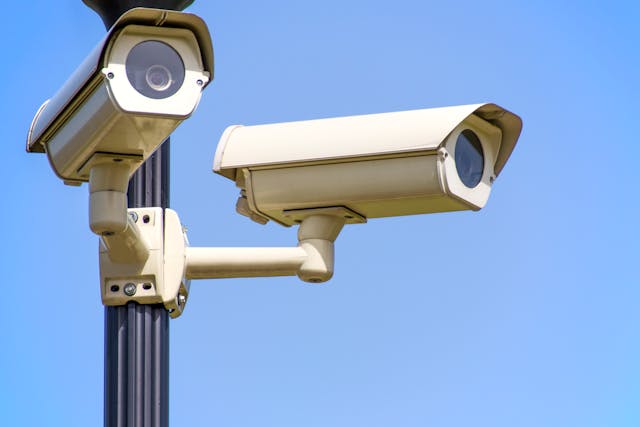
Surveillance technology has gained popularity in the recent past. CCTV systems have helped investigate and solve many cases, which explains why many people install them in high-threat areas. Technological advancements in artificial intelligence, cloud storage, and real-time processing have revolutionized conventional surveillance into intelligent monitoring systems.
Modern CCTV cameras are used for recording purposes and to analyze, interpret, and respond to events faster and more efficiently. With these advancements, security systems provide enhanced security and support many applications.
However, people looking to install CCTV cameras should understand how the advanced features work and the trends affecting the latest surveillance systems to take advantage of the emerging features. This article focuses on the major trends in CCTV camera technology that will define the industry in 2025.
Artificial Intelligence and Deep Learning in Video Analytics
Artificial intelligence is one of the most important features of the latest CCTV technology. An ai cctv camera is capable of identifying objects and following them, as well as categorizing them in real-time without the help of a human operator. This saves the time of the staff monitoring the cameras.
Instead of watching hours of footage, security teams are only alerted when the system recognizes something unusual, such as loitering, intrusion, or movement in restricted areas. Deep learning further enhances the functions of AI cameras because the system can learn from patterns and collected data. With time, an AI CCTV camera becomes smarter and more efficient in preventing security threats.
For instance, it can learn the characteristics of an environment and the typical behavior of visitors and workers and identify suspicious behavior. This is especially the case in areas such as airports, shopping malls or streets where there are many people since it would be almost impossible to monitor the situation physically. Applying such modern CCTV camera solutions by Canon will help security personnel detect anomalies quickly without manually scanning every single frame. Integrating these intelligent surveillance setups into large public spaces ensures proactive threat monitoring and overall public safety.
Edge Computing for Real-Time Data Processing
Real-time decision-making is crucial in surveillance because it enables timely action. This is where edge computing comes in handy since it processes data at the source and not in a central server. This approach eliminates the chances of delay and ensures a quick response.
CCTV cameras integrated with edge computing can analyze data on the device itself, even in cases with low connectivity. Additionally, edge computing helps reduce bandwidth usage since it does not involve the transfer of large volumes of video data to other servers.
This feature makes it easier to scale surveillance systems in remote areas or areas that experience a lot of traffic. It also enhances data privacy since data is processed locally and does not have to be transmitted over the internet. This keeps properties in remote areas safe by addressing connectivity challenges.
Cloud-Based Video Surveillance and Management
Surveillance over the cloud is one of the most common methods of managing and storing security videos today. The traditional systems were hardware-based and needed storage on physical servers, limiting the system's access and scalability. Cloud platforms have solved these challenges by storing the footage off-site.
Cloud footage storage has several benefits, including the possibility of monitoring video streams from different locations and devices. Security personnel can monitor the activities from the central control rooms. So, the user does not have to be physically present at the scene.
Cloud systems also have the advantage of automatic backup. This means the data is still secure even if the system fails or the hardware gets damaged. Unlike hardware storage, cloud storage has advanced security measures, ensuring that only authorized people with relevant credentials can access or manipulate the stored footage. This gives users peace of mind because criminals cannot get away with the storage hardware.
Transition From Analog to IP Cameras
Analog cameras were the most popular type of security camera. However, the transition to IP cameras is still on the rise. IP cameras provide better image quality, more coverage, and additional functions. These digital systems can capture higher resolutions like HD and 4K, which enables the capturing of fine details. This same shift toward high-resolution IP imaging is also transforming industrial automation, where a machine vision camera enables real-time quality inspection and defect detection on production lines.
Besides the high image quality, the IP cameras are easier to integrate with other systems. For example, they can integrate with access control, alarm systems, and mobile applications. The transition to IP also supports remote monitoring and advanced video analytics. As a result, more organizations continue modernizing their systems as analog configurations are slowly being replaced by IP-based systems.
Enhanced Cybersecurity Measures for Surveillance Networks
With the integration of surveillance systems, property owners need to enhance security to prevent hacking and other security threats. Modern CCTV systems are vulnerable not only to physical intrusions but also to cybercrimes.
For example, cameras can be hacked, and hackers can access important information or even interfere with the organization’s operations. Therefore, surveillance systems can integrate with security tools and measures to prevent cyber threats.
These may include data encryption, user authentication, and network segmentation. They also allow constant software updates to help reduce or eliminate the existing vulnerabilities.
Integration of 5G Technology in CCTV Systems
Technological advancement, especially the 5G, has led to the growth of modern CCTV systems. The innovative 5G technology provides higher data transfer rates and lower latency, making video streaming efficient and stable. This is important for mobile surveillance units and big systems in large organizations with large premises.
Besides, 5G technology enables users to stream high-definition videos without buffering or interruption. It also allows direct and real time interaction between cameras and monitoring centers.
So, security teams can respond to incidents as they happen in the best way possible. Integration of 5G has enhanced the current CCTV systems' reliability and functionality in different settings.
CCTV cameras have become smarter, faster, more secure, and more effective in 2025. The industry has evolved from video analytics based on artificial intelligence to cloud and 5G. Edge computing has also assisted in processing data at the source, while IP cameras improve image quality.
So, property owners seeking to install security cameras should pay attention to these advanced features and trends to choose the best ones. They should also work with seasoned CCTV professionals for quick and effective installations. Professional camera installers can also advise property owners on the best way to prevent security threats and make the best use of the cameras.