
What AI Integration Means for Energy Commodity Security
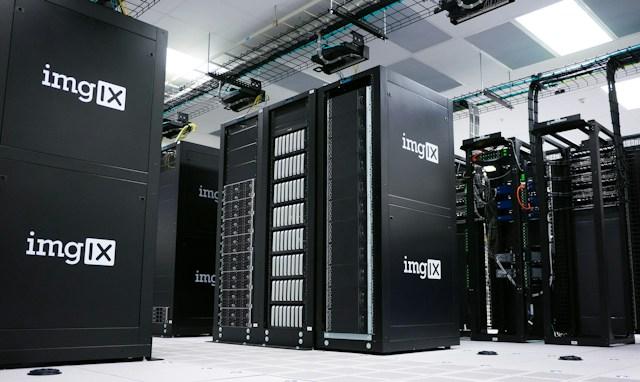
Artificial intelligence is changing how energy commodities are forecast, scheduled and traded. Models can process weather feeds, grid conditions and market prices faster than human teams, but faster decisions also create new security dependencies. A compromised data source or unauthorized model change can influence thousands of automated actions before an operator recognizes the pattern.
Energy companies need controls that account for both operational technology and digital market systems. That requires clear approval boundaries, protected data pipelines and detailed records of every automated decision. It also means measuring AI by its full operational cost, including security and recovery expenses.
Automation in Energy Market Floors
AI systems can help trading teams forecast demand, identify pricing anomalies and adjust positions as new information arrives. Common inputs include temperature projections, plant availability, transmission constraints and historical consumption. A model may recalculate an expected power shortfall every few minutes, giving traders more time to respond to changing conditions.
Research into AI in energy markets shows how forecasting, predictive maintenance and automated trading can support more efficient operations. Still, automation should have defined limits. A model that recommends a trade presents a different risk from one authorized to execute it without review.
Start by classifying automated actions according to their potential financial and operational impact. Low-risk recommendations may proceed through standard workflows. High-value trades, unusual volume changes and activity outside expected hours should require human approval. Teams should also set maximum position sizes and price deviation thresholds that cannot be changed by the model itself.
People remain central to the process. Analysis of energy trader roles highlights the continued need for judgment, oversight and communication even as AI handles more routine analysis. Operators must understand why a model issued an alert, which data affected it and when to reject its output.
Run scheduled exercises to test those skills. For example, provide the desk with a false demand spike caused by corrupted weather data and measure how quickly the team identifies the source, pauses automation and returns to a trusted forecast.
Protecting Algorithmic Pipelines
An AI trading system depends on a chain of data collectors, application interfaces, model repositories, cloud services and execution platforms. An attacker or technical failure may target any point in that chain. False market prices can distort recommendations, while altered model parameters can produce decisions that appear valid but consistently favor the wrong outcome.
Map every source that enters the model and assign an owner to it. Each source should have an approved format, expected update frequency and acceptable value range. If a regional demand feed normally changes by 1% to 3% between updates, a sudden 25% movement should trigger validation before the model uses it.
Guidance on energy supply chain security emphasizes identity controls, segmentation and verified access across connected infrastructure. Apply those principles by giving services the minimum permissions they need. Separate model development from production deployment and require two-person approval for code, parameter or data-source changes.
Security leaders also need to connect these controls with budgeting decisions. Capital reviews may consider depreciation schedules, tax savings and financing effects alongside implementation costs. Those financial considerations should never reduce funding for access monitoring, immutable logs or tested recovery systems.
Keep a signed record of each production model version. The record should identify its training data, owner, approval date and performance baseline. If results move outside that baseline, operators can compare versions and restore the last trusted model without relying on guesswork.
Evaluating Total Operational Cost
The purchase price of an AI platform rarely reflects what it costs to operate securely. Energy companies also pay for data feeds, cloud processing, storage, specialist staff, system integration and ongoing model validation. Security adds identity management, monitoring, independent testing and incident response capacity.
Build the cost model around the system's full life cycle. During implementation, account for data cleanup, interface development and employee training. During operation, include model retraining, vendor reviews and the computing capacity needed during high-volume events. Decommissioning also carries costs because teams must archive required records, remove credentials and confirm that vendors delete retained data.
Regulatory uncertainty belongs in the calculation. A review of AI regulation in the energy sector identifies concerns involving accountability, cybersecurity, transparency and data governance. Even if a company operates outside the jurisdictions discussed, those themes provide useful planning categories for internal controls.
Use scenario-based estimates instead of a single projected return. One scenario might assume normal market volume and stable data costs. Another could model a period of extreme weather when data processing doubles and staff must monitor the system around the clock. A third should estimate the cost of a security event that requires model suspension, forensic analysis and manual trading procedures.
Tie spending to measurable controls. A monitoring service should reduce alert detection time. A backup environment should meet a stated recovery target. Training should improve performance during exercises. If a cost cannot connect to a risk reduction, operating requirement or documented business outcome, review it before renewal.
Hardening Real-Time Trade Streams
Real-time streams create a distinct security problem because decisions may occur in milliseconds while investigations take hours. Market prices, demand signals and execution messages must remain accurate and available throughout that gap. A delayed feed can be as damaging as a false one if the system continues acting on stale information.
Protect stream integrity with encryption, strong service identities and message signing where supported. Synchronize system clocks so investigators can reconstruct events across trading applications, data platforms and identity services. Logs should capture the source, model version, input data and approval path behind each executed action.
Set controls for degraded operation. If a primary price feed fails, the platform might switch to a secondary source but reduce permitted transaction size. Conflicting feeds should move the system into a restricted mode and notify an operator. When both sources become unavailable, preapproved manual procedures should take over.
A useful response plan assigns decisions before an incident occurs. The trading lead decides whether to pause activity, the security lead preserves evidence and the technology team isolates affected services. Legal and compliance staff assess reporting duties based on the markets and contracts involved. Vendors must have named escalation contacts who can respond outside standard business hours.
Test the plan under realistic time pressure. Simulate replayed messages, missing timestamps or a model that suddenly recommends trades far outside its normal range. Record detection time, containment time and every manual workaround. Then fix ambiguous authority, missing telemetry and dependencies that slowed the response.
AI can support energy commodity security when its authority remains visible and reversible. The clearest sign of a mature program is a trading team that can explain an automated decision, verify the data behind it and safely stop execution when that evidence no longer holds.