
Smart Home Integration, Safety & Maintenance
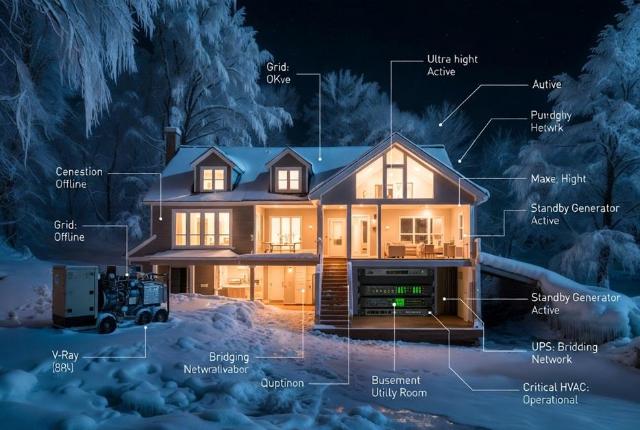
A connected home is only as smart as its power source. If the grid drops in Harrisburg or Hershey, your automation shouldn't just vanish. It needs to be a responsive, integrated piece of infrastructure. This final part of our series moves past the hardware and planning to focus on the execution - how to make your generator talk to your house, keep the system safe, and ensure it actually works five years from now.
For the full context on how we got here, you should look at our previous guides on generator types and the engineering behind automatic transfer switches.
Making the Generator "Talk" to the House
A standby generator is a standalone engine. Left alone, it’s just a dumb box. Integration transforms it into a sensor-rich participant in your home ecosystem. I think the key here is local control. You don't want your home's power logic dependent on a cloud server in another state. If the internet is out along with the power, a cloud-reliant system is useless.
Monitoring and Actionable Alerts
Effective monitoring is about data you can use. I don't need a thousand push notifications telling me everything is fine. I need to know the specific state: Is it running? Is it exercising? Is there a fault? By using local APIs through platforms like Home Assistant, we can pull metrics like voltage, frequency, and load percentage directly into your dashboard. Matter and Zigbee sensors can track fuel levels in propane tanks. If your fuel drops to 20%, the house should tell you before the engine starves.
Automation Scenes: Controlling the Chaos
When the power fails, the "Power Outage" scene should trigger immediately. This is about more than just turning on lights. It is about resource management. The house should automatically shed Tier 3 loads - things like non-essential LED strips, the home theater, or that guest room AC. It should dim critical hallways to 30% and close the smart shades to keep the heat in. This isn't just a gimmick. It extends your fuel runtime and prevents the generator from hitting an overload state. When the grid returns, the "Restoration" scene should reset everything back to normal and log the outage duration for your records.
Electronic Protection and the Gap
Sensitive electronics are vulnerable during power transitions. A generator takes 10-30 seconds to fire up and stabilize. That gap is where your network equipment and security NVRs die. You need a UPS (Uninterruptible Power Supply) with Pure Sine Wave output to bridge that bridge. It handles the surge and provides the clean power your microprocessors demand. I've seen too many high-end systems fried because someone relied on a cheap portable generator with high Total Harmonic Distortion (THD). Keep it under 5%. Preferably under 3%.
Safety and the Hard Rules of Electricity
Safety isn't a checklist item. It's the foundation of the whole install. If you don't respect the physics, someone gets hurt. It’s that simple.
Backfeed prevention is the most critical rule. You must have a physical interlock or a double-throw switch. Without it, your generator could send electricity back into the utility lines, potentially killing a line worker trying to restore power to your neighborhood. This is why we coordinate every project with licensed electricians. We ensure the grounding is correct and the neutral is bonded properly. This isn't a weekend DIY project.
Then there is the carbon monoxide risk. You cannot tuck a 20kW engine under a guest bedroom window. Most codes demand 5-10 feet of clearance. We direct exhaust away from the home and install dedicated CO detectors near the unit. It’s a combustion engine. It creates lethal gas. Don't gamble on placement.
Maintenance: The Reliability Tax
A generator is a car that sits in the driveway and only runs when things go wrong. If you don't maintain it, it won't start when the ice storm hits. Regular oil and filter changes are mandatory - usually every 100-200 hours of run time. Spark plugs and batteries need to be checked and replaced every few years. Most importantly, the unit needs an exercise cycle. Most standby units are programmed to run for 20 minutes once a week. It keeps the seals lubricated and the battery charged. If yours isn't doing that, you're looking at a dead unit when you need it most.
The Reality of Costs and ROI
The numbers for a professional backup system can be intimidating. Between the generator, the transfer switch, the high-voltage electrical work, and the smart home integration, you could be looking at $10,000 to $30,000. But in Central Pennsylvania, the ROI is easy to calculate. One burst pipe in January or one flooded basement from a dead sump pump can easily cost $20,000 in structural damage. That's not even counting the food loss or the loss of property visibility. A backup system is insurance that actually does something every time the lights flicker.
The Nestology Difference: Owner-Controlled Infrastructure
National brands like ADT or Vivint want to sell you a subscription. They want to lease you back the rights to your own security data. We don't do that. Nestology builds owner-controlled infrastructure. We engineer systems where the data stays in your house, the logic runs on your local server, and there are no monthly fees to keep the lights on. It’s about building a home that works for you, not for a cloud provider's quarterly earnings.
Summary
Resilience is the sum of engineering, safety, and maintenance. By integrating your power source with your home's intelligence, you create a system that manages itself. It’s the difference between a house that fails and a home that endures. If you’re ready to build a system that stays smart regardless of the grid, it’s time to stop looking at gadgets and start looking at infrastructure. Honestly, it’s the only way to do it right.
Ready to plan your system? Contact Nestology for an assessment. We specialize in smart security, climate automation, and energy monitoring that keeps you in control.
Smart Home Integration, Safety & Maintenance: The Final Layer of Resilience
A connected home is only as smart as its power source. If the grid drops in Harrisburg or Hershey, your automation shouldn't just vanish. It needs to be a responsive, integrated piece of infrastructure. This final part of our series moves past the hardware and planning to focus on the execution - how to make your generator talk to your house, keep the system safe, and ensure it actually works five years from now.
For the full context on how we got here, you should look at our previous guides on generator types and the engineering behind automatic transfer switches.
Making the Generator "Talk" to the House
A standby generator is a standalone engine. Left alone, it’s just a dumb box. Integration transforms it into a sensor-rich participant in your home ecosystem. I think the key here is local control. You don't want your home's power logic dependent on a cloud server in another state. If the internet is out along with the power, a cloud-reliant system is useless.
Monitoring and Actionable Alerts
Effective monitoring is about data you can use. I don't need a thousand push notifications telling me everything is fine. I need to know the specific state: Is it running? Is it exercising? Is there a fault? By using local APIs through platforms like Home Assistant, we can pull metrics like voltage, frequency, and load percentage directly into your dashboard. Matter and Zigbee sensors can track fuel levels in propane tanks. If your fuel drops to 20%, the house should tell you before the engine starves.
Automation Scenes: Controlling the Chaos
When the power fails, the "Power Outage" scene should trigger immediately. This is about more than just turning on lights. It is about resource management. The house should automatically shed Tier 3 loads - things like non-essential LED strips, the home theater, or that guest room AC. It should dim critical hallways to 30% and close the smart shades to keep the heat in. This isn't just a gimmick. It extends your fuel runtime and prevents the generator from hitting an overload state. When the grid returns, the "Restoration" scene should reset everything back to normal and log the outage duration for your records.
Electronic Protection and the Gap
Sensitive electronics are vulnerable during power transitions. A generator takes 10-30 seconds to fire up and stabilize. That gap is where your network equipment and security NVRs die. You need a UPS (Uninterruptible Power Supply) with Pure Sine Wave output to bridge that bridge. It handles the surge and provides the clean power your microprocessors demand. I've seen too many high-end systems fried because someone relied on a cheap portable generator with high Total Harmonic Distortion (THD). Keep it under 5%. Preferably under 3%.
Safety and the Hard Rules of Electricity
Safety isn't a checklist item. It's the foundation of the whole install. If you don't respect the physics, someone gets hurt. It’s that simple.
Backfeed prevention is the most critical rule. You must have a physical interlock or a double-throw switch. Without it, your generator could send electricity back into the utility lines, potentially killing a line worker trying to restore power to your neighborhood. This is why we coordinate every project with licensed electricians. We ensure the grounding is correct and the neutral is bonded properly. This isn't a weekend DIY project.
Then there is the carbon monoxide risk. You cannot tuck a 20kW engine under a guest bedroom window. Most codes demand 5-10 feet of clearance. We direct exhaust away from the home and install dedicated CO detectors near the unit. It’s a combustion engine. It creates lethal gas. Don't gamble on placement.
Maintenance: The Reliability Tax
A generator is a car that sits in the driveway and only runs when things go wrong. If you don't maintain it, it won't start when the ice storm hits. Regular oil and filter changes are mandatory - usually every 100-200 hours of run time. Spark plugs and batteries need to be checked and replaced every few years. Most importantly, the unit needs an exercise cycle. Most standby units are programmed to run for 20 minutes once a week. It keeps the seals lubricated and the battery charged. If yours isn't doing that, you're looking at a dead unit when you need it most.
The Reality of Costs and ROI
The numbers for a professional backup system can be intimidating. Between the generator, the transfer switch, the high-voltage electrical work, and the smart home integration, you could be looking at $10,000 to $30,000. But in Central Pennsylvania, the ROI is easy to calculate. One burst pipe in January or one flooded basement from a dead sump pump can easily cost $20,000 in structural damage. That's not even counting the food loss or the loss of property visibility. A backup system is insurance that actually does something every time the lights flicker.
The Nestology Difference: Owner-Controlled Infrastructure
National brands like ADT or Vivint want to sell you a subscription. They want to lease you back the rights to your own security data. We don't do that. Nestology builds owner-controlled infrastructure. We engineer systems where the data stays in your house, the logic runs on your local server, and there are no monthly fees to keep the lights on. It’s about building a home that works for you, not for a cloud provider's quarterly earnings.
Summary
Resilience is the sum of engineering, safety, and maintenance. By integrating your power source with your home's intelligence, you create a system that manages itself. It’s the difference between a house that fails and a home that endures. If you’re ready to build a system that stays smart regardless of the grid, it’s time to stop looking at gadgets and start looking at infrastructure. Honestly, it’s the only way to do it right.
Ready to plan your system? Contact Nestology for an assessment. We specialize in smart security, climate automation, and energy monitoring that keeps you in control.