
Control Systems and Key Technologies of Intelligent Cranes
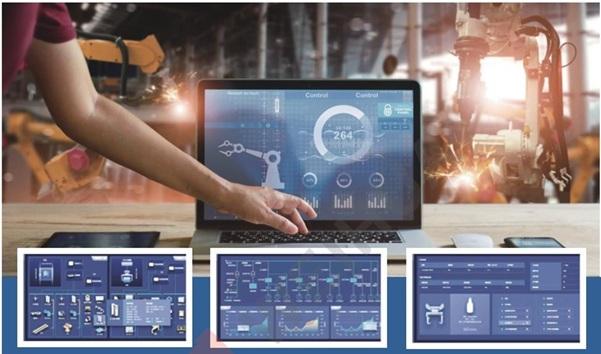
With the advancement of factory automation, the control of overhead cranes has been continuously evolving, gradually shifting from traditional manual operation to automation, intelligent control, and remote management. By leveraging automation, information, intelligent control, and Internet technologies, the operation and management of overhead cranes can transition from purely manual operation and inspection to automated operation, online monitoring, remote maintenance, and technical support, thereby forming a complete intelligent control platform and enhancing crane performance and market competitiveness.
Characteristics and Functions of Intelligent Cranes
Intelligent double girder overhead cranes can automatically perform movements and material handling tasks according to production requirements. They feature programmability, fault diagnosis, human-machine interfaces (HMI), automatic control, and remote management capabilities. Their intelligence encompasses perception, planning, execution, collaboration, learning, and data/information management, integrating disciplines such as mechanical engineering, electrical engineering, automation, instrumentation, computer science, intelligent control, and network communications.
Traditional crane operations involve operators traveling to the pickup location, lowering the hook to lift materials, moving to a target location, and unloading. Operators must follow production instructions, determine pickup points, execute handling operations, maintain material stability and precision, and respond to alarms or faults. Intelligent cranes provide HMI feedback, programmable control, remote training, and online guidance, improving real-time service and operational efficiency.
Key tasks for intelligent cranes include:
- Receiving task information from the control center (communication technology);
- Moving to pickup locations and transporting materials (hook sway suppression, 3D hook positioning, material recognition, automatic program control);
- Monitoring equipment status in real time and responding accordingly (safety monitoring technology);
- Uploading data to central servers and enabling online maintenance (remote monitoring and service center).
A complete system should include automatic material scanning, automatic selection of pickup and drop-off points, path planning, automated material handling, positioning devices, hook sway prevention, work logging and report generation, fault display, and data exchange with the control center. Remote functionality allows for fault diagnosis, maintenance guidance, online monitoring, and program updates, with uploaded data supporting design optimization.
Intelligent cranes reduce physical and cognitive labor, enable deep interaction between humans, machines, and materials, and perform perception, decision-making, and execution processes while providing real-time monitoring and historical process memory for data-driven crane design and systemized control.
Intelligent Crane Control System Architecture
The intelligent crane control system can be divided into three hierarchical levels: device-level, factory-level, and remote management-level.
Device-Level System
The device-level system controls a single intelligent crane, enabling fully automated operation and monitoring while transmitting data to the factory-level platform. It consists of:
- Single-crane control system: Includes PLCs, HMIs, inverters, and sensors, managing full automation and monitoring.
- Positioning and anti-sway devices: Control trolley, bridge, and hook positions, velocities, and sway angles.
- Automated control and material scanning system: Detects material distribution, issues automatic operation commands based on process requirements, and exchanges data with the central control system.
Factory-Level System
The factory-level system connects multiple device-level systems with a factory server to monitor, record, and schedule crane operations.
Key features:
- Located in the main control room, equipped with high-performance computers and communication devices (fiber optics, bus systems, wireless networks).
- Software includes monitoring, database, and production management systems, responsible for signal acquisition, fault self-check, data storage, transmission, and safety.
- Interconnected with device-level systems via LAN for real-time data aggregation and management.
- Supports remote control of crane start/stop, automatic mode selection, and task priority execution.
Remote Management System
Using VPN networks, remote management systems provide centralized monitoring of multiple factory devices, track operational status, store historical data, form an equipment data center, offer lifecycle-based maintenance recommendations, and support design optimization through big data analysis.
Key Technologies
Safety Monitoring and Remote Service Technology
Safety monitoring and remote service enable real-time fault detection and remote diagnosis, improving crane safety, service level, and responsiveness. Components include:
- Safety monitoring system: Measures operational parameters and records load and commands.
- VPN network: Ensures secure remote connectivity and data transmission.
- Data platform and analysis system: Collects, stores, and analyzes operational data to support design optimization.
Cargo Information Recognition, Verification, and Feedback
Intelligent cranes handle materials such as bulk items, coils, boxes, bundles, rolls, pieces, rods, and loose materials. Information recognition technologies include barcodes, RFID, voice, OCR, magnetic encoding, and image/graphic recognition. Accurate material data collection is essential for automated handling.
Hook Anti-Sway Technology
Hook sway affects handling accuracy and safety. Anti-sway methods include:
- Variable-frequency anti-sway with angle feedback;
- Variable-frequency control based on angle algorithms;
- Variable-frequency speed control.
Domestic systems still have room for improvement; universally applicable variable-frequency anti-sway devices are needed.
Automated Control and Management Software
Management software (MES) covers interface modules, inventory management, material recognition, crane scheduling, and spatial positioning. Fully automated control allows task execution based on priority, dynamic adjustment for material availability, and coordination of parking, transport, and other crane tasks. Factory DCS systems provide task signals and define crane operation modes.
3D Spatial Positioning Technology
Crane and hook positioning in 3D space uses sensors such as:
- Limit switches: Mechanical, low precision;
- Proximity switches: Capacitive, inductive, photoelectric, Hall effect;
- Encoders: Speed and position feedback, may require calibration;
- Barcode positioning: ±1 mm accuracy;
- Rack-and-pinion positioning: For trolley travel, requires vibration mitigation.
Intelligent Lifting Device Development
Automatic lifting devices are developed for various materials, including crane hooks, C-hooks, electromagnets, vacuum cups, forks, clamps, grab buckets, and container-type lifters. Intelligent management systems monitor electrical, hydraulic, temperature, load, oil level, position, and orientation parameters, transmitting data wirelessly or via bus systems, with optional remote service and support.
Conclusion
Intelligent cranes, as a key component of intelligent construction machinery, are still in an exploratory stage. This paper analyzes their features, functions, control system architecture, and key technologies, providing a reference for the development of intelligent crane control systems. Future research should consider real-world engineering applications and environmental factors to further advance intelligent crane technology.