
Biometric Spoofing Prevention and Why Liveness Detection Matters in Modern Access Control
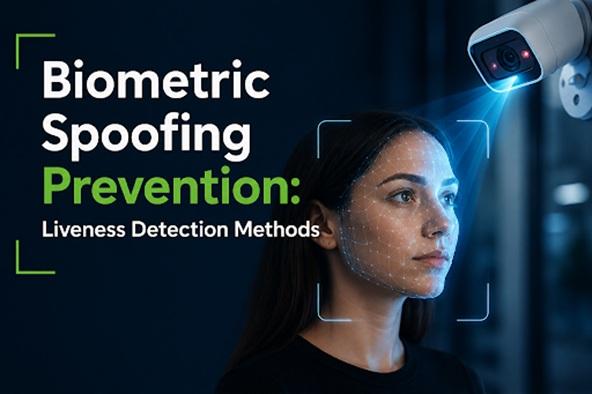
The notification came in on a Thursday morning. A printout of an employee's fingerprint has slipped through a security system at a financial services firm to gain access to a secure data center. The attacker was not able to break the encryption or software but rather simply tricked the biometric sensor into believing that a fake fingerprint was genuine.
This situation occurs more frequently than you may believe. Organizations are increasingly using biometric access control systems to control access to physical and logical resources but are finding a gap in their security strategy. Biometrics do have their benefits over traditional passwords and cards, but they also present a new attack surface that many security teams haven't thought through. Most biometric systems are unable to differentiate between a genuine user and an elaborate fake. This is where liveness detection comes into the equation.
Security professionals already understand that spoofing attacks work across multiple domains. Biometric systems face the same vulnerability. They exploit fundamental assumptions about identity verification, which is why understanding the threat becomes essential. Organizations need to move beyond assuming their biometric sensors automatically prevent unauthorized access, as they don't.
The Spoofing Problem Everybody Underestimates
It turns out that attacks on biometric systems are easier to carry out than most security professionals believe. Fingerprint spoofs can be made of gelatin, silicone, or even good prints. Attackers don't need to know how to use advanced tools or be technically knowledgeable. Materials are readily available, and the techniques are simple enough for just about anyone willing to try to do it.
The problem with this in an enterprise setting is that it needs very few resources to pull off these attacks. These biometric forgeries are not difficult to produce, and can be created with basic knowledge and access to commercially available materials, unlike sophisticated cyber attacks that require expertise and infrastructure. Research on fingerprint spoofing methods demonstrates that fake fingerprints created with materials like gelatin and silicone can successfully deceive scanners without proper detection mechanisms. Insider threats are another aspect to consider; employees who have legitimate access to the biometric data can create spoofs to mask unauthorized access or to implicate their peers.
Why Liveness Detection Matters
Liveness detection exists to solve a common problem, as it identifies whether the biometric being presented originated from a living person in real-time. The challenge is that this determination must happen quickly, reliably, and without getting in your users' way. Block just 5 percent of valid users due to false rejections, and you will see support tickets pile up. Frustrated users eventually find workarounds, and then your whole system falls apart.
Companies deploying modern access control systems understand this tension well. The security team wants absolute certainty, the operations team wants speed, and users want convenience. Liveness detection becomes the tool that balances these competing demands, but only if you choose the right approach for your specific environment.
Active vs. Passive Liveness Detection
The fundamental approach to liveness detection splits into two broad categories, though most modern systems blend elements of both. Active liveness detection requires the user to perform some action during authentication. A facial recognition system might instruct you to blink twice or turn your head left, monitoring whether your biometric responds appropriately. The system watches for behaviors that are difficult to replicate with static presentations.
Passive liveness detection analyzes inherent characteristics of the biometric without requiring explicit user action. For fingerprint systems, this means examining texture, blood flow, perspiration patterns, and electrical conductivity of the skin. Facial recognition systems using passive detection look for micro-expressions and eye movement patterns. The advantage here is that users experience frictionless authentication. The disadvantage is that sophisticated spoofs become progressively harder to detect without additional signals.
Implementation Methods You'll Encounter
Challenge-response approaches are the most common implementation you'll run into. They present the user with random instructions and monitor whether the biometric responds appropriately. These systems work well in controlled environments where users have time to follow instructions, but they introduce latency that isn't suitable for high-throughput access scenarios.
Hardware-based methods detect physical properties that spoofs cannot replicate. Some systems use infrared sensors to measure blood flow, detecting the heat signature of living tissue. Others employ multi-spectral imaging that captures wavelengths invisible to the human eye. These approaches require specialized equipment, which increases deployment costs but provides high assurance for critical access points in regulated industries.
Behavioral analysis methods monitor subtle indicators of liveness. For face recognition, systems watch for involuntary micro-expressions that humans cannot consciously control. Modern machine learning models have become remarkably effective at distinguishing genuine presentations from spoofs. The challenge with this approach surfaces when user populations become diverse. Age, ethnicity, and physical characteristics influence facial expressions and behavior patterns. A system trained predominantly on one demographic may perform differently across populations.
Real-World Challenges in Deployment
Deployment of liveness detection in production environments exposes challenges that testing environments rarely surface. Environmental factors significantly impact performance. Poor lighting breaks facial recognition liveness detection. Wet or damaged fingertips confuse fingerprint sensors. Users wearing sunglasses or masks bypass certain detection methods entirely.
The aging problem deserves specific attention. A biometric template created when someone was thirty years old may perform poorly when they're forty-five. Fingerprints change with age, wear, and injury. Facial features shift due to weight changes and sun damage. Enrollment quality becomes critical. Rush through enrollment, and you'll end up with poor baseline templates.
False Rejection and User Adoption
False rejection rates become organizational burdens that IT teams must manage. A liveness detection system rejecting 3 percent of legitimate authentication attempts sounds acceptable until you realize that in a 500-person building, those rejections affect approximately fifteen people daily. Each rejection generates a support interaction. Analysis of false rejection rate impacts shows that repeated rejections train users to find workarounds, undermining your entire security strategy.
This is why understanding the specific false rejection and false acceptance rates for your selected system matters more than any theoretical performance claims. Companies designing access control systems increasingly factor in re-enrollment protocols and user support burden as core deployment considerations.
Layered Authentication Strategy
Liveness detection works best as one component of a layered authentication approach rather than a complete solution unto itself. Combining biometric authentication with additional factors like proximity cards, mobile credentials, or PIN verification, it reduces reliance on any single authentication method. Implementation decisions should align with your specific threat model. An organization managing access to a data center faces different risks than a company protecting executive offices.
One practical consideration that often gets overlooked involves biometric data storage and refresh. Biometric data should be encrypted at rest and in transit. Access logs should track authentication attempts, and periodic review of those logs helps identify patterns that might indicate spoofing attempts or system compromise.
FAQs from Security Teams
What spoofing method is hardest to defend against?
Deepfake video presentations against facial recognition present the highest difficulty. Advanced deepfakes now incorporate blinking, micro-expressions, and head movements that fool passive liveness detection. Hardware-based approaches remain effective countermeasures.
Can fingerprint liveness detection really detect perspiration patterns?
Modern capacitive sensors measure electrical properties of living tissue, but quality varies significantly between manufacturers. Testing with your specific sensor type is essential before production deployment, as theoretical capabilities don't always translate to reliable field performance.
Do I need to replace existing biometric systems?
Not necessarily. Many existing systems support liveness detection software updates. Assessment of your current hardware capabilities should be the first step before making replacement decisions or budget requests to leadership.
What's the relationship between liveness detection and compliance requirements?
Regulations like GDPR and HIPAA increasingly scrutinize biometric authentication practices. Implementing robust liveness detection demonstrates security best practices, but compliance also requires transparent disclosure of biometric data usage and proper consent protocols.
Conclusion
Liveness detection transforms biometric authentication from a convenient security mechanism into a genuinely effective access control component. The technology isn't new, but adoption in enterprise environments remains inconsistent. If you're still deploying biometric systems without liveness detection, you're essentially inviting spoofing attacks that we now know are entirely feasible.
Your decision to implement liveness detection should be driven by your threat model and user population characteristics, not by vendor marketing or industry trends. Some organizations need the absolute assurance that hardware-based methods provide. Others find that well-implemented passive detection serves their needs effectively. The critical step is moving past the assumption that biometric sensors automatically prevent unauthorized access. They don't. The sooner your security strategy accounts for this reality, the sooner you'll build access control systems that actually work.