Security | Threat Detection | Cyberattacks | DevSecOps | Compliance

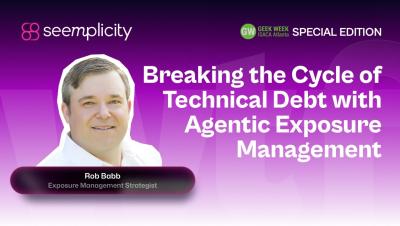
Breaking the Cycle of Technical Debt with Agentic Exposure Management

In this video, Rob Babb, Exposure Management Strategist at Seemplicity, shares key insights from a presentation at ISACA Atlanta’s Geek Week regarding breaking the cycle of technical debt through agentic exposure management. The discussion focuses on why standard scoring methods like CVSS are often insufficient on their own for effective vulnerability prioritization.12 Key Topics Covered: For more information on agentic exposure management, visit: seemplicity.ai.

Are You Behind on Patching? | CISA KEV vs. Third-Party KEVs

Are you relying solely on the CISA KEV list for your vulnerability management? You might already be behind. In this video, Rob Babb, Exposure Management Strategist at Seemplicity, discusses why waiting for a vulnerability to appear on the CISA KEV list can leave your organization exposed for weeks. In this video, you’ll learn: It's time to break the cycle of technical debt. Learn more at: seemplicity.ai.

Scaling Exposure Management: From Manual Patching to AI-Powered Remediation

Is your security team drowning in a "WTF" moment? When vulnerability scanners return 45,000+ critical findings, manual workflows simply can't keep up. In this session, Megan Horner (Director of Product Marketing at Seemplicity) explores why traditional vulnerability management is failing in the age of AI-driven attacks. What you’ll learn: Stop treating remediation as a manual chore and start building an automated pipeline.

Turning Bug Bounty Chaos into Structured Action

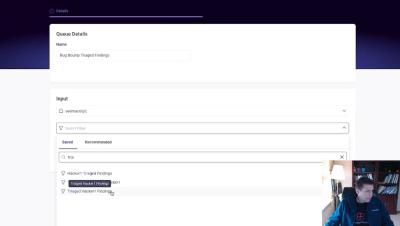
For many security teams, bug bounty programs are a double-edged sword: they provide critical insights automated tools miss, but they also introduce a massive operational burden due to free-form, unstructured, and noisy data. In this video, Kevin Swan, Sr Product Marketing Manager at Seemplicity, demonstrates how Seemplicity's Exposure Action Platform bridges the Triage Gap by transforming unstructured HackerOne findings into clear, trackable fixes. Learn how to move findings from a third-party platform into a remediation workflow without slowing down your engineering teams.

Claude Mythos Just Killed Exploitability as a Security Signal

The game has changed. For years, security teams used exploitability to decide what to patch first. If a vulnerability had a known exploit, it went to the top of the list. If not, it waited. But with the arrival of next-gen AI models like Claude Mythos, that strategy is officially broken. In this video, we discuss how Claude Mythos has collapsed the barrier to building working exploits. What used to take real skill and significant time can now be weaponized in minutes. When everything is exploitable, exploitability becomes noise.

From Finding to Fix: Remediation Orchestration When Asset Ownership Is Missing

Security teams don’t struggle to find issues. They struggle to move them forward. In this use case demo, we show how remediation coordination breaks down when assets have no clear owner, and how remediation orchestration restores accountability across teams, tools, and environments. You’ll see how security teams can move beyond manual handoffs, Slack messages, and guesswork by orchestrating remediation across teams, even when ownership is unclear or spans multiple domains.

Seemplicity's AI Agents: Clarity

Meet Clarity, the first of Seemplicity’s four new AI Agents transforming how security teams understand and act on vulnerabilities. Instead of cryptic scanner outputs and confusing CVE text, Clarity turns dense technical data into clear, actionable narratives — explaining what happened, why it matters, and how to fix it. With Clarity, you can: Translate vulnerability data into plain language Improve collaboration between security, IT, and engineering Accelerate remediation and reduce exposure fatigue.

Streamlining DevSecOps with ASPM | Seemplicity

How ASPM Improves DevSecOps Efficiency Is your DevSecOps process slowing you down instead of speeding you up? In this quick educational video, we break down how Application Security Posture Management (ASPM) helps DevSecOps teams cut through noise, streamline workflows, and fix what matters—without disrupting development velocity. You'll learn: The common pitfalls slowing down DevSecOps How ASPM centralizes findings and prioritizes real risks Ways ASPM automates remediation workflows What smarter, faster security looks like in practice.

How to Move Beyond Spreadsheets When Managing Vulnerabilities | Seemplicity

Still managing vulnerabilities with spreadsheets? In this short video, discover why traditional methods fall short and how automated Remediation Operations (RemOps) can help you move beyond manual tracking, endless update chasing, and version chaos. Learn how modern security teams: Whether you're dealing with a growing backlog or struggling to scale your vulnerability management, this video shows you a better, faster way forward.

How to Avoid 3 Common Mistakes in Remediation Execution | Seemplicity

Learn how to avoid common mistakes in remediation plan execution with Seemplicity's Director of Product Marketing, Megan Horner. Discover three critical missteps - lack of accountability, poor prioritization, and reliance on manual processes - and gain actionable tips to address them. By enhancing accountability, focusing on high-risk vulnerabilities, and automating workflows, your organization can improve remediation efficiency and reduce cybersecurity risks.