Security | Threat Detection | Cyberattacks | DevSecOps | Compliance

Guidelines: How to reduce the noise of Falco rules in Sysdig Secure

Rule tuning is one of the most important steps during the definition of the security posture. With the detection rules, it’s impossible to use a “one fits all” approach: every customer has a unique environment, with its peculiarities and business needs. So, when a new rule is released it’s crucial to understand the security use case behind the detection and reduce the false positives (FP) as much as possible. The Threat Research Team constantly checks if noise occurs.

Terraform Security Best Practices

Terraform is the de facto tool if you work with infrastructure as code (IaC). Regardless of the resource provider, it allows your organization to work with all of them simultaneously. One unquestionable aspect is Terraform security, since any configuration error can affect the entire infrastructure. In this article we want to explain the benefits of using Terraform, and provide guidance for using Terraform in a secure way by reference to some security best practices. Let’s get started!

Chaos Malware Quietly Evolves Persistence and Evasion Techniques

The name Chaos is being used for a ransomware strain, a remote access trojan (RAT), and now a DDoS malware variant too. Talk about chaos! In this case, Sysdig’s Threat Research Team captured attacks using the Chaos variant of the Kaiji botnet malware. There is very little reported information on this malware since September 2022, perhaps because of the unfortunately chaotic naming, or simply because it is relatively new. Kaiji malware was of Chinese origin in 2020 and is written in Golang.

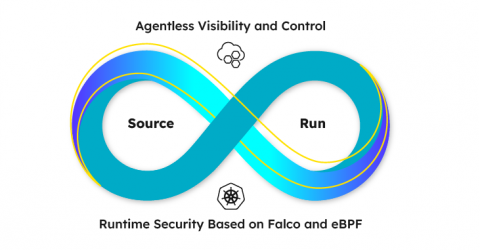
Why CNAPP Needs Runtime Insights to Shift Left and Shield Right

There’s an important shift happening in the cloud security industry: organizations are looking for an integrated platform that connects the dots between several key security use cases from source through production. Whether it is for tool consolidation, consistent end-to-end experience, or “one throat to choke,” customers are increasingly choosing a platform-based approach to address critical cloud security risks.

DISA STIG compliance for Docker and Kubernetes with Sysdig Secure

What if a malicious threat actor would want to get into the U.S. Department of Defense’s (DoD) network. Could they do it? You may think this only happens in the movies, right? In this case, reality surpassed fiction. On Dec.20, 2018, the APT10 Group did exactly that. Members of APT10 stole personal, confidential information, including social security numbers and dates of birth, from over 100,000 Navy personnel.

Why the Wiz/SentinelOne Partnership Validates the Sysdig Approach

With today’s announcement of the Wiz/SentinelOne partnership and other recent launches, like Orca/ThreatOptix, we are seeing cloud security players publicly validate that they can no longer compete without a compelling runtime security solution. Agentless technology enabled young companies to solve the low-hanging fruit problem of periodic cloud security assessment.

MITRE ATT&CK and D3FEND for Cloud and Containers

MITRE ATT&CK and MITRE D3FEND are both frameworks developed by the non-profit organization MITRE, but they serve different purposes. If you are new to the MITRE ATT&CK framework and would like to brush up on some of the concepts first, we created a Learn Cloud Native article to help you on your journey. If you want to go further, here’s how Falco’s Cloudtrail rules align with MITRE ATT&CK.

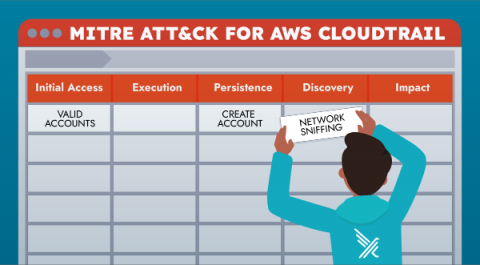
Aligning Falco's Cloudtrail Rules with MITRE ATT&CK

This blog will explain how Falco’s Cloudtrail plugin rules can be aligned with MITRE ATT&CK Framework for Cloud. One important note is that the team at MITRE has developed several different matrices to address the unique risk associated with adversaries in the cloud, in containerized workloads as well as on mobile devices.

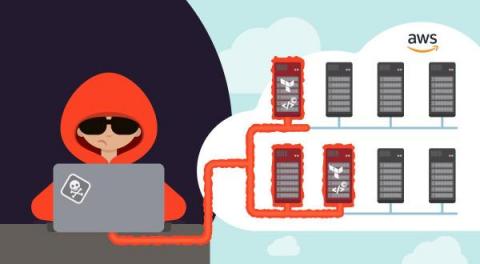
SCARLETEEL: Operation leveraging Terraform, Kubernetes, and AWS for data theft

The Sysdig Threat Research Team recently discovered a sophisticated cloud operation in a customer environment, dubbed SCARLETEEL, that resulted in stolen proprietary data. The attacker exploited a containerized workload and then leveraged it to perform privilege escalation into an AWS account in order to steal proprietary software and credentials. They also attempted to pivot using a Terraform state file to other connected AWS accounts to spread their reach throughout the organization.