Security | Threat Detection | Cyberattacks | DevSecOps | Compliance

How Do CNAPP Platforms Help Prevent Misconfigurations Across Multi-Cloud Environments?

Cloud misconfigurations rank among the leading causes of cloud security incidents across AWS, Azure, and Google Cloud Platform. CNAPP platforms deliver cloud security posture management (CSPM) with continuous detecting misconfigurations in multi-cloud environments, automated remediation for cloud misconfiguration, and unified policy enforcement.
What CVE 2026 23550 Is & Why It's Critical

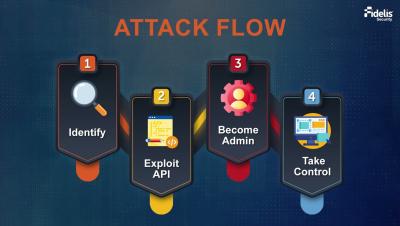
CVE-2026-23550 is a critical unauthenticated privilege escalation vulnerability affecting the Modular DS WordPress plugin (versions ≤ 2.5.1). With a CVSS score of 10.0, this flaw allows attackers to gain full administrator access without authentication. In this video, we break down: What CVE-2026-23550 is How the vulnerability works (technical root cause) What attackers can do after exploitation.

A Deep Dive into Fidelis Network Deception Features and What They Mean for Security Teams

Security teams today are not failing because they lack tools. Most organizations already have firewalls, EDR, SIEM, cloud monitoring, and multiple detection layers. Yet attackers still manage to enter networks, stay hidden, and move laterally before detection. That gap between entry and detection is the real challenge. This creates pressure for CISOs and SOC leaders. Analysts deal with alert fatigue, unclear signals, and limited time. When alerts are uncertain, response slows.

From DevOps to Runtime: Engineering the Right CWPP Strategy for Your Cloud Environment

Cloud-native architectures have fundamentally changed how organizations build, deploy, and scale applications. But they have also introduced new security challenges, especially when it comes to protecting workloads that span virtual machines, containers, Kubernetes, and serverless environments.

How to Respond After an Active Directory Compromise: Step-by-Step Active Directory Response and Recovery Playbook

Enterprise IT relies heavily on Active Directory (AD) for user, access, and authentication management. A compromise can harm systems, data, and accounts. Why Swift Response Matters A fast, effective response can contain an AD incident, while delays can turn it into a major organizational crisis, including: A clear AD response plan is essential to systematically: Long downtime, damage to organization’s reputation, and problems with compliance can result from neglecting proactive AD recovery.

Why Network Security Blind Spots Persist and How Behavior Monitoring Fixes Them

You are counting on lots of security measures to keep your network safe. The truth is that these measures can still have secret passages that bad people can use to sneak around without being noticed. You can have things like firewalls and special software, on your computers to watch for problems and still not catch people moving around inside your network taking data slowly or doing weird things that are not supposed to happen because these things do not always look like the problems you are expecting.

How Cloud-Native Applications Defend Against DDoS Attacks

As organizations migrate critical applications to the cloud, cloud-based DDoS attacks and defenses have become a growing concern amid the increasing number of cyber threats. Unlike traditional threats, these attacks are increasingly targeted, sophisticated, and capable of disrupting services in ways that can impact entire business operations and business continuity.

How to Prevent Active Directory Attacks by Securing Privileged Accounts

Let’s be honest—when Active Directory is compromised, the incident is never small. Almost every major enterprise breach involves Active Directory at some point. Attackers may enter through phishing, malware, or a misconfigured endpoint, but their real goal is always the same: gain control over privileged identities and Domain Admin accounts. Once that happens, containment becomes difficult and recovery becomes painful. Preventing Active Directory attacks isn’t about adding more tools.

CVE-2025-59287 WSUS Vulnerability: Exploitation, Defense & Detection Explained

CVE-2025-59287 turns WSUS (Windows Server Update Services) into a high-value attack surface—and attackers are already abusing it. In this video, we break down how CVE-2025-59287 is exploited, what defenders should look for, and how to mitigate and detect attacks before damage spreads across your environment. What you’ll learn in this video: How attackers scan exposed WSUS servers on ports 8530 and 8531.

Hybrid Network Security in 2026: Key Challenges, Risks, and Best Practices

Secure hybrid networks promise agility by blending on-premises data centers with public cloud platforms and private cloud environments—yet cross-cloud blind spots leave security teams racing to spot threats slipping through hybrid seams. Attackers chain exploits across multiple environments while visibility evaporates under tool sprawl, turning flexible hybrid network architectures into dangerous patchwork. In 2026, US organizations face $10.22 million average data breach costs amid this chaos.

AWS ECR Scanning: The Practical Guide to Securing Your Containers

If you operate containers on AWS you’re likely familiar with how vulnerabilities can accumulate. The majority of container images currently include least one critical security flaw. Frequently hidden within a base image or an overlooked dependency. This makes enhancing your AWS container security essential. It’s the method to prevent problems such, as data leaks, privilege abuse and supply-chain threats.

Inside Cloud Malware Analysis: Techniques and Real-World Use Cases

Cloud environments power modern business, but they also attract sophisticated malware. Attackers target cloud storage, virtual machines, and APIs to hide malicious code and steal sensitive data. This guide explains cloud malware analysis in clear terms. It covers key techniques and real examples to help security teams spot and stop these threats.