Security | Threat Detection | Cyberattacks | DevSecOps | Compliance

Emerging Threat: Axios npm Supply Chain Attack Drops Remote Access Trojan (RAT)

On March 31, 2026, two malicious versions of axios were published to npm, , using credentials stolen from a lead axios maintainer. The attacker injected a hidden dependency into both releases that drops a remote access trojan (RAT) on any machine that ran npm install during the exposure window. No CVE identifier has been assigned at the time of writing. The malicious dependency executes automatically at install time via a postinstall hook, without any action by the developer.

Emerging Threat: F5 BIG-IP Access Policy Manager Remote Code Execution (CVE-2025-53521)

CVE-2025-53521 is an unauthenticated remote code execution vulnerability in F5's BIG-IP Access Policy Manager (APM). The flaw exists in the apmd process, the daemon responsible for processing live access policy traffic, and is triggered when a BIG-IP APM access policy is configured on a virtual server and the system receives specific malicious traffic. No credentials are required to exploit it. The vulnerability carries a CVSS score of 9.8 and a CVSS score of 9.3.

Citrix NetScaler ADC and Gateway Vulnerabilities (CVE-2026-3055 & CVE-2026-4368)

On March 23, 2026, Cloud Software Group (Citrix) published a security bulletin disclosing two vulnerabilities in NetScaler ADC (formerly Citrix ADC) and NetScaler Gateway (formerly Citrix Gateway). Both affect customer-managed on-premises deployments; Citrix-managed cloud services and Adaptive Authentication instances have been updated automatically. CVE-2026-3055 is an out-of-bounds read resulting from insufficient input validation in NetScaler ADC and NetScaler Gateway.

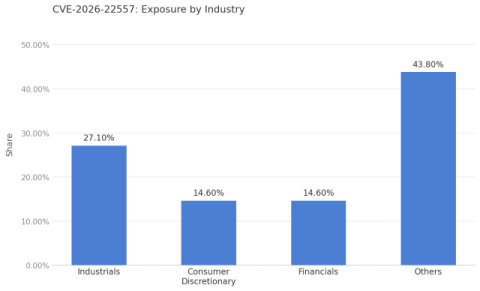
Emerging Threat: Ubiquiti UniFi Network Application Path Traversal (CVE-2026-22557)

CVE-2026-22557 is a path traversal vulnerability in the Ubiquiti UniFi Network Application caused by improper limitation of a pathname to a restricted directory (CWE-22). A malicious actor with network access can exploit the flaw to traverse directory boundaries, access files on the underlying operating system, and manipulate those files to gain unauthorized access to system accounts.

Emerging Threat: GNU Inetutils telnetd LINEMODE SLC Buffer Overflow (CVE-2026-32746)

CVE-2026-32746 is a critical out-of-bounds write in GNU Inetutils telnetd caused by insufficient bounds checking in the LINEMODE SLC (Set Local Characters) suboption handler. Public advisories attribute the issue to the add_slc logic not verifying whether the destination buffer is already full before writing additional data. The published CVSS v3.1 score is 9.8, with network attack vector, no required privileges, and no user interaction.

Emerging Threat: Microsoft SQL Server Elevation of Privilege Vulnerability (CVE-2026-21262)

CVE-2026-21262 is an elevation of privilege vulnerability affecting Microsoft SQL Server. The issue is caused by improper access control within SQL Server components, allowing an authenticated attacker to elevate privileges over a network.

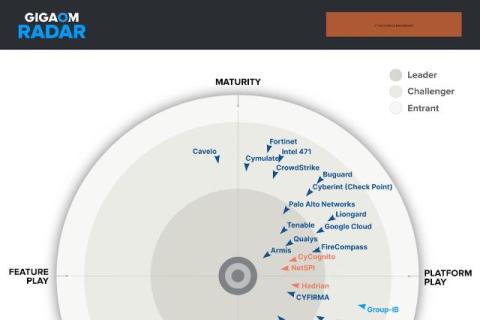
CyCognito Named a Leader and Outperformer in the 2026 GigaOm Radar for ASM

In 2026, the ASM scorecard has moved well past discovery. The market is shifting from visibility to validated proof: what’s exploitable, what connects to critical systems, and what requires immediate action. The latest GigaOm Radar for Attack Surface Management is anchored to that bar. Across 32 vendors, it highlights the platforms that have moved beyond inventory into contextual prioritization and actionable validation. This is the turning point CyCognito is built for.