Security | Threat Detection | Cyberattacks | DevSecOps | Compliance

Mapping and Managing AI Supply Chain Risk (Featuring Panorays)

-Recent breaches show AI risk is already present in many environments, often entering through suppliers, data flows, and integrations. But awareness alone is not enough. CISOs and security leaders must actively manage the expanded attack surface AI creates. In this session, experts from CyCognito and Panorays help you understand how to identify AI relationships, assess the risks they pose, and remediate vulnerabilities before they lead to an incident. You’ll learn.
Emerging Threat: Cisco Catalyst SD-WAN Authentication Bypass (CVE-2026-20127)

CVE-2026-20127 is a critical authentication bypass vulnerability affecting Cisco Catalyst SD-WAN Controller (vSmart) and Cisco Catalyst SD-WAN Manager (vManage). The flaw stems from improper validation within the control plane and management plane authentication mechanisms, allowing a remote, unauthenticated attacker to submit crafted requests that bypass standard authentication controls. Successful exploitation results in access to the system as a high-privileged internal user account.

Emerging Threat - Dell RecoverPoint for VMs Hardcoded Credential (CVE-2026-22769)

CVE-2026-22769 is a hardcoded credential vulnerability affecting Dell RecoverPoint for VMs, a disaster recovery orchestration platform used to manage replication and failover of virtualized workloads. The issue stems from static authentication credentials embedded within a product component. Because these credentials are not uniquely generated per deployment and cannot be changed by administrators, they introduce a structural authentication weakness.

Permission to Ignore: Leveraging the CTEM Framework to Focus on Real Risk

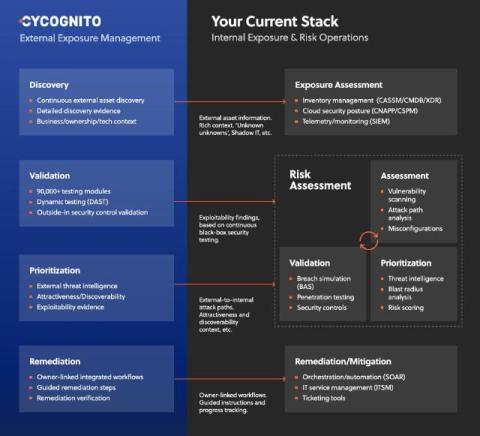
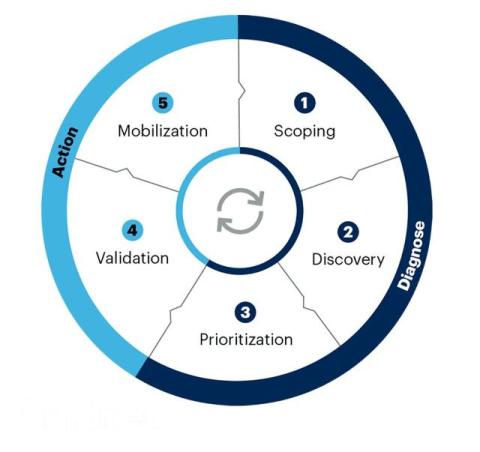
Security frameworks have always had a gap. They tell you to find vulnerabilities and fix them, but they’ve rarely provided a system to determine which ones actually matter before you tap into your most expensive resource: engineering time. CTEM changes the game by treating security as a continuous lifecycle rather than a series of silos.

Emerging Threat: CVE-2026-1731 - BeyondTrust Privileged Access Exposure Risk

CVE-2026-1731 is a vulnerability disclosed in products developed by BeyondTrust. At the time of writing, publicly available technical details regarding the root cause, vulnerable code paths, and exploitation prerequisites remain limited. Based on initial advisory information, the issue affects components involved in privileged access or remote access workflows, which are typically deployed to manage high-value credentials, session brokering, or secure administrative access to enterprise systems.

From Activity to Impact: How CTEM Refocuses Security KPIs

For years, security programs reported progress using the same familiar metrics: number of vulnerabilities, patch rates, backlog size. These metrics became the default scorecard not because they reflected risk, but because they were easy to produce. The problem is that these metrics do not measure security improvement. They measure activity. Vulnerability counts rise and fall with scan cadence. Patch rates spike around maintenance windows. Backlogs grow when coverage improves.

What's New in CyCognito: February 2026 Platform Enhancements

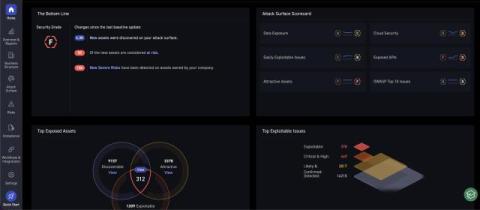
Security teams need clear signals, fast investigations and enablement that fits into existing workflows. The latest CyCognito updates focus on improving posture visibility, expanding user learning in-app, and streamlining asset and issue review. Recent enhancements include a new beta Homepage, CyCognito Academy, list view improvements and expanded notification controls.

Removing the Guesswork from CTEM

When Gartner introduced Continuous Threat Exposure Management (CTEM) in 2022, it formalized a problem security teams had been struggling with for years: patching large volumes of vulnerabilities was not translating into meaningful risk reduction. CTEM reframed the problem. Instead of measuring progress by the number of CVEs addressed, it shifted focus to whether attackers could actually reach and exploit assets that matter to the business. What Gartner did not provide was a concrete recipe for execution.

Emerging Threat: CVE-2026-24858 - FortiCloud SSO Authentication Bypass

CVE-2026-24858 is an authentication bypass vulnerability affecting FortiCloud’s Single Sign-On (SSO) implementation. Under certain conditions, the flaw allows an unauthenticated attacker to bypass standard authentication checks and gain access to FortiCloud services without valid credentials. The root cause is tied to insufficient validation within the SSO authentication flow, where trust boundaries between identity assertions and session establishment are not enforced strictly enough.