Security | Threat Detection | Cyberattacks | DevSecOps | Compliance

Report: Cybercriminals are Hiring Social Engineering Talent

ReliaQuest has published a report on the cybercriminal recruitment ecosystem, finding that fluent English speakers with social engineering skills are highly sought-after. “Among the most in-demand skills is English-speaking social engineering, with job posts more than doubling from 2024 to 2025,” the researchers write.

New Phishing Kit Bypasses MFA to Steal Microsoft 365 Credentials

Attackers are using a newly discovered phishing-as-a-service (PhaaS) platform dubbed “Salty 2FA” to target a wide range of industries across North America and Europe, according to researchers at ANYRUN. The phishing attacks are delivered via email and primarily attempt to steal Microsoft 365 credentials. Like many popular commodity phishing kits, Salty 2FA is designed to bypass a variety of multifactor authentication measures.

The Hidden Cost of "Free" Gifts: How Survey Scams Are Evolving to Steal Financial Data

You've probably seen them: enticing online offers for free products from brands you trust, like a Yeti beach chair from Costco or an emergency car kit from AAA. All you have to do is fill out a quick survey and pay a small "shipping fee" of a couple of dollars. But what seems like a harmless transaction is actually a sophisticated scam with a high price tag. The KnowBe4 Threat Lab team has been tracking a phishing campaign where scammers use these fake surveys to steal financial data.

The Technical Sophistication Behind the "Free" Gift Scam: Evading Detection

Below is an example of a sophisticated survey scam phishing email that KnowBe4’s Threat Lab team has been monitoring as discussed in “The Hidden Cost of "Free" Gifts: How Survey Scams Are Evolving to Steal Financial Data”. As discussed in our previous blog, the human element is a critical part of the fake survey scam. However, the campaign's success is largely due to its advanced technical infrastructure.

Threat Actors Are Increasingly Abusing Generative AI Tools for Phishing

Cybercriminals are increasingly abusing AI-assisted website generators to quickly craft convincing phishing sites, according to researchers at Palo Alto Networks’ Unit 42. In many cases, even when these services have safeguards in place to prevent abuse, criminals are able to bypass these measures in order to create phishing pages. Unit 42 tested a popular website generator to see how easy it was to spin up a spoofed website.

The Attacker's Playbook: A Technical Analysis of Quishing and Encrypted SVG Payloads Used in HR Impersonation Phishing Attacks

In this series, we first explored the psychology that makes HR phishing so effective, then showcased the real-world lures attackers use to trick your employees. Now, we’re going under the hood to answer the critical question: How do these attacks technically bypass security defenses?

New Homoglyph Phishing Campaign Impersonates Booking.com

Attackers are using a Japanese Unicode character to replace forward slashes in phishing URLs, BleepingComputer reports. The attacks impersonate Booking.com with phony emails that inform users of a new login to their account. “The attack, first spotted by security researcher JAMESWT, abuses the Japanese hiragana character “ん” (Unicode U+3093), which closely resembles the Latin letter sequence '/n' or '/~', at a quick glance in some fonts,” BleepingComputer explains.

Phishing Attacks Target Brokerage Accounts to Manipulate Stock Prices

Professional phishing groups are targeting customers of brokerage firms in order to manipulate stock prices, KrebsOnSecurity reports. The attackers use a technique called “ramp and dump” to profit from the scheme. “With ramp and dump, the scammers do not need to rely on ginning up interest in the targeted stock on social media,” Krebs explains.

Warning: Social Engineering is a Growing Threat to the Industrial Sector

Social engineering attacks are a growing threat to operational technology (OT) environments, Industrial Cyber reports. Cyberattacks against these environments can be particularly damaging since they have the potential to cause physical disruptions.

From Human Resources to Human Risk: Why HR is the Perfect Department for Cybercriminals to Impersonate

We all trust HR - or at least we do when we think they’re emailing us! Data from KnowBe4’s HRM+ platform reveals that phishing simulations with internal subject lines dominate the list of most-clicked templates in 2025. Out of the top 10 templates people interacted with between May 1 - June 30, 2025, an incredible 98.4% had subject lines relating to internal topics - with HR mentioned in 45.2%.

That 'Urgent Payroll Update' Email is a Trap: A Look at the Latest HR Phishing Tactics

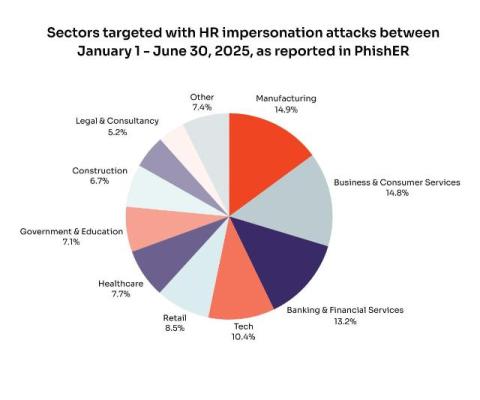
Phishing attacks impersonating HR are on the rise. Between January 1 – March 31, 2025, our Threat Lab team observed an 120% surge in these attacks reported via our PhishER product versus the previous three months. These attacks have remained at elevated levels since peaking in February. (FYI in our previous post, we explored the psychology that makes these attacks so effective.

How KnowBe4 Defend Seamlessly Integrates with Microsoft Defender for Office 365 Quarantine-And Why SOC Teams Should Care

Modern Security Operations Centers (SOCs) face a persistent challenge: managing threats across multiple security tools while maintaining operational efficiency. While single-vendor approaches offer simplicity, they often leave gaps that sophisticated attackers are quick to exploit. The reality is that today's threat landscape demands a more nuanced approach—one that combines the best capabilities from multiple specialized vendors.

A Practical Guide to the European Union's Cybersecurity Funding for SMEs

For any small- to medium-sized enterprise (SME), the cybersecurity landscape can be intimidating. You are informed of a variety of threats, reliable expertise is scarce, and there is limited (if any) budget available. To help with this, the European Union (EU) has funding available to help SME’s improve their cyber defences. But what does this funding actually entail, and how can it practically help your organisation? Let's break it down.

Alert: Tech Support Scammers Send Phony Podcast Invites

The Better Business Bureau (BBB) has warned that scammers are targeting high-profile employees and influencers with fake invitations to appear as a guest on popular celebrity podcasts. The scammer poses as the podcast’s production manager, offering the target $2,000 for the appearance. If the victim agrees, the attacker will ask them to hop into a virtual meeting to test their setup before the podcast.

Beyond the Inbox: How Old-School Mail Scams Are Still Stealing Your Money

In a world so full of digital online scams, it’s hard to remember that scammers abuse our postal mailing systems as well. Scams are as old as humanity. And most of the scams we see today on the internet have been occurring for decades or even centuries before the internet was the internet. Nigerian scams have been documented back to the 1700s.

Anatomy of a Vishing Scam

I hear about a ton of similar-sounding scam calls, where the scammer is pretending to be from a service you use (or used), offering you a substantial monthly discount (30% or more) if you pay some fee ahead of time. Sometimes they take the advance fee using your credit card, and sometimes they tell you that you have to get store gift cards. Who would possibly believe that a legitimate vendor would want them to pay with store gift cards? Hundreds of thousands of people.

FBI Report: Attackers Are Sending Physical Packages with Malicious QR Codes

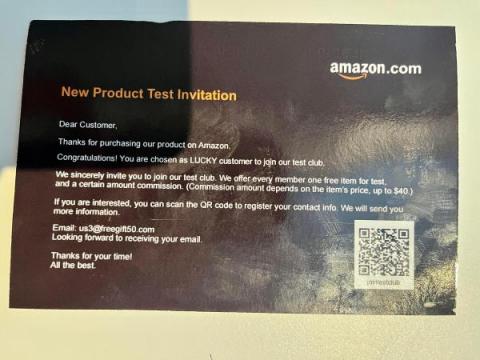
The FBI has issued an advisory warning that scammers are distributing QR code phishing (quishing) links via unsolicited packages sent by snail mail. Recipients may scan the code to find out where the package came from, which will land them on a phishing page. This is a variation of a “brushing scam,” where unscrupulous vendors send packages designed to harvest information that can be used in phony positive reviews.

Beyond Traditional Defenses: Why French Cyber Resilience Needs to Improve

In today's world, cyberattacks are a constant threat. While technical defenses are crucial, people often remain the easiest attack vector for cybercriminals. To gauge the resilience of French employees against cyberattacks, we looked at the impact of security awareness training (SAT) and phishing simulations in strengthening their defenses. Our latest report, "Go Phish: How Susceptible Are French Employees To Malicious Attacks?", aims to provide some insight.

Social Engineering Attacks Surged in the First Half of 2025

Cybersecurity incidents nearly tripled in the first half of 2025, jumping from 6% in the second half of 2024 to 17% in 2025, according to a new report from LevelBlue. Business email compromise (BEC) remains the most common method for initial access, but non-BEC tactics rose by 214%. The researchers observed a major surge in social engineering attacks, driven by the recent popularity of the ClickFix tactic.

Warning: New Phishing Campaign Targets Instagram Users

A phishing campaign is targeting Instagram users with phony notifications about failed login attempts, according to researchers at Malwarebytes. Notably, the emails contain "mailto" links rather than traditional URLs, which help the phishing messages avoid being flagged by security filters. "Instead of linking to a phishing website, which is most common with emails like this, both the ‘Report this user’ and ‘Remove your email address’ links are mailto links," the researchers write.

If You Think Social Engineering Is Bad, It's Going To Get Worse

There is no other way to say it clearer, social engineering is going to be a lot, lot worse soon and far more successful than it is today. And that’s saying a lot. It’s already pretty bad. As I’ve been touting for over 20 years…in hundreds of articles…social engineering is involved in more successful data breaches than any other single hacker method.

How Hackers Exploit Microsoft Teams in Social Engineering Attacks

Attackers are using Microsoft Teams calls to trick users into installing the Matanbuchus malware loader, which frequently precedes ransomware deployment, according to researchers at Morphisec. Matanbuchus is a malware-as-a-service offering that allows threat actors to install additional payloads onto infected Windows systems. “Over the past nine months, Matanbuchus has been used in highly targeted campaigns that have potentially led to ransomware compromises,” Morphisec says.