Security | Threat Detection | Cyberattacks | DevSecOps | Compliance

How to build a unified control framework for multi-standard compliance

In this article Businesses face an increasingly complex environment when it comes to compliance. With multiple standards emerging from different jurisdictions and regulatory bodies, achieving operational efficiency while ensuring regulatory adherence can be challenging. A Unified Control Framework (UCF) designed to handle multi-standard compliance is not just a technical solution; it is a leadership imperative that demands vision, collaboration, and robust strategies.


GDPR, CCPA, and ISO 27701: Harmonizing global data privacy compliance

In this article Data has become one of the most valuable assets for organizations. The increased flow of personal information across borders has compelled regulatory bodies and industry standards to introduce robust data privacy frameworks. Three prominent instruments that have emerged on the global stage are the European Union’s General Data Protection Regulation (GDPR), the California Consumer Privacy Act (CCPA), and the International Organization for Standardization’s ISO 27701 standard.

Third-party risk is everyone's problem: What CISOs need to know now

In this article The alarm wasn’t a breach. It was an invoice. A mid-sized enterprise onboarding a new analytics vendor found themselves tangled in a post-implementation scramble: customer data had been shared without encryption, the vendor’s security posture was based on trust alone, and legal had skipped the SLA review because “they’d worked with them before.” What followed wasn’t a data loss, but something quieter and more corrosive, an erosion of confidence.

Leveraging AI to reduce cybersecurity costs and risks: A CISO's guide

In this article Chief Information Security Officers (CISOs) face a dual imperative in the digital landscape of today: safeguarding their organizations from an ever-evolving threat landscape while managing escalating security costs. Artificial Intelligence (AI) offers transformative potential in meeting these challenges by automating threat detection, streamlining compliance, and optimizing resource allocation.

How CISOs are using AI to automate risk assessments in 2025

In this article In 2025, the role of the Chief Information Security Officer (CISO) and compliance leadership has become even more critical in ensuring that risk assessments are not only comprehensive but also agile and adaptive. Artificial Intelligence (AI) has emerged as a transformative force in cybersecurity, enabling risk assessments to be automated, more accurate, and proactive.

Third-party risk management: What's next | TrustTalks - Ep 35 | Security and GRC Podcast

Akshay sits down with Paola to discuss Third-party risk management. Third-party risk isn’t just a security checkbox anymore, it’s becoming one of the most dynamic and high-stakes areas of enterprise risk. In this episode, we unpack where third-party risk management is headed: from static spreadsheets to real-time monitoring, from annual audits to AI-driven insights, and from compliance pressure to competitive advantage.

Third-party risk management: Trends, tech, and what's next

In this article There’s a silent shift happening in boardrooms, risk teams, and procurement departments across counters, and it’s reshaping how companies think about their vendors. Third-party risk used to be a compliance afterthought, reduced to a stack of spreadsheets and annual checklists. But not anymore.

ISO 42001 & NIST AI RMF: Practical steps for responsible AI governance

As artificial intelligence continues to reshape industries, responsible governance has emerged as a business necessity. Organizations deploying AI face the challenge of maintaining innovation while mitigating risks related to bias, data privacy, security, and transparency. Two major frameworks – ISO 42001 and NIST AI Risk Management Framework (AI RMF)—have been developed to help businesses navigate this balance.

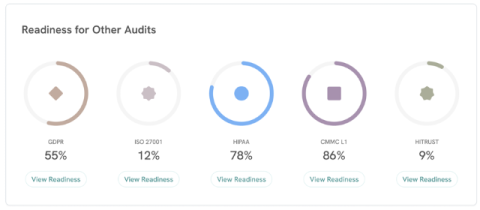
Continuous audit readiness: Multi-frame compliance for strategic advantage

Navigating the business environment calls for a proactive approach to risk management—particularly through continuous audit readiness. This strategy not only assures compliance across multiple frameworks, but it also drives operational efficiency, protects brand reputation, and supports strategic decision-making initiatives.

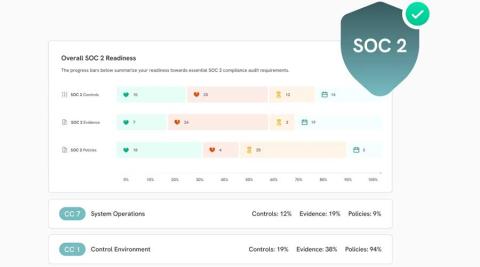
SOC 2 complete guide

SOC 2 compliance is no longer a “nice to have” – it’s an essential requirement for SaaS providers and service organizations handling sensitive client data. Whether you’re a startup looking to build credibility or an established firm entering enterprise deals, SOC 2 offers a structured framework to demonstrate your commitment to security, privacy, and operational integrity.

Automating evidence collection for regulatory compliance: Tools & best practices

With mounting pressures from regulatory bodies, leaders face the dual challenge of maintaining audit readiness while streamlining processes to combat increasing administrative overhead. Automation is emerging as a strategic solution that not only addresses existing pain points but also transforms the enforcement of compliance into a proactive business function.

How to get HITRUST certified

How to get HITRUST certified has become a strategic move for organizations handling sensitive health and financial data. It demonstrates a serious commitment to information security, privacy, and regulatory compliance. However, the path to certification is often viewed as daunting – requiring time, budget, internal effort, and cross-functional coordination. Many organizations struggle with cost concerns, internal resource limitations, and uncertainty about the actual return on investment.

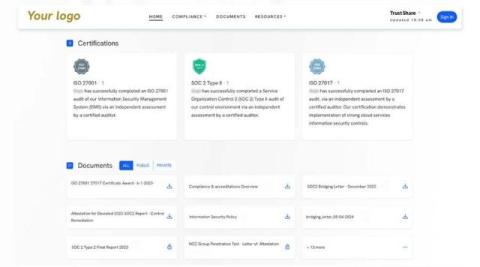
Customer assurance portals: Enhancing trust and accelerating sales cycles

Effective leadership demands innovative strategies that address customer concerns while streamlining business processes. One such strategy involves the use of customer assurance portals to build trust and accelerate sales cycles. As business leaders explore new avenues to stay ahead, understanding the power and potential of these portals is imperative.

What is a SOC 2 Report?

You’re facing a SOC 2 audit, and you don’t quite know what to expect or how to prepare for it. Although an independent auditor will inspect your company’s IT security program, you’re not entirely sure what information the resulting report may contain. To get fully prepared, it can be helpful to look at some real-life SOC 2 audit report examples. In the following article, we’ll look at a few sample SOC 2 reports, but first, let’s address the obvious question.

The ROI of automated third-party risk management: A leadership perspective

As organizations become increasingly reliant on third-party vendors and external partners, leaders must ensure that risk management practices are both robust and efficient. Automated third-party risk management (TPRM) offers a transformative opportunity to drive measurable returns on investment (ROI) while enhancing operational resilience.

Risk register template guide

A risk register is a structured document used to identify, track, and manage risks throughout a project or within an organization’s operations. It serves as a central repository for all known risks, helping teams stay aware of potential issues that could impact objectives. Each entry typically includes a risk description, the likelihood and impact of the risk, the person responsible, and planned mitigation or treatment actions.

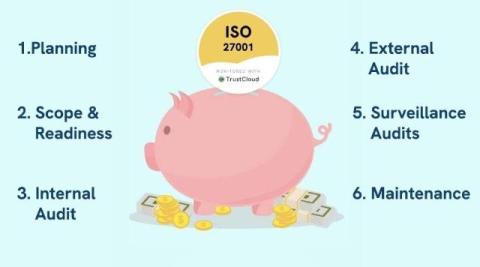
ISO 27001 certification: Cost, process, timelines and implementation in 2025

In this article Businesses looking for serious compliance street cred often turn first to ISO 27001. ISO 27001 is a globally recognized framework that outlines and defines information security management system (ISMS) requirements. Because being ISO 27001 certified demonstrates an organization meets best practices for information security, ISO certification can give businesses a significant competitive advantage. If you’re weighing ISO 27001 vs.

Navigating SOC 2 automation: A modern approach to continuous compliance

We once had a mid-market fintech client come to us in the middle of a SOC 2 renewal panic. Their CTO described it as “death by screenshot” – a desperate scramble to gather Slack threads, access logs, and onboarding spreadsheets just to satisfy the auditor’s checklist. They had the right policies. They had the right intentions. What they didn’t have was time.

The AI advantage in first-party risk management

Risk management is evolving at a pace that compels organizations to adopt more advanced technologies. Among these, artificial intelligence is emerging as a leading force in transforming internal oversight practices, particularly in the realm of first-party risk management. The need to manage risks that originate within the organization has prompted leaders to reevaluate and innovate traditional strategies, making AI an indispensable component of modern risk frameworks.