Security | Threat Detection | Cyberattacks | DevSecOps | Compliance

TrustCloud raises $15M to accelerate GRC Transformation for enterprise CISOs

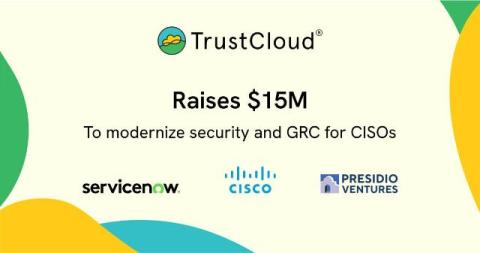
When I speak to enterprise CISOs and GRC leaders, they often talk to me about 2 problems: Today we unlocked a huge milestone for TrustCloud that will help us scale operations to solve these 2 problems for enterprise CISOs and GRC leaders. We’ve raised $15M in strategic funding led by ServiceNow Ventures, with participation from Cisco Investments, Presidio Ventures, OpenView Venture Partners, Tola Capital, and other existing investors. (Read official press release)
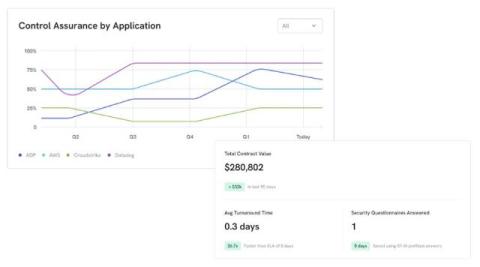
The Impact of continuous control assurance on audit readiness

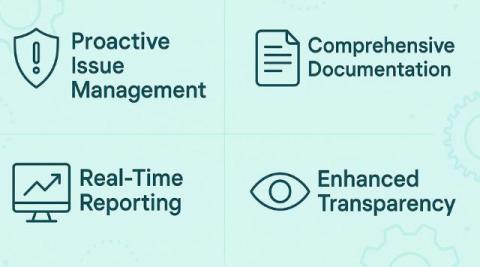
Owing to the rapidly evolving regulatory and operational landscape, organizations are increasingly focused on ensuring that their internal control frameworks are both resilient and adaptive. Continuous control assurance (CCA) plays a pivotal role in enhancing audit readiness, enabling companies to maintain robust compliance standards while minimizing disruption to their routine operations.

Reducing security review time with AI workflows

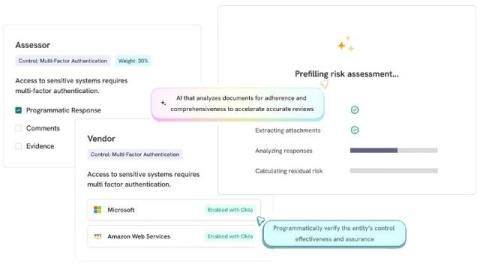
In the fast-paced world of modern business, security processes have become a cornerstone of an organization’s risk management strategy. As companies navigate increasingly complex threat landscapes, the pressure mounts to enhance security while keeping pace with business innovation. Integrating artificial intelligence (AI) into security review workflows is emerging as a practical solution to reducing review times, lowering costs, and improving system reliability.

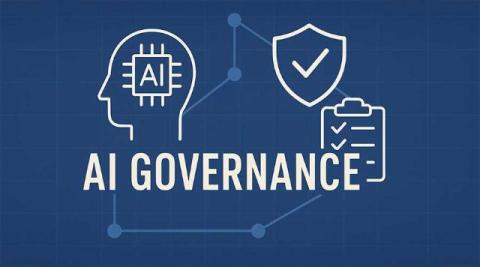
Why AI governance is now a CISO imperative

Let’s be real: 2024 is the year AI went from pilot to policy. And in 2025, it’s not slowing down. Every enterprise I talk to, from high-growth SaaS companies to large-scale global platforms, implements AI internally or embeds it into its products. With that momentum comes a wave of questions: Is this secure? Are we exposing customer data? What will our auditors say? CISOs are now expected to balance innovation with protection, fostering progress while staying ahead of risk.

How TrustCloud puts customer data security and privacy first: ISO 27001 and ISO 27701 certified

Today, trust is more than a marketing promise – it’s a competitive advantage. For organizations operating in highly regulated industries, trust is built on a foundation of security, privacy, and transparency.

Best practices for automating third-party vendor assessments: A leadership perspective

Enterprises increasingly rely on third-party vendors to support critical operations, drive innovation, and provide essential services. However, as organizations expand their supplier networks, the complexities and challenges in ensuring vendor reliability—especially in terms of compliance, security, and operational excellence—have also grown. For leadership teams, automating vendor assessments is no longer a luxury but an operational necessity.

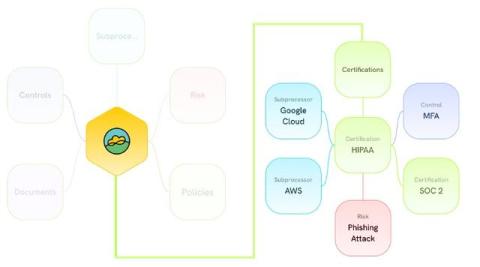
Integrating control graphs for holistic risk management

Enterprises around the globe are transitioning to integrated frameworks that encompass multiple risk dimensions, ensuring that risk identification, evaluation, and mitigation are conducted in a holistic manner. One of the emerging methods in this domain is the integration of control graphs into risk management frameworks.

The role of security assurance in accelerating revenue

The complexities of digital transformation have redefined the role of security—not merely as a technical requirement but as a core strategic driver of revenue growth. This article examines the direct correlation between robust security assurance, risk mitigation, and accelerated revenue, by leveraging insights from leading market research firms such as Gartner, Forrester, and IDC.

From spreadsheets to programmatic risk registers

Technical leaders and risk management professionals are frequently confronted with the challenge of transitioning from outdated, manual methods towards scalable, automated solutions in the dynamic landscape of modern risk management. The evolution from traditional spreadsheet-based risk registers to contemporary programmatic risk registers epitomizes this shift.