Security | Threat Detection | Cyberattacks | DevSecOps | Compliance

Introducing Astra Trust Center: Proof of Security, Simplified

Ironically, most ‘Trust Center’ platforms don’t inspire trust. Click a vendor’s “Trust Center” and you’ll find one of two things: a dusty archive of “final-final” PDFs or a glossy page of buzzwords with zero verification, and a cheerful nudge to “email ” if you want the details. No wonder 86% of enterprise buyers today bail if they can’t verify security early.
How to get NIST SP 800-171 Certification: Mastering CUI Protection

Your organization just won a federal contract. During the celebratory pizza party, the CXO cust in, “though the data is not confidential, it is controlled.” Simply put, this means you’re handling sensitive government data (also known as Controlled Unclassified Information or CUI), which requires safeguarding or dissemination controls for critical information that falls just short of classified status, triggering compliance with NIST SP 800-171.

How to get ABDM Certification 2025: Guide to Healthcare Digital Transformation

With 79.91 crore Ayushman Bharat Health Accounts already created and healthcare institutions facing 5.33 vulnerabilities per minute, the question of how to get ABDM certification is no longer just a compliance tick-box; it becomes indelible in your pursuit of sustaining your healthcare operations.

Partial Scans vs. Full Scans: Which Delivers Better Security Coverage and Efficiency?

Vulnerability scanning is no longer optional for modern teams. With new features released weekly, and sometimes resources deployed and removed within hours, businesses need constant vigilance to stay ahead of attackers. The real question is: how often should you scan without slowing down the development process? Full scans are thorough but time-intensive, sometimes taking hours or days. Partial (incremental) scans are faster and CI/CD-friendly but risk missing critical gaps.

Role of DAST in DevSecOps Maturity Models

Over the past few years, software has undergone a significant shift in how businesses approach security. The old model of responding to problems after the fact is no longer viable; organisations are moving to a security-first approach, where security is a priority throughout the entire development process. However, this transition is more than just a timing change; it is a complete reevaluation of how security aligns with development and operations.

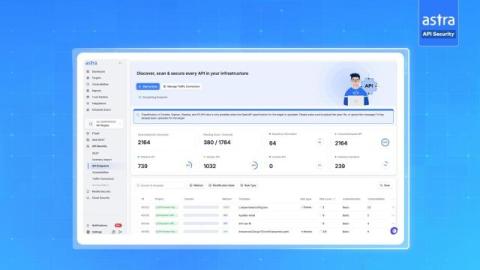
API Security Testing with DAST vs. SAST Approaches

API security breaches have reached a crisis point, with 57% of organizations experiencing API-related breaches in the past two years. Only 13% of organizations can prevent more than 50% of API attacks, while 84% of security professionals experienced an API security incident in the past year. The average cost to remediate API incidents was $591,404 in the United States, increasing to $832,801 in the financial services sector.

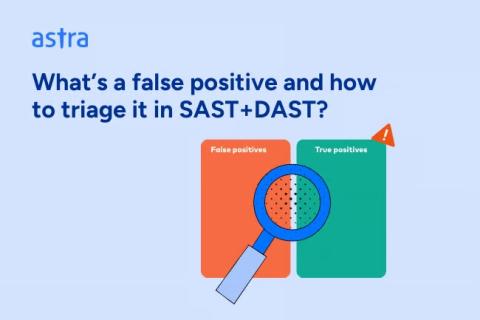
What's a False Positive & How to Triage It in SAST+DAST?

In 2025, DevOps teams are overwhelmed not by missing vulnerabilities but by too many false ones. SAST reports flagging “phantom bugs” that stall pipelines, while DAST scans misfire on runtime edge cases. The noise has become deafening, and developers are starting to tune out entirely. False positives are not just noise. They are a growing attack surface in themselves. They slow down real fixes and create blind spots where actual threats hide.

How to Maintain DevSecOps Velocity Without Compromising Security

Software delivery today is a delicate balancing act between moving quickly and maintaining security. CXOs chase release velocity, PMs measure success by the number of features shipped, and developers are asked to code faster with every sprint. However, every pipeline that prioritizes speed without embedded security is essentially gambling with the risk of a breach. Legacy security models still act like toll gates, piling on reviews and post-deploy scans that stall progress.

Balancing Scan Depth and Speed in Modern Pipelines

Most teams run on velocity budgets, not risk budgets. While features get sprints, milestones, and release slots, risk, on the other hand, gets hope. When scan depth and speed decisions are made without an explicit budget for risk, the outcome is predictable: throughput is optimized while exposure compounds silently in the background.

CERT-In 2025 Audit Guidelines: What Every CXO Needs to Know

When engineers stress-test a bridge, they don’t ask the pedestrians to sign off on safety. They put the liability squarely on the designers, contractors, and city officials, i.e., if it fails, it’s their names on the line. CERT-In 2025 audit guidelines and framework apply the same logic to digital infrastructure. No more passing the buck to auditors; CXOs must sign risks, PMs must certify vendors, and developers must prove security in every build.