Security | Threat Detection | Cyberattacks | DevSecOps | Compliance

The Ultimate Guide to DAST for Single Page Applications (2025)

The majority of web experiences are currently developed with Single Page Applications to offer a fast, seamless, and undeniably effective user experience. Frameworks such as REACT, Angular, and Vue.js have turned the browser into an application runtime rather than a passive page loader. Nevertheless, this transition is associated with a security price that most teams continue to underestimate. Dynamic Application Security Testing (DAST) tools were designed to work with simpler web applications.
How Continuous DAST Empowers OWASP Top 10 Compliance

Your app isn’t just HTML anymore. It is containers talking to microservices, SPA front ends calling GraphQL, and third‑party SDKs everywhere. That mix creates blind spots and unpredictable OWASP Top 10 gaps. Continuous DAST looks through every layer, including mobile backends, APIs, and container workloads, simulating attacker behaviour across your entire technology stack. Hence, no more guessing which component hides the next SSRF, injection, or misconfiguration.

DAST Best Practices: A Guide for CXOs & Security Leaders

DAST often underdelivers, not because the tool is broken, but because it’s misapplied. It gets dropped into pipelines without strategy, runs against partial environments, skips authenticated areas, and generates findings that teams ignore. The result is predictable: wasted cycles and lost credibility. DAST best practices focus on addressing operational failures that render scans ineffective.

Continuous DAST in CI/CD Pipelines: A Practical Guide

Every pipeline shift introduces a new blind spot. SAST catches coding flaws, and SCA catches dependency risks; however, as delivery moves to CI/CD, new risks have emerged, not in the code itself, but in how it is executed. From broken access controls and authentication drift to logic flaws behind feature flags, these threats show up in production. Continuous DAST in CI/CD pipelines isn’t just “another layer” but a runtime check that’s most likely to catch what gets exploited.

A Guide to Comprehensive Payment Gateway Testing

With global e-commerce transactions projected to exceed $8.1 trillion by 2026, according to Statista, payment gateways are an irresistible target for attackers. A single exploit, like a poorly configured API or insecure redirect, can lead to massive fraud, compliance violations, and irreparable loss of customer trust. Yet, many businesses still rely on surface-level testing or compliance checklists, missing critical flaws in business logic, API behavior, and payment flow integrations.

How to Make Security an Enabler Rather Than a Blocker for Engineering ft Jayesh Singh Chauhan

In today's fast-paced tech environment, cybersecurity has become an integral part of software development. Join Jayesh Singh Chauhan, Founder of Cloudurance Security and former CISO at CoinSwitch, in this insightful fireside chat hosted by The 403 Circle, powered by Astra Security, as we explore practical strategies to seamlessly integrate cybersecurity into engineering without compromising speed. In this webinar, we discuss.

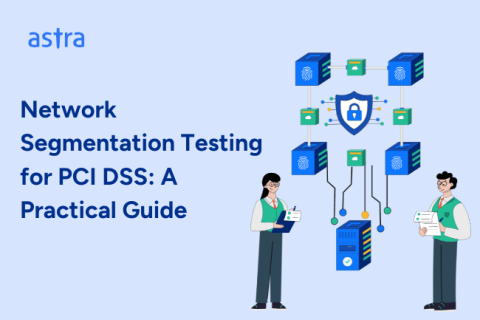
Network Segmentation Testing for PCI DSS: A Practical Guide

PCI DSS compliance isn’t just about ticking off controls, but it’s more about how your infrastructure is architected and enforced. Few decisions influence the scope of compliance as directly as the implementation of network segmentation. Every additional system brought into the PCI scope adds operational friction: more logs to review, more systems to harden, more controls to audit. One misconfigured firewall rule or a forgotten DNS server can quietly pull half your network into scope.

How to Get Your ABHA Web Application Security Certificate

Most healthtech teams focus on building fast, getting the ABHA APIs working, passing the sandbox, and moving to production. However, the reality is that over functionality, if your app can’t prove it’s secure, you don’t go live. The ABHA Web Application Security Certificate exists for one primary reason: to prevent vulnerable systems from accessing India’s health data network.

Summer 2025 Product Updates: What's New at Astra Security

Security teams don’t need another dashboard screaming about low-priority bugs. They need to know what’s important, what’s already fixed, and what’s still a ticking time bomb. That’s where we’re headed at Astra. This summer, we’ve made several updates that do exactly that. Delta scans that stop pointing at the same issues. MFA protection where it actually matters. Cloud rescans that are faster and smarter.

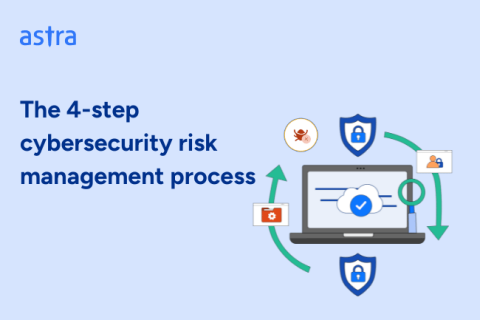
The 4-Step Cybersecurity Risk Management Process

You are the CISO of a mid-sized enterprise that is experiencing rapid growth, i.e., your security stack is becoming increasingly complex by the month, compliance auditors are asking more challenging questions, and your board wants measurable proof that security investments are actually reducing risk. Meanwhile, attack vectors are evolving daily, and your current risk assessments consistently lag behind.

FedRAMP Penetration Testing Compliance in 2025: A Guide

Federal Risk and Authorization Management Program (FedRAMP) penetration testing compliance is a formal and systematic assessment that all Cloud Service Providers (CSPs) must conduct before providing their services to the U.S. government to meet stringent security criteria. The hands-on test allows security professionals to emulate the techniques of malicious actors to determine whether they can bypass the system’s security measures.

Achieving PCI DSS Level 1 Compliance: A Comprehensive Guide

Purpose: Help payment service providers achieve PCI DSS Level 1 compliance with enterprise-grade security. Scope: Technical requirements across network, data, access, physical, and cloud environments. Outcome: A compliant, breach-resistant system that builds trust and streamlines audits. Methodology: Real-world pentesting, layered defenses, and compliance-driven implementation. In 2023 alone, the payments industry handled north of 3.4 trillion transactions worth >$1.8 quadrillion.