Security | Threat Detection | Cyberattacks | DevSecOps | Compliance

Managed Bot Protection for Education Institutions: Prevent Credential Abuse and Downtime

This growing exposure is reflected in real-world threat data. The Huntress 2025 Cyber Threat Report found that the education sector accounted for 21% of all cyber incidents observed last year, underscoring how frequently schools and universities are targeted. The report also highlights a strong presence of automated and data-driven attacks, with malicious scripts making up 24% of education-focused threats, followed by infostealers (16%), malware (13%), and ransomware (7%).


How Managed DDoS Protection Keeps Education and EdTech Platforms Resilient

Globally, schools and universities now face over 4,300 cyberattacks per week on average, marking a 40% year-over-year increase and making the education sector a prime target for disruptive DDoS attacks. Most educational institutions operate with lean IT teams responsible for infrastructure, user support, and security. This resource constraint makes it difficult to withstand prolonged or application-layer DDoS attacks that can quickly disrupt learning platforms and administrative systems.

Managed DDoS Protection for Insurance: Why Always-On Defense Is Essential

According to the State of Application Security 2025, web applications faced a sharp rise in hostile traffic, with 4.8 billion attacks blocked and 1.52 billion DDoS incidents affecting nearly 70% of monitored applications. APIs became the primary target, seeing 388% more DDoS attacks per host than websites, signaling a shift toward precision, application-layer disruption.

API Security in the Education Sector: Protecting the Digital Learning Ecosystem

Recent research shows that the education sector now faces over 4,300 cyberattacks per week per organization, a 41% year-on-year increase. Education also consistently ranks among the top three most targeted industries globally, driven by the volume of sensitive student data and heavy reliance on cloud-based learning systems.

CVE-2025-68613: Critical n8n RCE Vulnerability Enables Full Server Compromise

A critical remote code execution (RCE) vulnerability has been disclosed in n8n, a popular open-source workflow automation platform widely used to orchestrate business processes, SaaS integrations, and internal automation pipelines. Tracked as CVE-2025-68613, the vulnerability carries a CVSS score of 9.9 (Critical) and allows authenticated attackers to execute arbitrary system-level code on vulnerable n8n instances.

Apache Commons Text Code Injection Vulnerability (CVE-2025-46295)

A critical code injection vulnerability has been identified in Apache Commons Text, a widely used Java library for text processing and interpolation. Tracked as CVE-2025-46295, the vulnerability carries a CVSS v3 score of 9.8 (Critical) and affects all versions of the library prior to 1.10.0. The vulnerability has an EPSS score of 0.253%, indicating a low short-term probability of exploitation.

Migrating from Legacy WAFs to AI-Driven Managed WAAP: Why Execution Matters More Than Technology

In 2025, security benchmarks showed that over half of publicly disclosed vulnerabilities can bypass WAF protections when rule updates lag behind real-world exploits. Legacy WAFs were built for stable applications and predictable traffic. Today, frequent releases, API-driven architectures, and rapidly evolving attacks expose the limits of manual tuning and after-the-fact validation, leaving protection out of sync with reality.

Managed Bot Protection for SMBs: Protecting Growth, Reputation & Stability

According to the Indusface State of Application Security Report, SMBs now experience more attacks per application than large enterprises. Each SMB site facing an average of 2.24 million attacks per quarter, driven largely by malicious bot traffic and automated DDoS attempts. Despite this, many SMBs still operate with minimal security controls or legacy technology stacks, making them extremely vulnerable.

Managed DDoS Protection for E-commerce: Securing Online Store Availability

The digital storefront never sleeps, but in the first half of 2025, it has faced unprecedented hostility. According to the State of Application Security report 2025 Report, the threat landscape has shifted dramatically. E-commerce has become a primary target, with DDoS incidents in the retail and e-commerce sector spiking by 420%. Perhaps even more concerning is the vector of these attacks: attacks on APIs rose by 104%, with vulnerability exploitation increasing 13-fold.

CVE-2025-10573: Stored XSS in Ivanti EPM

A critical stored XSS vulnerability (CVE-2025-10573) in Ivanti Endpoint Manager lets attackers poison the admin dashboard with malicious scripts, leading to session hijacking and device compromise. AppTrana blocks these malicious scan submissions at the edge, preventing stored XSS payloads from ever reaching the EPM dashboard, even before patching.

React After React2Shell: New RSC Vulnerabilities Expose DoS and Source Code Risks

The disclosure of React2Shell (CVE-2025-55182) triggered a rapid patching effort across the React and Next.js ecosystem. However, deeper inspection of React Server Components (RSC) in the aftermath revealed additional vulnerabilities in adjacent code paths. These vulnerabilities pose serious operational and security risks.

CVE-2025-66675: Apache Struts DoS Vulnerability Leads to Disk Exhaustion

A newly disclosed denial-of-service vulnerability, CVE-2025-66675, affects a wide range of Apache Struts 2 versions and poses a serious availability risk for applications that handle file uploads. While the EPSS score is 0.05%, indicating a low probability of exploitation in the next 30 days, the vulnerability still represents a high availability risk for exposed and unpatched environments.

Secret Scanning: A Critical Practice for Protecting Sensitive Data in Code

With the rise of CI/CD pipelines, cloud-native development, and globally distributed teams, sensitive credentials like API keys, tokens, and database passwords often slip into source code. Sometimes accidentally, sometimes under pressure to deploy fast. This is not a rare mishap. A recent study found that 34% of API security incidents involve sensitive data exposure. And according to Cyble, over 1.5 million.env files containing secrets have been discovered in publicly accessible environments.

AppTrana AppSec Platform | AI-powered All-in-One Web and API Security Platform

About Indusface: Indusface is a leading application security SaaS company, securing over 6,500 customers across 95 countries with its award-winning platform. Backed by leading institutional investors, Indusface is a category leader in cloud WAAP, with repeated recognition from top analysts and industry platforms including Gartner, Forrester, GigaOm, and G2. The industry's only AI-powered, all-in-one AppSec platform helps businesses discover, detect, remediate, and protect web applications and APIs at internet scale, backed by a 100% uptime guarantee.

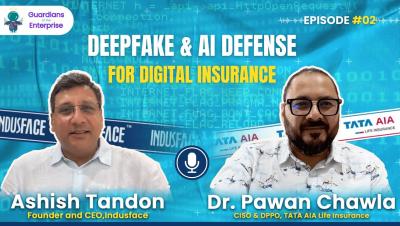
Deepfake & AI Defense for Digital Insurance | Dr.Pawan Chawla (CISO & DPPO, Tata AIA Life Insurance)

In Episode of Guardians of the Enterprise, Dr. Pawan Chawla (CISO and DPPO, Tata AIA Life Insurance) joins Ashish Tandon (Founder and CEO, Indusface) to discuss the emerging cyber challenges facing the insurance industry. He highlights how cybercrime marketplaces are lowering barriers for attackers, the rise in third-party and internal risks, and other evolving threats shaping security priorities for insurers.

Securing Mission-Critical Insurance Systems

In this episode, Dr. Pawan Jawla, Chief Mission Security Officer at Tata AIA, shares what truly keeps security leaders awake at night while protecting mission-critical insurance systems. From the rise of low-cost ransomware and evolving fraud techniques, to meeting Government of India, DCI, and insurance-specific compliance standards. We also explore why security audits should be treated as gap-finding, not fault-finding, the persistent confusion around data ownership inside enterprises, and why, despite massive investment, 95% of organizations still struggle to see ROI from AI.

CVE-2025-10573: Critical Unauthenticated Stored XSS in Ivanti Endpoint Manager

A newly disclosed vulnerability in Ivanti Endpoint Manager (EPM) tracked as CVE-2025-10573 allows unauthenticated attackers to inject persistent JavaScript into the EPM administrative dashboard. Assigned a CVSS score of 9.6, this vulnerability presents a critical security risk because it enables attackers to hijack administrator sessions and gain full control over managed endpoints.

CVE-2025-66516: Critical XXE Vulnerability Exposes Apache Tika Deployments

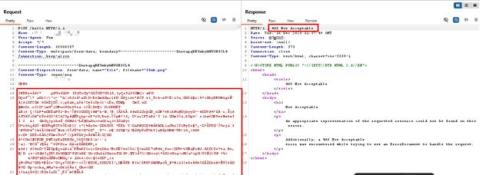
A critical XXE vulnerability, CVE-2025-66516, has been discovered in Apache Tika, putting any workflow that processes PDFs at serious risk. A malicious PDF can trigger the exploit through any Tika workflow, silently giving attackers access to sensitive files, internal URLs, cloud metadata, and your internal network. AppTrana blocks these malicious PDFs at the edge, keeping your data and internal systems secure.

CVE-2025-66516: Critical XXE Vulnerability Exposes Apache Tika Deployments

A critical vulnerability, CVE-2025-66516 (CVSS 10.0), has been identified in Apache Tika, affecting how the framework processes PDF files containing XFA (XML Forms Architecture) data. The vulnerability resides in tika-core, which means any system using Tika’s default parsing behavior remains vulnerable even if the PDF parser module was previously patched. No special configuration or insecure application code is required; simply ingesting a malicious PDF is enough to trigger the exploit.

React2Shell(CVE-2025-55182): Critical RCE Vulnerability in React Server Components and Next.js

The modern JavaScript ecosystem was shaken this week as Meta, Vercel, Google Cloud, AWS, and leading security researchers revealed two critical issues: CVE-2025-55182 and the downstream Next.js variant CVE-2025-66478. Both are rated CVSS 10 and allow remote code execution (RCE) by exploiting weaknesses in the React Server Components (RSC) “Flight” protocol. The vulnerabilities affect React 19 and all major frameworks embedding the RSC implementation, most notably Next.js 15.x and 16.x.

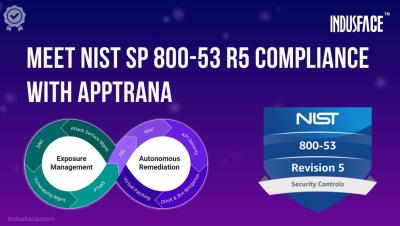
NIST SP 800-53 r5 Compliance Made Simple with AppTrana

With over 32,000 security incidents reported by U.S. federal agencies in the past year, cyber risks are growing in scale and complexity. NIST SP 800-53 r5 provides a comprehensive framework of security and privacy controls to help organizations manage risk, protect critical systems, and maintain regulatory compliance.

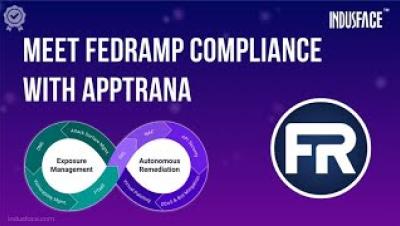
Accelerate Your FedRAMP Journey with AppTrana WAAP

Achieving FedRAMP compliance is complex, but AppTrana WAAP simplifies it. This video explains how AppTrana delivers continuous vulnerability scanning, attack prevention, SIEM-friendly audit logs, real-time incident response, and automated remediation through SwyftComply. Perfect for CISOs, compliance teams, and cloud security leaders preparing for FedRAMP audits.

LLMs, Quantum Computing, and the Top Challenges for CISOs in 2026

Cybersecurity in 2026 is entering its most transformative and volatile phase yet. For CISOs, the landscape is no longer defined only by web, network, and cloud threats. Instead, attackers now target AI/LLM systems, APIs, identity platforms, SaaS ecosystems and supply chains. The surge in attacks across applications, APIs, and GenAI systems indicates that adversaries are scaling faster, using automation, AI-assisted exploitation, and new social engineering vectors.

CVE-2025-54057: Stored XSS Vulnerability in Apache SkyWalking Exposes Monitoring Dashboards to Attackers

Apache SkyWalking is one of the most widely adopted open-source Application Performance Monitoring (APM) and observability platforms, trusted by developers and DevOps teams to visualize telemetry, trace distributed systems, and ensure application uptime. However, a recently disclosed vulnerability has revealed that the very dashboards designed to improve visibility could be turned into attack vectors.