Security | Threat Detection | Cyberattacks | DevSecOps | Compliance

CVE-2025-59287: Critical WSUS Vulnerability Exploited in the Wild

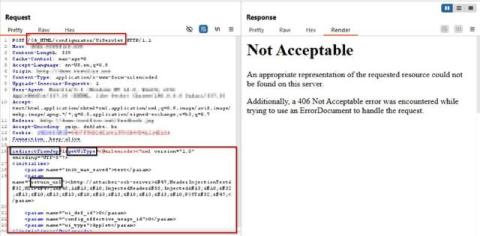
Microsoft disclosed CVE-2025-59287 , a critical, unauthenticated RCE in Windows Server Update Services (WSUS) that lets attackers execute SYSTEM-level code via unsafe deserialization. In this video we break down how the exploit works, which servers are at risk, and real-world attack activity observed after the PoC went public.


Streamlining MSSP Operations with a Centralized WAF Dashboard

Managed Security Service Providers (MSSPs) are tasked with securing dozens or even hundreds of client applications at once. Each client may have unique traffic patterns, custom rules, and distinct compliance needs. Managing Web Application Firewalls (WAFs) for such diverse environments can easily become chaotic if done manually or across fragmented systems. A centralized MSSP WAF dashboard changes that equation.

Managing False Positives in Multi-Client MSSP WAF Deployments

Managing Web Application Firewall (WAF) rules across multiple clients is one of the most critical yet challenging tasks for MSSPs. While WAFs are essential for blocking malicious traffic and protecting applications, overly aggressive rules can trigger false positives, blocking legitimate requests, and disrupting client operations. For MSSPs false positives can lead to operational inefficiencies, client dissatisfaction, and even revenue loss.

The Blueprint: How MSSPs Can Build a Profitable Pentest-as-a-Service (PtaaS) Offering

The latest 2025 Verizon Data Breach Investigations Report (DBIR) reveals a striking shift: exploitation of vulnerabilities has surged to become the initial access vector in approximately 20% of breaches, a 34% increase over the prior year. In an environment where cyber threats evolve faster than patch cycles, enterprises no longer view penetration testing as a checkbox exercise.

CVE-2025-59287: Critical WSUS Vulnerability Exploited in the Wild

In October 2025, Microsoft disclosed a critical remote code execution vulnerability (CVE-2025-59287) in Windows Server Update Services (WSUS), which enables unauthenticated attackers to gain full control over affected servers. WSUS is a central patch management tool in Windows environments, responsible for approving, distributing, and monitoring updates across corporate networks.

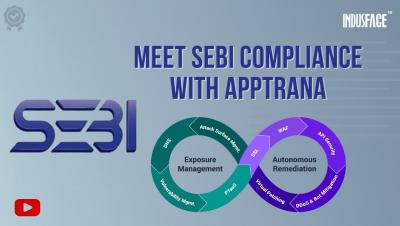
Stay SEBI-Compliant: Strengthen Your Security with AppTrana WAAP

Are you prepared for SEBI’s latest cybersecurity mandates? In this video, discover how AppTrana WAAP helps financial institutions effortlessly meet SEBI cybersecurity compliance requirements. From continuous vulnerability scanning and managed WAF protection to real-time threat detection and compliance reporting, AppTrana ensures your applications stay secure and compliant at all times.

RBI Compliance Made Simple with AppTrana | Secure Your Banking and Payment Apps

In H1 2025, Indusface AppSec data recorded over 742 million attacks on banking and financial websites, a 51% surge from last year. 77% exploited known vulnerabilities, bots hit 95% of sites, and DDoS attacks spiked by over 500% on APIs. To counter these threats, the RBI’s Digital Payment Security Guidelines mandate stronger defenses across web apps, APIs, and data systems.

Reducing Scan Noise: False Positive Mitigation Strategies for MSSPs

For Managed Security Service Providers (MSSPs), efficiency is everything. Every minute wasted chasing false positives is time that could have been spent on genuine threats, client communication, or platform improvement. Yet, excessive scan noise continues to plague many MSSPs, overloading SOC teams, distorting dashboards, and eroding client confidence.

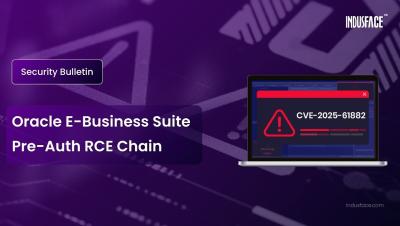
Active Exploits Target Oracle EBusiness Suite (CVE202561882)

A critical zero‑day (CVSS 9.8) in Oracle E‑Business Suite (EBS) versions 12.2.3 – 12.2.14 (CVE‑2025‑61882) allows unauthenticated remote code execution (RCE) via the BI Publisher Integration in the Concurrent Processing module, actively exploited in the wild by Cl0p and other threat actors.

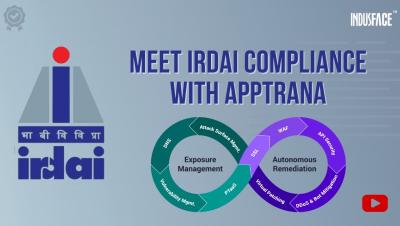
Achieve IRDAI Compliance and Protect Insurance Apps with AppTrana

The insurance sector is facing a surge in cyberattacks. In 2024, Indusface tracked 495 million attacks on insurance websites and APIs. As threats become more targeted and automated, the IRDAI 2023 Information and Cybersecurity Guidelines have raised the bar for insurers to secure their applications and data. In this video, discover how AppTrana WAAP helps insurance companies achieve IRDAI compliance while staying resilient against real-world cyber threats.

Cl0p Exploits Critical Oracle E-Business Suite Zero-Day (CVE-2025-61882)

In October 2025, a critical zero-day vulnerability was disclosed in Oracle E-Business Suite (EBS), tracked as CVE202561882, which allows unauthenticated remote code execution (RCE). This vulneraility affects versions 12.2.3 through 12.2.14 and has already been actively exploited in the wild by the Cl0p ransomware group and potentially other threat actors.

Penetration Testing for Financial Services: Meeting Compliance and Security Benchmarks

The financial sector has always been a prime target for attackers, but the scale and sophistication of threats have grown exponentially. In just the first half of 2025, over 742 million attacks were recorded across more than 600 global banking and financial services (BFS) sites, averaging 1.2 million attacks per site, a 51% increase compared to the same period in 2024.

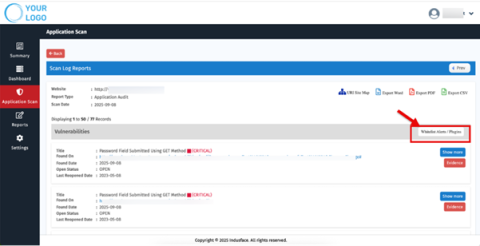
Best Vulnerability Management Platforms MSSP Buyer's Guide

Cybercriminals are not waiting around; they are exploiting vulnerabilities faster than ever. According to the 2025 Verizon Data Breach Investigations Report (DBIR), vulnerability exploitation accounted for 20% of breaches, marking a 34% jump from last year. This sharp rise highlights a hard truth: leaving security gaps unaddressed is an open invitation to attackers.

Managed DDoS Protection for SaaS Companies: Ensuring Availability, Security, and Business Continuity

SaaS companies face a 20% yearly likelihood of a significant DDoS attack, according to the Indusface State of Application Security H1 2025, underlining the risks to uninterrupted operations. Even brief downtime can have severe consequences. On average, a DDoS attack requires 12 hours for monitoring, analysis, and mitigation, translating to roughly 2.4 hours of annual downtime per SaaS application. This can disrupt workflows, breach SLAs, and erode customer trust.

How Managed Bot Protection Shields SaaS Businesses

In the first half of 2025 alone, AppTrana blocked over 64 million bot attacks across industries, a number that highlights how automated abuse has become a daily battle for digital businesses. With 30,000+ SaaS providers powering the workflows of 14 billion users worldwide, SaaS sits at the core of digital transformation, making it a prime target for credential stuffing, account takeover, API abuse, and other bot-driven exploits.

Penetration Testing Metrics That Matter

Running a penetration test is only half the battle. The real challenge is translating complex technical findings into insights that leadership can act on. The right metrics do not just highlight vulnerabilities; they tell a story about risk, resilience, and readiness. In this guide, we explore the penetration testing metrics that truly matter and how to present them in a way that resonates with decision-makers.

Managed Bot Protection in Financial Services: Anti-Fraud, Compliance, Continuity

In the first half of 2025, more than 742 million attacks were recorded across 600+ financial sites, according to the Indusface State of Application Security Report: Banking and Financial Services, underscoring a 51% year-over-year surge in threats. Bots were the most persistent threat, detected on 95% of applications, where they powered campaigns to crack credentials, scrape sensitive data, and exploit payment systems.