Security | Threat Detection | Cyberattacks | DevSecOps | Compliance

Cognitive Load and Dashboards in the 2025 SOC

The 2025 year in review reflects on research that shows daily grind and relentless tasks weigh more on the mind than rare major incidents. Flight deck style design offers a model for soc dashboards in 2025, where each instrument should cut cognitive load instead of drowning analysts in flashing warnings and clutter.

Alert Fatigue, Shoplifting Risk and 2025 Security Economics

The Razorwire Christmas Party 2025 episode compares most cyber incidents to shoplifting rather than aviation disasters, with losses treated as part of the cost of doing business. Burnout in 2025 often grows from false positives, alert fatigue and badly shaped workflows, so security economics and ergonomics matter more than dramatic nation state stories.

From Blame Culture to Reasonable Challenge in 2025

The 2025 review highlights how blame culture still drives incident hiding in cybersecurity, even as risk grows. A simple “reasonable challenge” guide, with set phrases for raising and receiving concerns, offers a practical way in 2025 to support psychological safety, early reporting and better security governance.

Breaking Chain of Command in 2025 Security Decisions

The Razorwire Christmas Party 2025 episode looks at how decision culture shapes security outcomes across the year. Frontline staff need room to break the chain of command when something feels wrong, so protection in 2025 depends on people lower in the hierarchy raising hard questions and taking timely action. cybersecurity podcast, razorwire podcast, razorwire christmas party, razorthorn, 2025 cybersecurity review, decision making in security, breaking chain of command, frontline empowerment, zero trust culture, organisational trust, incident response decisions, helpdesk security, security leadership.

APT Teens, AI Voices and 2025 Helpdesk Attacks

The 2025 year in review episode shows how advanced threat groups rely on simple steps, from infostealer credentials to AI voice tools, to work through helpdesks. Native language, fake confusion and social engineering still unlock password resets in 2025, opening the door to ransomware and double extortion across networks.

AI Automation Dreams in the 2025 Security Budget Squeeze

The Razorwire Christmas Party 2025 review looks at rising expectations for AI and automation while security budgets stall in real terms. Automation in 2025 sits in a tug of war between cost cutting targets and the reality that attackers also use AI, so defensive upgrades have to match a live, adaptive threat.

Burnout, Duty of Care and 2025 in Cybersecurity

The Razorwire Christmas Party 2025 episode looks back at a year where burnout in security work feels closer to an occupational hazard than a personal weakness. A legal style “but for” test highlights how organisational decisions, pressure and inaction in 2025 shaped stress, harm and duty of care across cybersecurity teams.

The Razorwire Christmas Special 2025: Looking Back, Looking Forward

What happens when you gather some of the sharpest minds in cybersecurity for an end-of-year chat about where we've been and where we're heading? Welcome to Razorwire's Christmas special. Today I’m chatting with some of our favourite guests from 2025: clinical traumatologist Eve Parmiter, cyber futurist Oliver Rochford, CISO and podcast host Marius Poskus and occupational psychologist Bec McKeown for a roundup of the cybersecurity industry this year. This isn't a glossy year-in-review full of predictions and corporate optimism. We're talking about what's actually happened.

Razorwire 2025 Cybersecurity Year in Review

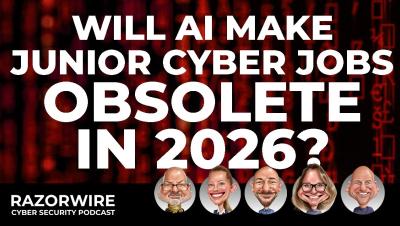
The Razorwire Christmas Party 2025 episode looks back over a year of burnout, AI hype, flat security budgets and noisy breaches, and forward to the future of work in cybersecurity. Listeners get a fast survey of social engineering trends, alert fatigue, decision culture, talent pipelines and work life boundaries that shaped 2025 and point to the years ahead.

The One Thing Everyone Gets Wrong About Support #mentalhealth #wellbeing

Different viewpoints and psychological safety improve both problem solving and emotional support in security teams. The clip highlights how rushing to fix other people’s struggles can backfire, and shows why listening without assuming you know the solution is often the most effective response.

Know Your Top Three Burnout Warning Signs

Security professionals are encouraged to learn their own big three indicators of rising stress, starting with a clear physical sign. Headaches, clenched jaws or a twitchy eye can all signal that pressure is building, and self awareness helps catch burnout while there is still time to respond with humility rather than denial.

What Burnout Sounds Like Before You Collapse

Burnout often starts with thoughts like, there is no energy left, no skills to draw on and no point in trying any more. The clip walks through that emotional timeline, from the stage where someone still speaks up to the point of desolation, and argues the best time to act is when the fire is a singe, not when the whole roof is blazing.

Burnout As An Occupational Hazard In Cybersecurity

Cybersecurity professionals live with perpetual problems, repeated attacks and the expectation that sooner or later something will go wrong. Burnout is framed as an occupational hazard in that environment, so people need to predict its impact, plan ahead and build protection before that helpless feeling takes over.

A Mental Health Community For Cyber Professionals

The Mental Health in Cyber Security Foundation is a home for support, shared best practice and real stories about mental health in cybersecurity. The long-term vision is an organisation where people in the industry know they can go for advice, guidance and practical help with the pressures of their work.

How Consumer UX Is Reshaping Enterprise Identity

Consumer behaviour shapes expectations for workplace sign in, where anything difficult or slow is abandoned for easier options. Digital natives bring that mindset into the enterprise, so security teams must align user experience, secure authentication and complex enterprise technology to protect identity.

Technology Is Ready, Mindsets Need to Catch Up

Security technology for access control already exists, but success depends on mindset and the willingness to change course when conditions shift. The idea of being audible ready, switching plays at the line based on what appears in front of you, mirrors how security leaders adjust identity strategy and embrace change despite human resistance.

Is PAM Really Solving Security Problems?

Privileged access management has long aimed to control powerful accounts, yet many environments still carry excessive permissions and weak accountability. Password vaults, rotating credentials and stronger governance place controls around admin accounts, linking PAM, access control and identity security to limit damage when something goes wrong.

How Hackers Steal Your Identity So Fast!

Recent UK breaches highlight how commoditised attacks and dark net markets provide ready stolen credentials for intrusions. Continuous authentication and behavioural analytics shift focus from the initial login to how a user interacts with data and resources, helping detection when attackers try to impersonate genuine behaviour.

Risk Based Authentication Returns to the Forefront

Risk based authentication pairs login events with behavioural signals, stepping up security when anomalies appear in how users work. As organisations onboard part time staff and gig workers, continuous authentication and smarter policies help balance security with convenience for a diverse workforce.