Security | Threat Detection | Cyberattacks | DevSecOps | Compliance

Securing GenAI Code: Manage Risk from Code to Cloud

The productivity revolution promised by AI coding assistants has arrived. Developers are shipping features faster than ever, with tools like GitHub Copilot, Amazon CodeWhisperer, and Claude Code becoming as essential to modern development as Git itself. But beneath this velocity lies a troubling reality that every security leader needs to confront: we’re scaling security debt at unprecedented speed.

Application Security Prioritization: How the Best Teams Fix What Matters Most

In the race to ship software faster, security teams are drowning. Not in vulnerabilities… those are abundant, predictable even. They’re drowning in noise. The average enterprise application generates thousands of security findings from multiple scanners, each screaming for attention with equal urgency. Meanwhile, developers are building faster than ever, fueled by cloud-native architectures, open-source dependencies, and AI-generated code. The uncomfortable truth?

Seamless DevSecOps for GitLab: Security Built Into Every Pipeline

Modern development teams move fast; security must keep pace. As organizations increasingly rely on GitLab to power CI/CD pipelines, integrating application security directly into the workflow is no longer optional — it’s essential. The Veracode GitLab Workflow Integration embeds automated security testing directly into GitLab pipelines, enabling teams to shift security left without disrupting delivery.

Why Securing AI Code Generation is Critical for AppSec

The revolution is here, but it’s not what we expected. AI coding assistants have transformed software development, with developers shipping code faster than ever before. GitHub Copilot, Amazon CodeWhisperer, and Claude Code have become as essential to modern development as Git itself. The productivity gains are undeniable; what once took hours now takes minutes. But there’s a dangerous blind spot in this revolution: security.

The Mythos Moment: Why the Future of Cybersecurity Is Software Trust

Anthropic’s Mythos announcement is not just another cybersecurity headline. It is a signal. AI is transforming software faster than security teams can adapt. The organizations that win won’t be the ones that simply find more flaws. They’ll be the ones that can prove their software can be trusted. A signal that software risk has entered a new era; one where AI can accelerate both the creation of software and the discovery of its weaknesses faster than human teams can respond.

Spring 2026 Threat Research: Key Trends in Software Supply Chain Security

The software supply chain continues to face escalating threats, with malicious actors targeting developers and organizations at an unprecedented scale. In our Spring 2026 Threat Research Review, we analyze the latest trends, uncover alarming statistics, and highlight the evolving tactics used by attackers. From dependency injection attacks to the rise of typosquatting, this report provides a comprehensive look at the threats shaping the software ecosystem.

What RSAC 2026 Actually Told Us About Your Security Debt

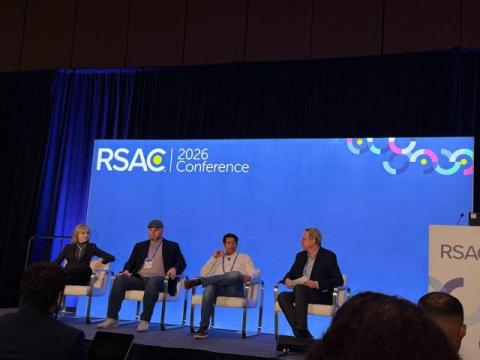
I recently attended the RSA Conference 2026 (RSAC 2026) in San Francisco. I have been attending and speaking at RSAC for a long time, and every year I try to figure out what actually changed versus what just looks new. This year felt different, but not in the way the expo floor would suggest.

Breaking Down the Axios Supply Chain Attack

Apr 2, 2026 Mastering Software Supply Chain Management in 2026 Read More Natalie Tischler Mar 31, 2026 Why Security Debt Should Be a Board-Level Priority Read More Natalie Tischler Mar 26, 2026 Prioritize, Protect, Prove: A Roadmap for Application Security Transformation Read More Natalie Tischler.

Mastering Software Supply Chain Management in 2026

Engineering teams face a dual mandate: ship high-quality features faster and keep the underlying infrastructure secure. As development velocity increases, so does the complexity of the tools, libraries, and third-party components that make up your applications. Software Supply Chain Management is the discipline of securing these interconnected components.