Security | Threat Detection | Cyberattacks | DevSecOps | Compliance

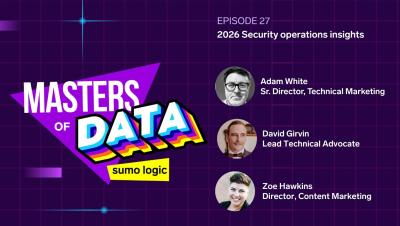
Ep 27: 2026 Security operations insights

On this episode of Masters of Data, we dive into our 2026 Intelligent Security Operations report. While 90% of 500+ security leaders see AI/ML cutting alert fatigue, actual implementation remains stuck at basic anomaly detection—not the full automation everyone wants. The gap is real: only 51% say their SIEM effectively reduces detection and response times, exposing serious maturity issues. Add rampant tool sprawl (most orgs run 3-10+ security tools that don't communicate), and you've got an integration nightmare. We explore how Model Control Protocol and AI agents could solve this, but here's the truth.
Sumo Logic's 2026 Security Operations Insights report: AI, siloed tools, and team alignment

Security threats have always been expanding and evolving, but recent data shows that modern applications are more complex for security and operations than ever before. And AI is only a piece of that puzzle. To stay on top of the changing market and hear directly from security leaders on what’s really top of mind, Sumo Logic surveyed over 500 security leaders with the help of UserEvidence. We asked about data pipelines, tool sprawl, confidence in SIEM, and, of course, AI.

UEBAenabled SIEM use cases: Stopping insider threats before they strike

Insider threats remain one of the most challenging security risks organizations face. Unlike external attackers who must breach perimeters, insiders already possess legitimate access to critical systems and data. They understand security controls, know where valuable assets reside, and can operate under the radar of traditional rule-based detection systems for extended periods.

New Databricks and Snowflake apps strengthen cloud data security and data pipeline visibility

If you’re like most companies we work with, you’re awash in opportunities (and a bit overwhelmed with pressure) to adopt AI. Of course, integrating new technologies means more data to manage and systems to monitor.

Ep 26: You can patch your code, you can't patch burnout

In this episode of Masters of Data, we tackle why cybersecurity professionals burn out, and it's not just long hours. We explore how repetitive tasks, limited growth, and work that feels invisible drain security teams who face constant vigilance with few wins and no finish line. We discuss how high-stakes environments and rigid SLAs prevent real breaks, then share solutions: celebrate small victories, recognize contributions, prioritize physical health, and protect work-life balance. The key? Clear communication, realistic expectations, and making security's invisible impact visible.

Token Torching: How I'd burn your AI budget (so you can fix it)

I spend most of my time thinking like a criminal. Not because I’m edgy, but because that’s literally the job. And lately, everywhere I look, I see the same thing: People are exposing MCP endpoints like they’re REST APIs, and forgetting they’re actually money execution engines. So let’s talk about Token Torching. Yes, I invented another name. This isn’t data theft. It’s not taking your service down.

Top 10 SIEM best practices for modern security operations

Nowadays, it’s not uncommon for enterprise IT leaders to find themselves in a situation that seems like a catch-22. On one hand, they’re expected to make data-driven decisions that improve productivity and profitability in a business. On the other, they’re preoccupied with their core responsibilities such as protecting critical systems, maintaining network security, and accelerating investigations when a security event occurs. Traditional tooling won’t keep up with modern systems.